Как это работает
How Do Foiling Sailboats Work? Hydrofoils Explained
Опубликовано · Последняя проверка Октябрь 2026
A foiling sailboat uses hydrofoils, wing-shaped fins under the water, to lift its hull clear of the surface once it is going fast enough. With the hull out of the water, most of the drag disappears, so boats like the International Moth, the WASZP, SailGP F50s and America's Cup AC75s can sail at two or three times the wind speed.
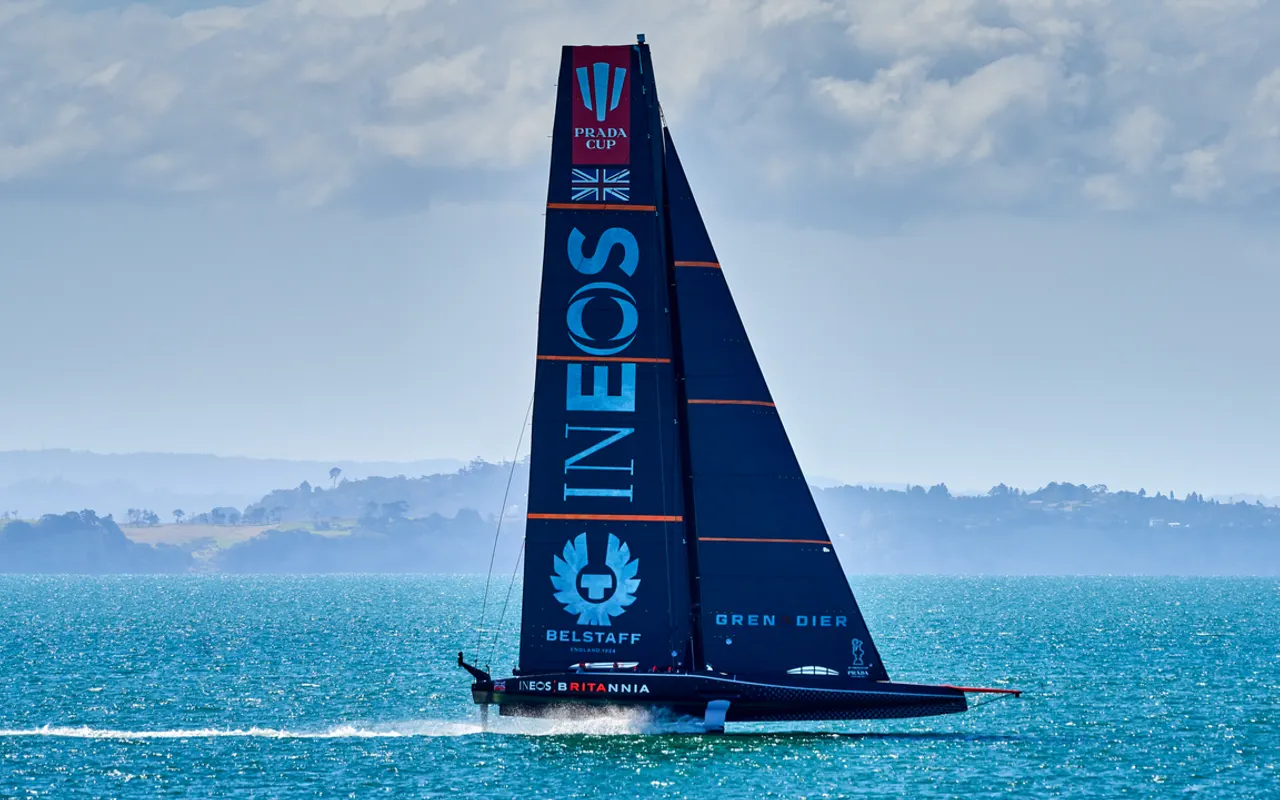
A wing under the water
A hydrofoil works like an aircraft wing. As water flows over it, its shape and angle (the angle of attack) push water down and create lift upward. Water is about 800 times denser than air, so a small foil makes a lot of lift: a Moth foil is not much bigger than a large chopping board.
Lift grows with the square of speed. Double the speed and the foil makes four times the lift. That is why every foiler has a take-off speed: below it, the foils can't carry the boat's weight and the hull sits in the water like any other dinghy or yacht.
Why foiling is so fast
A normal hull has to push water aside, and drag rises steeply as it goes faster. Once the hull lifts out, only the slim foils and struts are in the water. Less drag means more speed, more speed builds more apparent wind, and the boat accelerates further. That is how foilers sail downwind faster than the wind, angled across it rather than straight down it.
Controlling ride height
Fly too low and the hull touches the water and slams. Fly too high and the foil breaks the surface, sucks in air (ventilation), loses lift, and the boat crashes down. Different boats solve this in different ways:
| Судно | Height control |
|---|---|
| International Moth, WASZP | A wand dragging on the surface works a flap on the main foil, like a toilet-cistern float |
| SailGP F50 | Flaps on the foils, controlled by the crew |
| America's Cup AC75 | Foil arms on each side canted by hydraulics, plus flaps controlled by the crew |
| Kitefoils, wingfoils | The rider's weight and body position |
Why foilers crash
- Losing speed in a manoeuvre. Tacks and gybes slow the boat. Drop below take-off speed and it comes down off the foils, often sharply.
- Ventilation. A foil that breaks the surface loses lift almost instantly.
- Light wind. With less power to keep speed up, there's less margin for error, as Emirates Team New Zealand found in October 2026 training.
- Too much power. In strong gusts the boat can be overpowered at very high speed, and the crashes get bigger.
Can you learn to foil?
Yes, but most people learn on a conventional dinghy first. Good sail trim and balance carry straight across. Training foilers such as the WASZP, and foil kits for some dinghies, make it more affordable. Wear a helmet and impact vest: falls happen at speed, and foils are sharp.