Licences
Do I Need a VHF Radio Licence? The SRC Explained (UK)
Published · Last checked October 2026
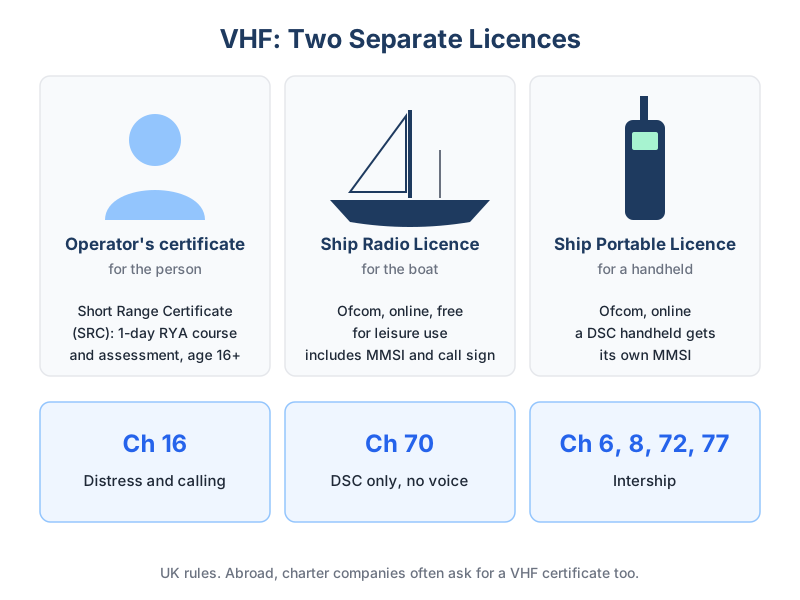
In the UK there are two separate licences. The person using a marine VHF needs an operator's certificate, usually the Short Range Certificate (SRC), gained on a one-day RYA course with an exam. The boat needs an Ofcom Ship Radio Licence, which is free online for leisure vessels and comes with an MMSI number for DSC. A handheld VHF needs a Ship Portable Radio Licence.
| Licence | Who or what | How |
|---|---|---|
| Short Range Certificate (SRC) | The operator | RYA course (classroom or online) plus a practical and written assessment; minimum age 16 |
| Ship Radio Licence | The vessel's fixed radio equipment | Ofcom, online; free for leisure use; includes the vessel's MMSI and call sign |
| Ship Portable Radio Licence | Handheld VHF | Ofcom, online; DSC handhelds get their own MMSI |
| Long Range Certificate (LRC) | Operator of MF/HF and satellite systems | RYA course; for ocean sailing |
What the SRC course covers
- Channels and their uses: 16 for distress and calling, 70 for DSC, intership and port channels.
- Routine calls, procedure words and the phonetic alphabet.
- DSC: making and receiving alerts and routine calls.
- Distress, urgency and safety procedures, and GMDSS equipment such as EPIRBs and SARTs.
Abroad, many charter companies and some countries require the skipper or a crew member to hold a VHF operator's certificate.
Related guides
Frequently asked questions
Can I use a VHF radio without a licence?
Not legally for routine use in the UK: you need an operator's certificate (or to be supervised by a holder) and the radio must be licensed. Anyone may use it in a genuine emergency.
How long does the SRC take?
Typically one day in a classroom, or a self-paced online course, followed by an assessment at an RYA centre.