Beginners
Parts of a Sailboat: Names and Diagram
Published · Last checked October 2026
A sailboat has four groups of parts: the hull (the body, with the keel and rudder underneath), the spars (mast and boom), the sails (mainsail and headsail), and the rigging (fixed stays and shrouds that hold the mast up, and moving lines such as halyards and sheets that control the sails). Learn the dozen names in the diagram below and you can follow almost any instruction on board.
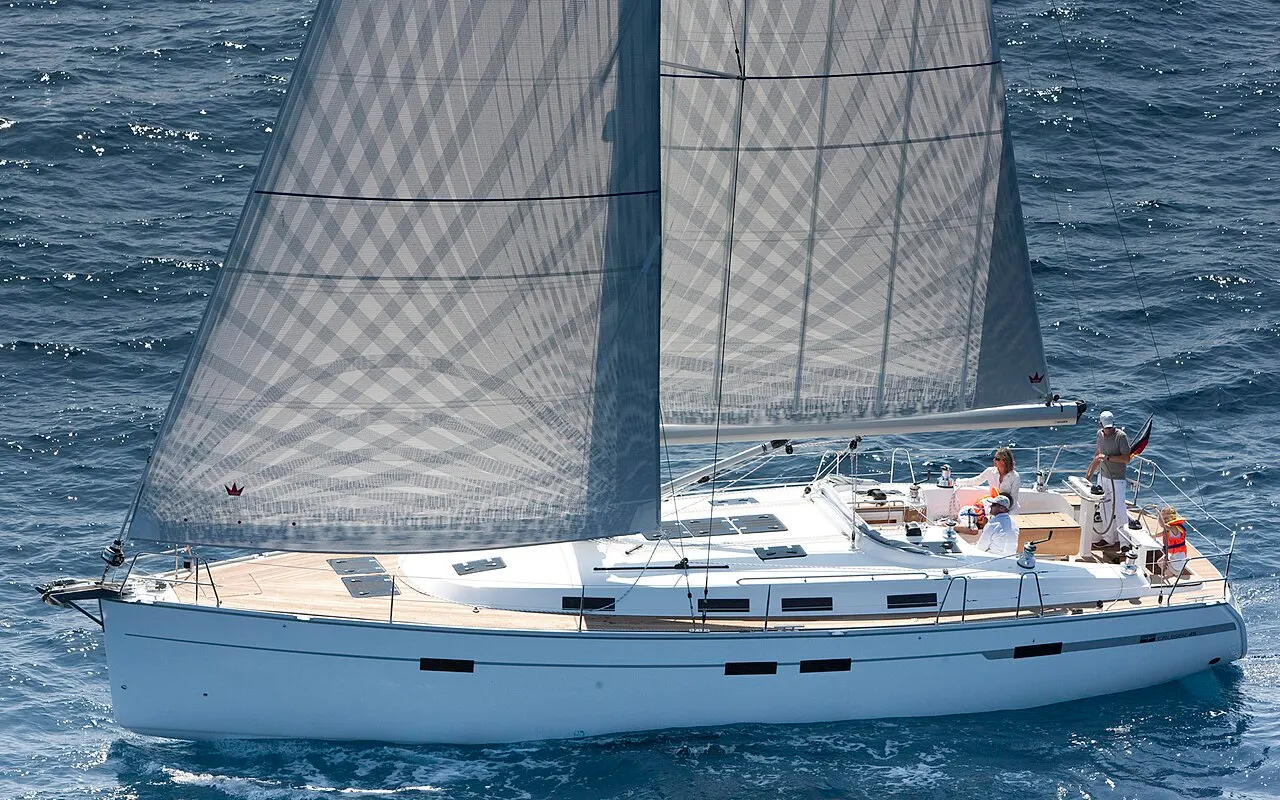
Sailboat parts diagram
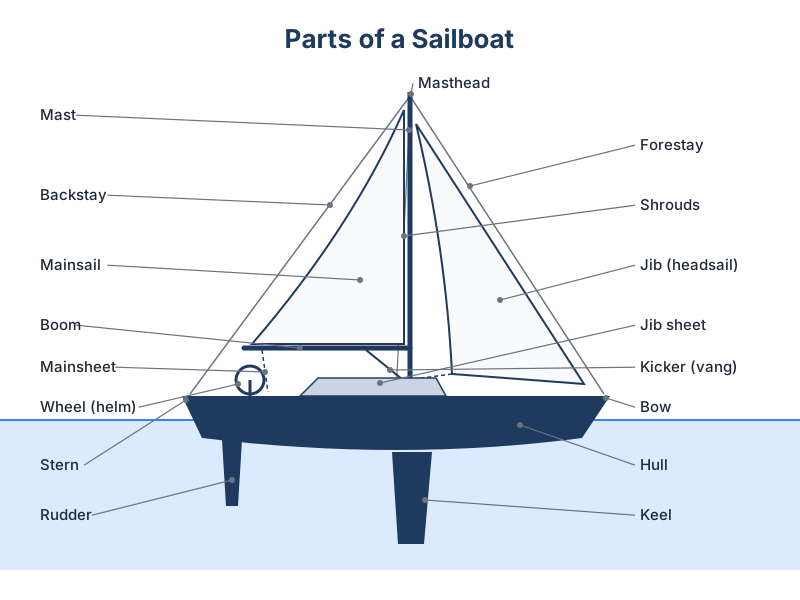
The hull: bow, stern, keel and rudder
| Part | What it is | Why it matters |
|---|---|---|
| Hull | The watertight body of the boat | Floats the boat; its shape decides speed and comfort |
| Bow | The front | Points into the waves; anchor and forestay are here |
| Stern | The back | Where you usually steer from |
| Port / starboard | Left / right, looking forward | Never change, whichever way you face |
| Keel | The heavy fin under the hull | Stops the boat sliding sideways and keeps it upright |
| Rudder | The steering blade at the stern | Turned by the tiller or wheel |
| Cockpit | The sunken area where the crew sits | Where you steer, trim and work the winches |
| Deck | The top of the hull you walk on | Clip on to jackstays here in rough weather |
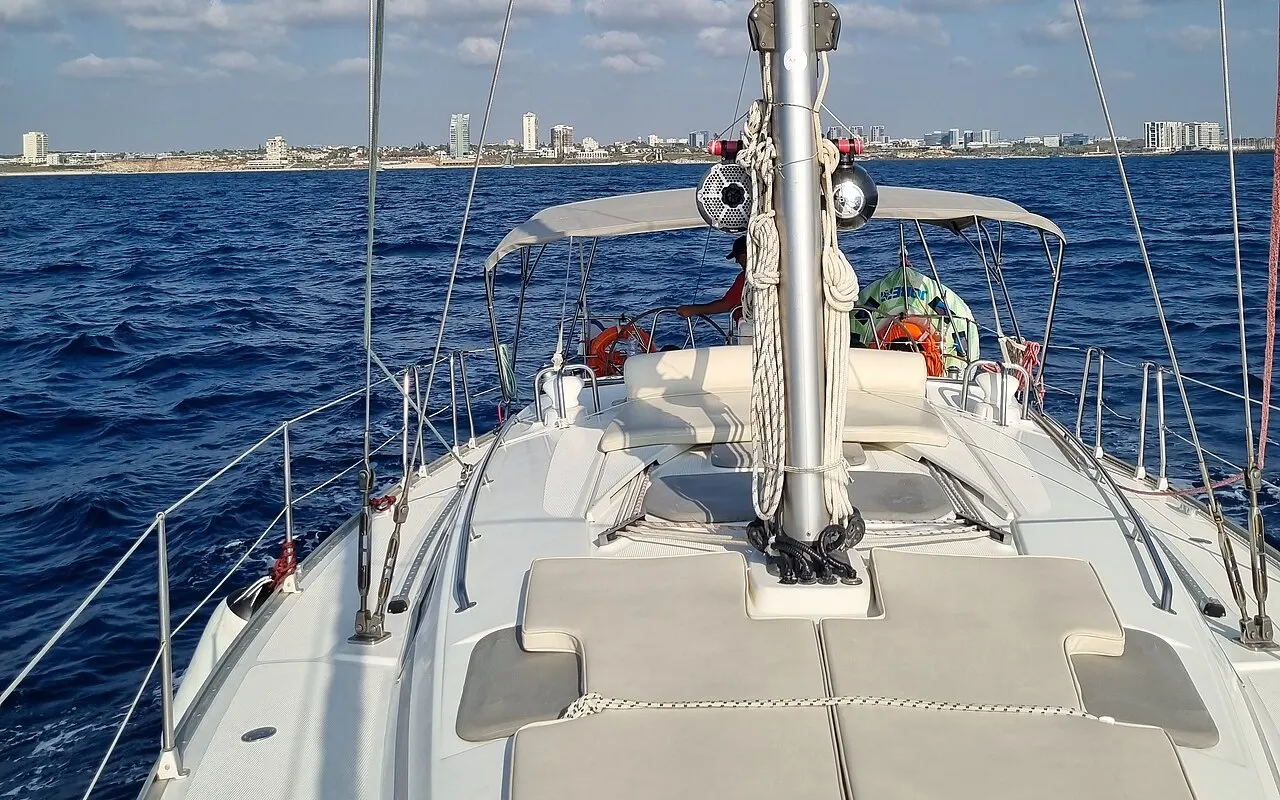
Spars: mast and boom
The mast is the tall vertical pole that holds the sails up. The boom is the horizontal pole along the bottom of the mainsail, joined to the mast by a fitting called the gooseneck. The boom swings across the boat when you tack or gybe, which is why crews call out before every turn.
Sails: mainsail, jib and genoa
- Mainsail: the sail behind the mast, attached to the mast and boom.
- Jib: a headsail in front of the mast that does not overlap it. A genoa is a larger headsail that overlaps the mast. Most cruising boats roll their headsail away on a roller furler.
- Spinnaker or gennaker: a large, light, balloon-shaped sail for sailing downwind.
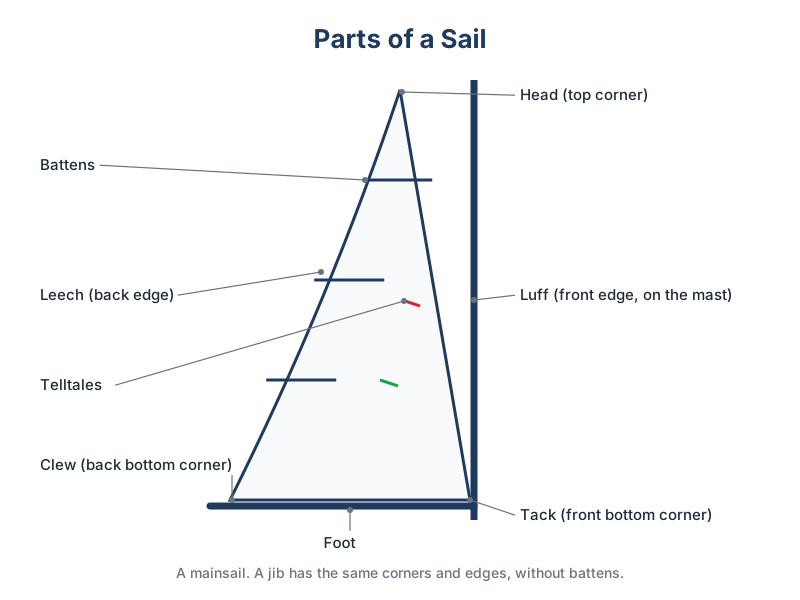
Parts of a sail
Every sail has three corners and three edges, and you will hear these words on day one.
Sail materials and shapes
Most cruising sails are woven polyester (Dacron): tough, cheap and easy to fold. Racing sails use laminates of film and fibres such as aramid or carbon, which hold their shape better but wear faster. A mainsail with full-length battens keeps its shape as it ages and stacks neatly on the boom; an in-mast furling mainsail rolls into the mast at the pull of a line but cannot have horizontal battens, so it's flatter and less powerful.
Sailboat rig types: sloop, cutter, ketch, yawl, schooner
The rig is the arrangement of masts and sails. Most yachts you'll learn on are sloops, but you'll meet the others in any harbour, and the names come up in exams and in the Shipping Forecast-style radio chat of the yacht club bar.
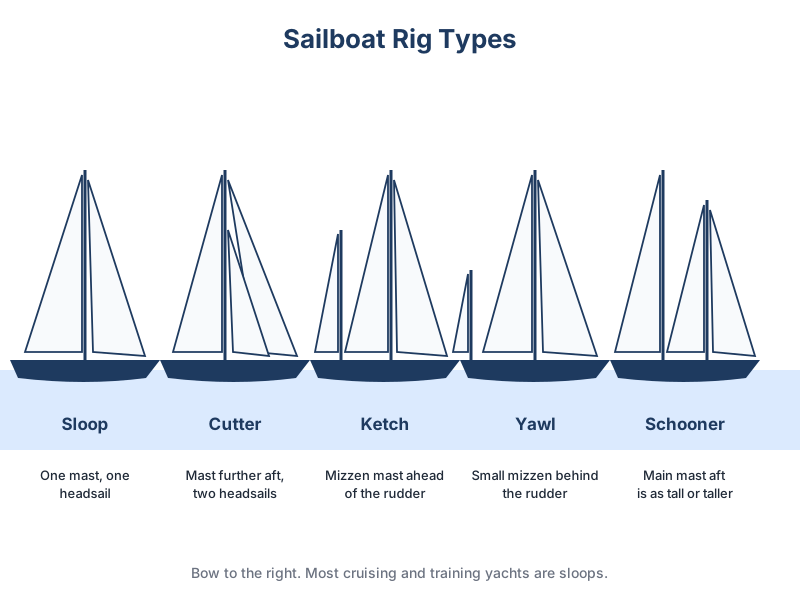
| Rig | Masts | How to recognise it | Why choose it |
|---|---|---|---|
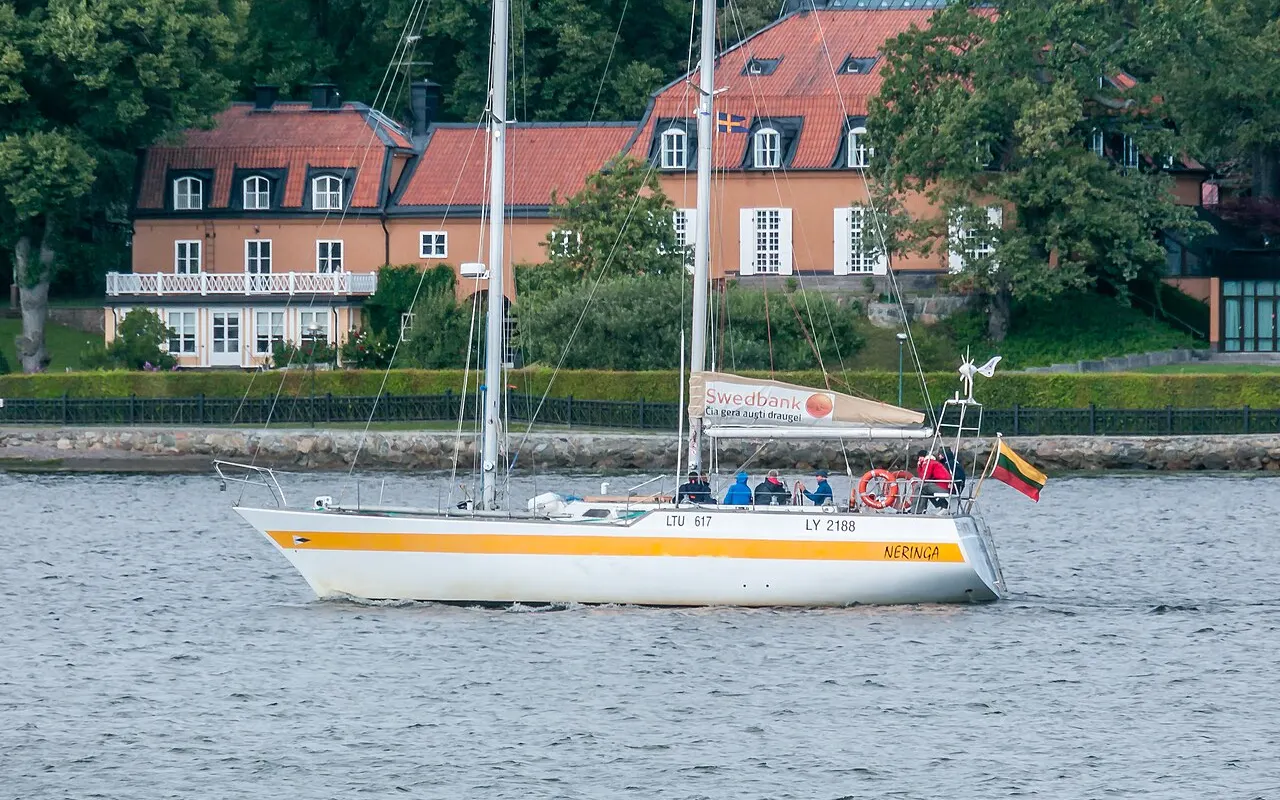
| Sloop | One | One headsail, mast about a third of the way back | Simple, efficient upwind, easy to handle |
| Cutter | One | Two headsails (yankee and staysail), mast further aft | Smaller sails to handle; a staysail is useful in strong winds |
| Ketch | Two | Smaller mizzen mast ahead of the rudder post | Sail area split into easy-to-handle pieces; good balance under jib and mizzen |
| Yawl | Two | Small mizzen mast behind the rudder post | Mizzen helps balance and can hold the bow into the wind at anchor |
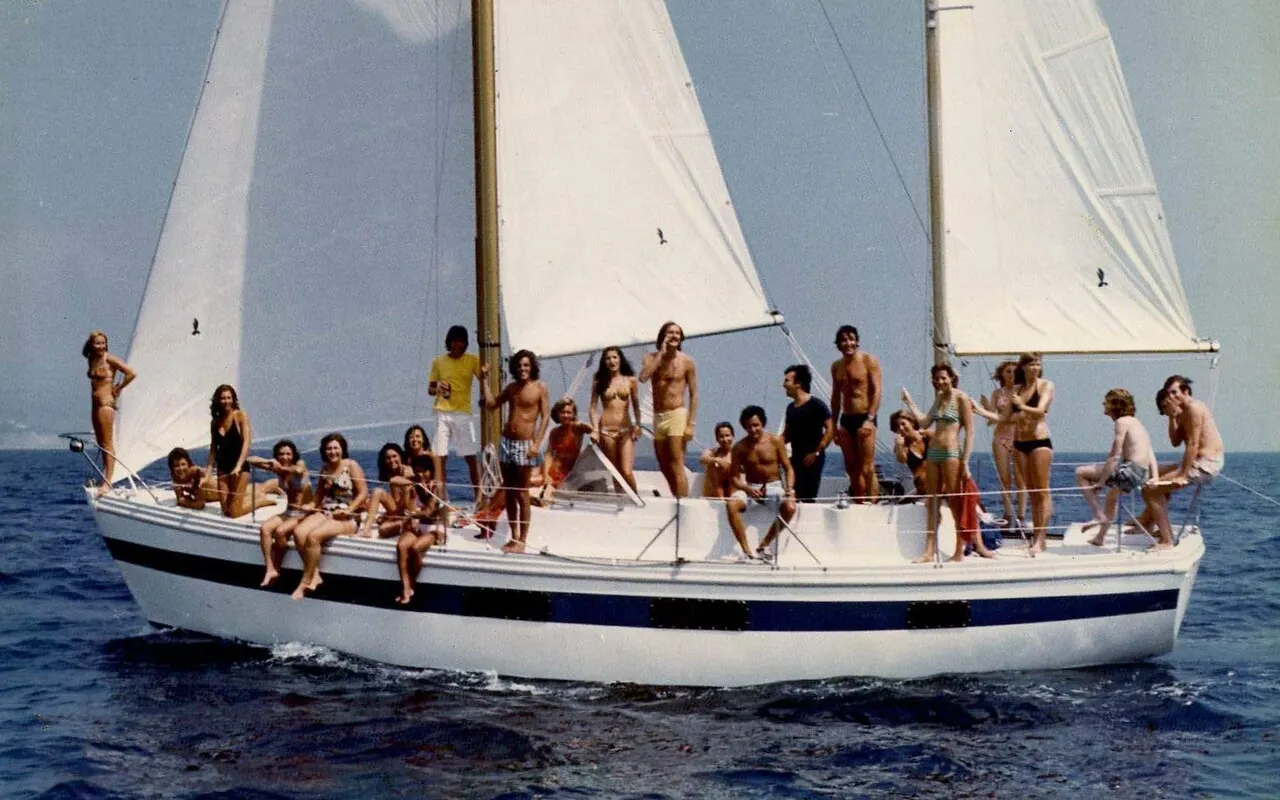
| Schooner | Two or more | Aft mast as tall as or taller than the foremast | Big sail area for reaching; traditional and charter vessels |
Masthead and fractional rigs
On a masthead rig the forestay goes to the very top of the mast, usually with a big overlapping genoa. On a fractional rig it meets the mast lower down (often seven-eighths of the way up), with a smaller jib and a bigger mainsail. Fractional rigs let you bend the mast with the backstay to flatten the main in a breeze; most modern production yachts use them.
Keel types
The keel does two jobs: it stops the boat sliding sideways (so it can sail upwind) and its weight keeps the boat upright. How it's shaped changes how the boat behaves.
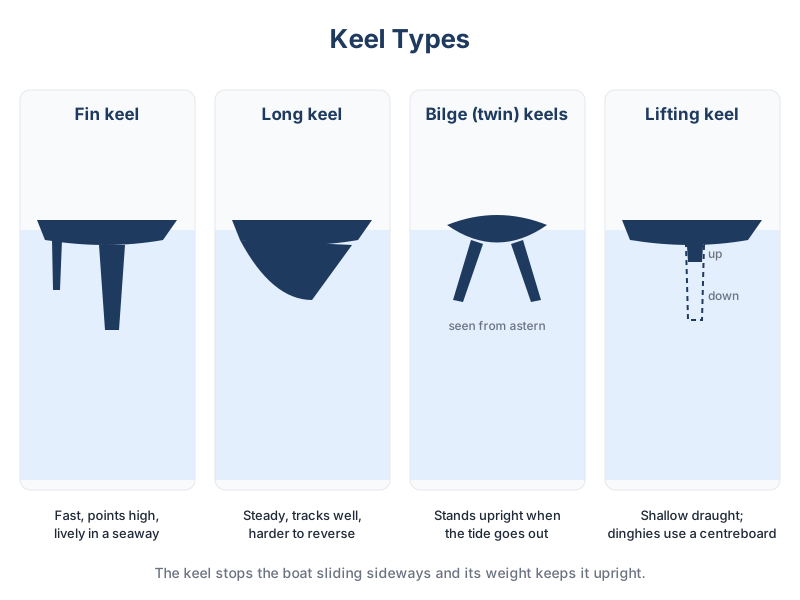
| Keel | Good at | Watch out for |
|---|---|---|
| Fin keel | Pointing high, speed, quick turns | More lively motion; deep draught |
| Long keel | Holding a straight course, gentle motion offshore | Slow to turn; hard to steer astern in a marina |
| Bilge (twin) keels | Drying moorings: sits upright when the tide goes out | Slightly less efficient upwind |
| Lifting keel / centreboard | Shallow creeks, trailing, beaching | Less stable with the keel raised; check the lifting gear |
Sailboat dimensions
| Term | Meaning | Why it matters |
|---|---|---|
| LOA | Length overall | Marina fees and berth size |
| LWL | Length on the waterline | Longer waterline means a higher potential speed |
| Beam | Greatest width | Whether you fit the berth; interior space |
| Draught | Depth of the keel below the waterline | The least depth of water you can float in |
| Air draught | Height of the masthead above the waterline | Clearance under bridges and power cables |
| Freeboard | Height of the deck above the water | How dry the boat is; how hard to climb aboard from the water |
| Displacement | The boat's weight | Heavier boats are steadier but need more wind |
Rigging: standing and running
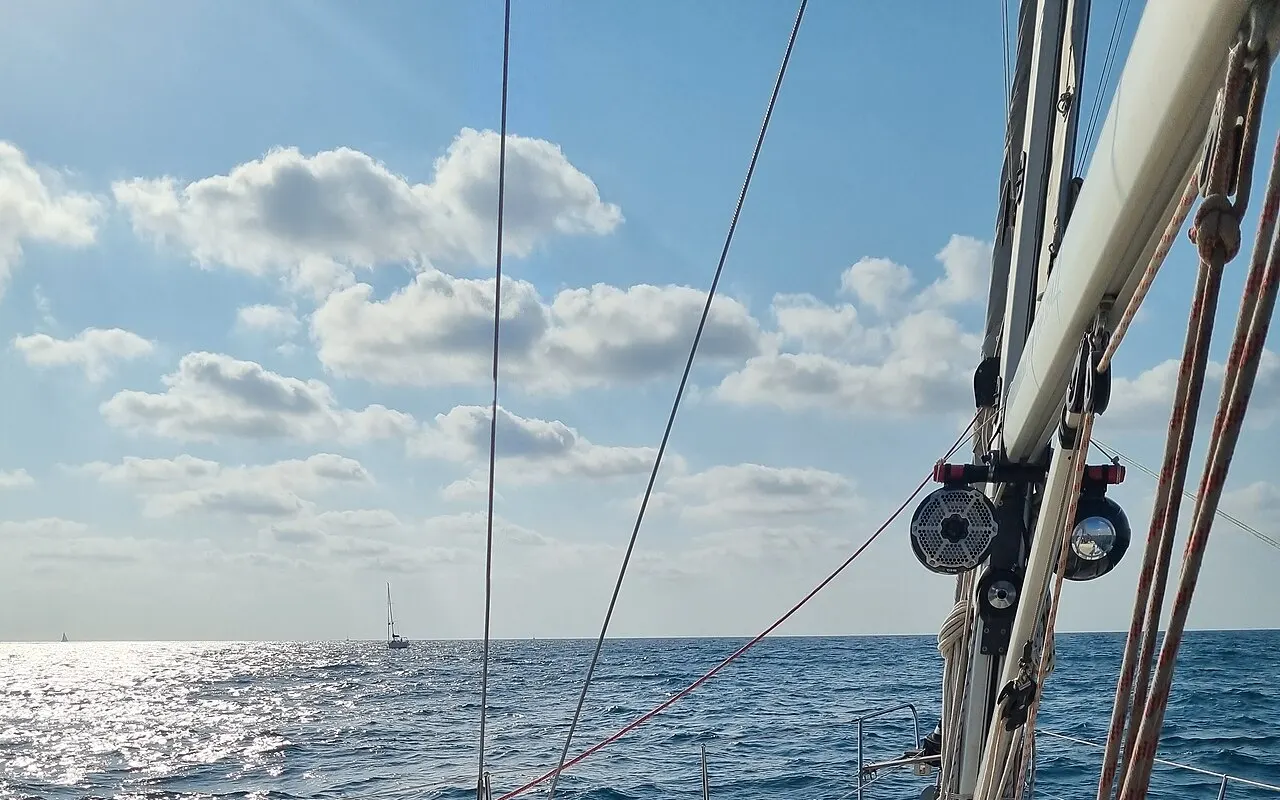
Standing rigging is the wire that holds the mast up and never moves: the forestay (to the bow), the backstay (to the stern) and the shrouds (to each side, spread by the spreaders). Running rigging is the rope you pull on to control the sails.
| Line | What it does |
|---|---|
| Halyard | Hoists a sail up the mast |
| Sheet | Pulls a sail in or lets it out (mainsheet, jib sheets) |
| Kicker (vang) | Holds the boom down to flatten the mainsail |
| Outhaul | Tensions the foot of the mainsail along the boom |
| Cunningham | Tensions the luff to move the sail's draft forward |
| Reefing lines | Pull down a reef to make the mainsail smaller |
| Topping lift | Holds the end of the boom up when the sail is down |
Deck hardware
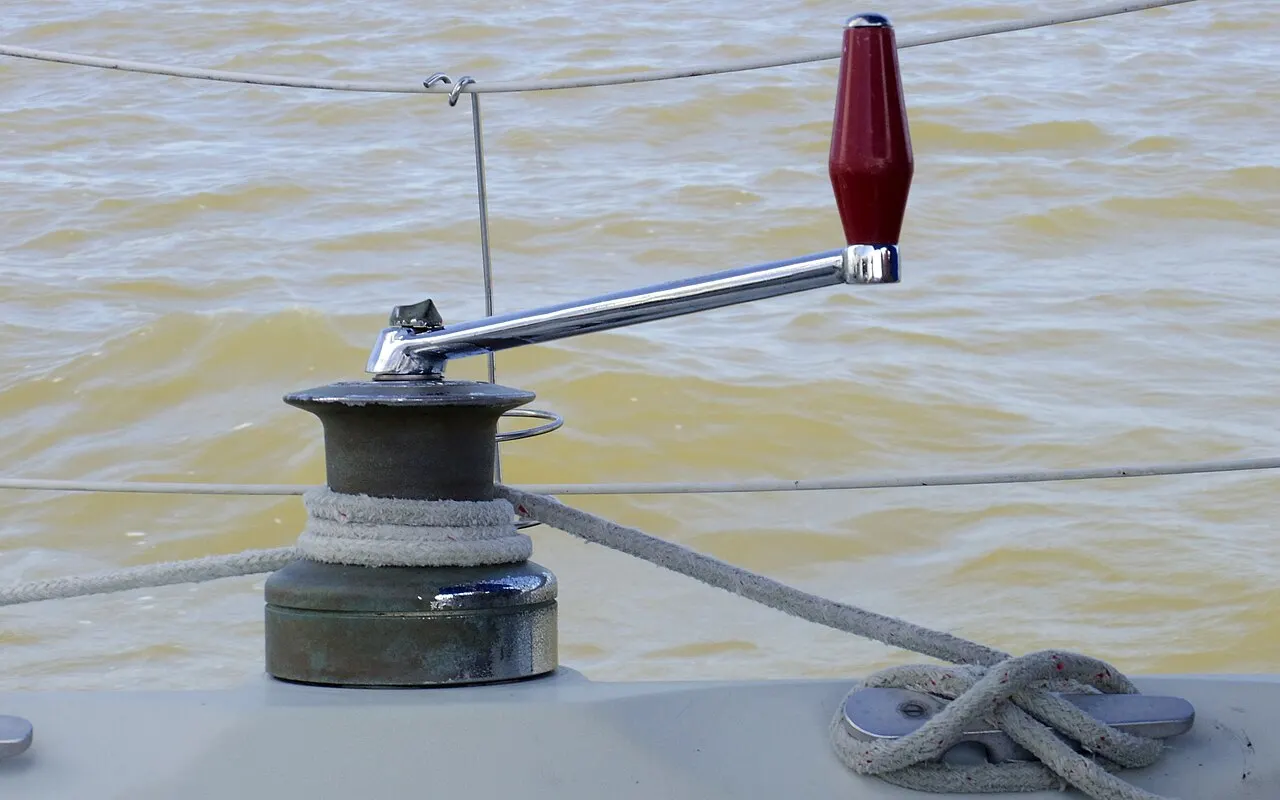
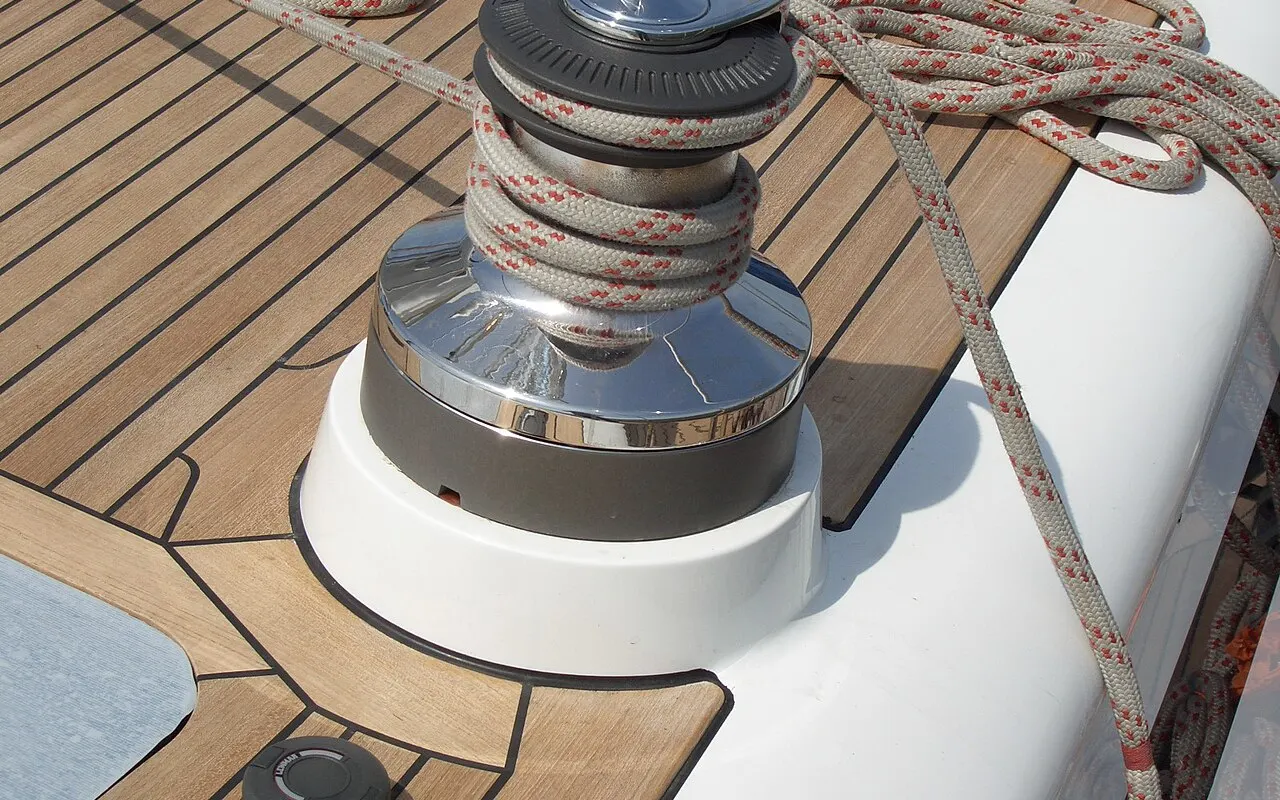
- Winch: a drum with a handle that multiplies your pull on a sheet or halyard.
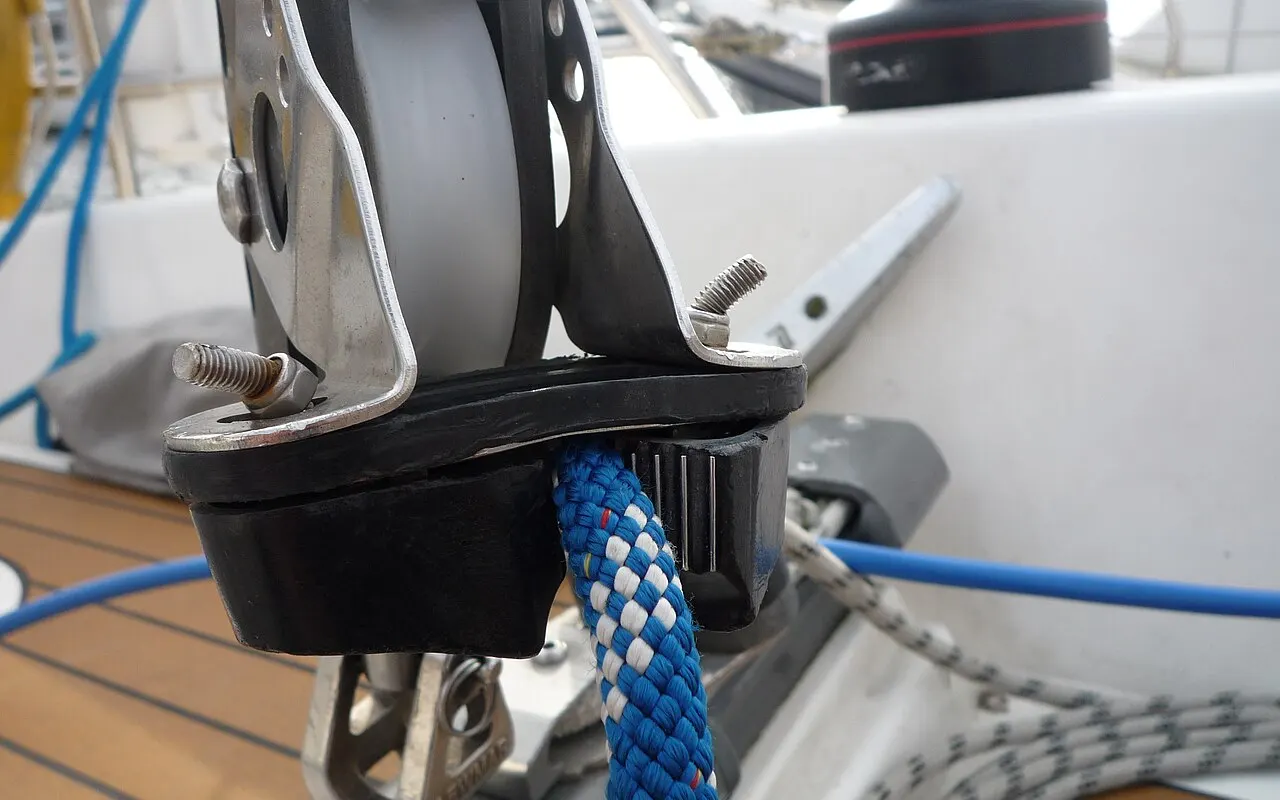
- Cleat and clutch (rope jammer): hold a line once it is set.
- Block: a pulley that changes a line's direction.
- Traveller: a track that moves the mainsheet across the boat.
- Stanchions and guardrails (lifelines): the fence round the deck. Jackstays run along the deck for harness tethers.
- Pulpit (at the bow) and pushpit (at the stern): the metal frames at each end.
How to use a winch
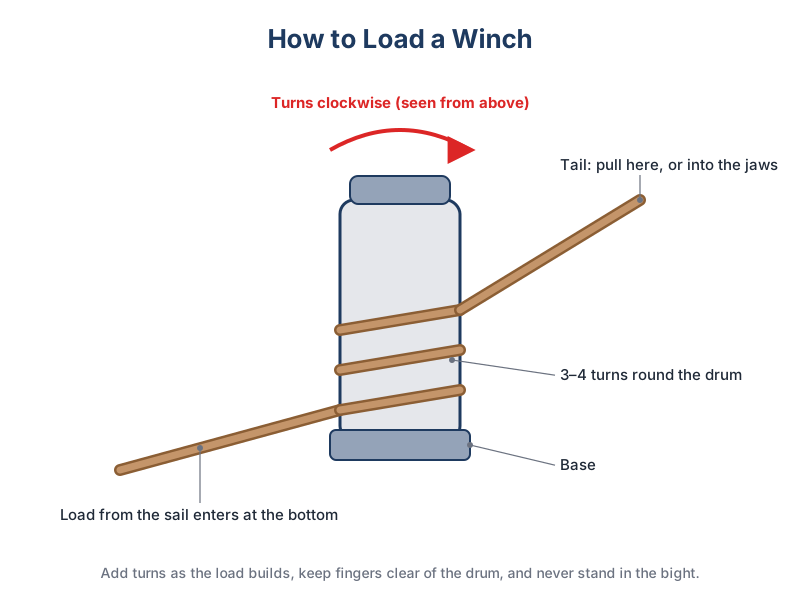
- Put two or three turns clockwise round the drum, from the bottom up, while the load is light.
- Pull the tail hand over hand until it gets hard, then put the tail in the self-tailing jaws (or have a crew member tail).
- Fit the winch handle and wind. Most winches have two speeds: one direction is fast, the other slow and powerful.
- Remove the handle when you've finished, so nobody trips on it and it can't fly off.
- To ease, keep a hand flat on the turns and let the rope slip round slowly. To release completely, lift the turns up off the top of the drum.
Cleats, clutches and cam cleats
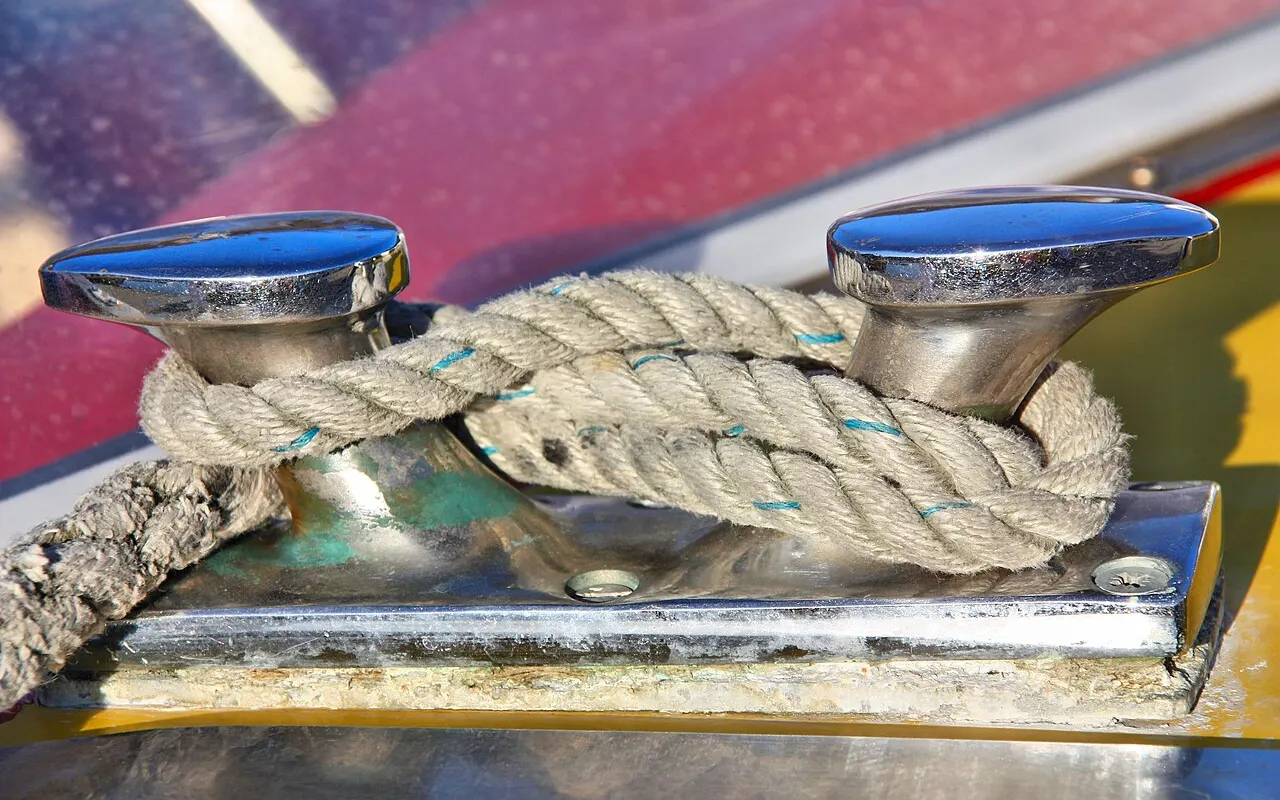
A horn cleat holds a line with a cleat hitch; a clutch (rope jammer) grips a halyard or reefing line so the winch can be used for something else; a cam cleat grips a line between two toothed jaws and releases with a quick upward pull, ideal for dinghy sheets and the mainsheet on many yachts.
Below deck: inside a cruising yacht
| Name | What it is |
|---|---|
| Saloon | The main cabin, with seats and a table |
| Galley | The kitchen, usually with a gimballed cooker that stays level when the boat heels |
| Heads | The toilet compartment. Learn the pump sequence before you use it. |
| Chart table | Where you navigate, with the VHF, instruments and electrical panel |
| Forepeak / V-berth | The cabin in the bow |
| Quarter berth | A bunk tucked under the cockpit |
| Bilge | The lowest part of the hull, where water collects; check it daily |
| Seacocks | Valves on pipes through the hull; know where every one is and close them if the boat floods |
Practise the names with the sailing glossary, then see the sails at work in the sail trim tool. For the words you'll hear on day one, read sailing terms for beginners.