RYA courses
Sailing Qualifications Explained (UK RYA)
Published · Last checked October 2026
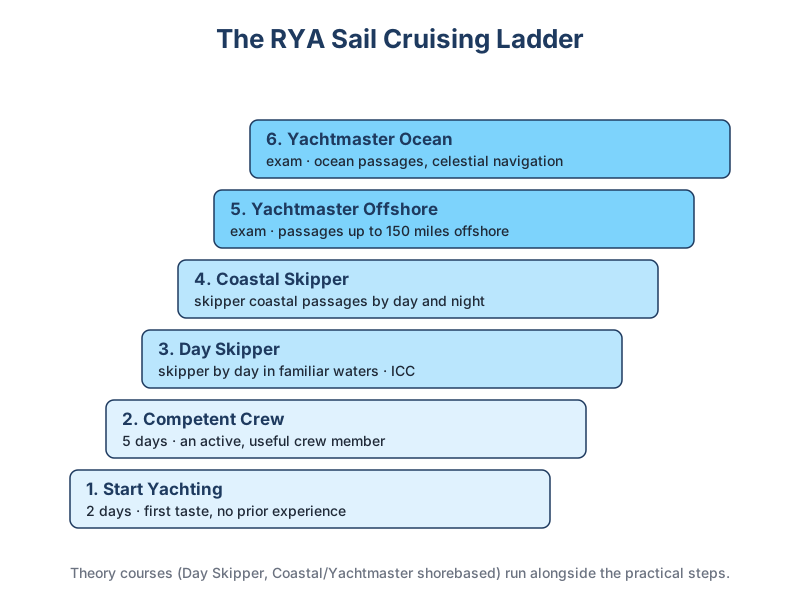
In the UK you don't need a qualification to sail your own boat for pleasure, but most charter companies and many countries ask for one. The usual path is the RYA ladder: Start Yachting, Competent Crew, Day Skipper (the usual charter qualification, and the route to an ICC), Coastal Skipper, then the Yachtmaster Offshore and Ocean exams. RYA certificates such as Day Skipper don't expire.
The RYA sail cruising ladder
| Qualification | Type | Typical length | What it shows |
|---|---|---|---|
| Start Yachting | Practical | 2 days | A first taste of sailing; no experience needed |
| Competent Crew | Practical | 5 days | A useful crew member on a yacht |
| Day Skipper theory | Classroom or online | About 40 hours | Navigation, tides, weather, COLREGs |
| Day Skipper practical | Practical | 5 days | Skipper a yacht by day in familiar waters |
| Coastal Skipper practical | Practical | 5 days | Skipper coastal passages by day and night |
| Yachtmaster Offshore | Exam | 8–12 hours (one candidate) | Skipper passages up to 150 miles from a safe haven |
| Yachtmaster Ocean | Exam (oral + sights) | Exam after an ocean passage | Skipper ocean passages using celestial navigation |
What does Day Skipper allow you to do?
- Skipper a yacht by day in waters you know: the RYA's own description of the level.
- Charter a yacht: most bareboat charter companies ask for Day Skipper (or equivalent experience) for the skipper.
- Apply for the ICC (International Certificate of Competence), which many European countries ask to see.
- Move up: it's the entry point for Coastal Skipper.
It doesn't make you a professional. To skipper for hire you need a commercially endorsed qualification (Yachtmaster level for most work) plus extra certificates such as first aid and a medical.
Does Day Skipper expire?
No. RYA course completion certificates, including Day Skipper and Competent Crew, have no expiry date. The ICC is issued with an expiry date (usually five years) and can be renewed, and commercial endorsements need revalidating. If you haven't sailed for years, a refresher or a few days with an instructor is wise before chartering.
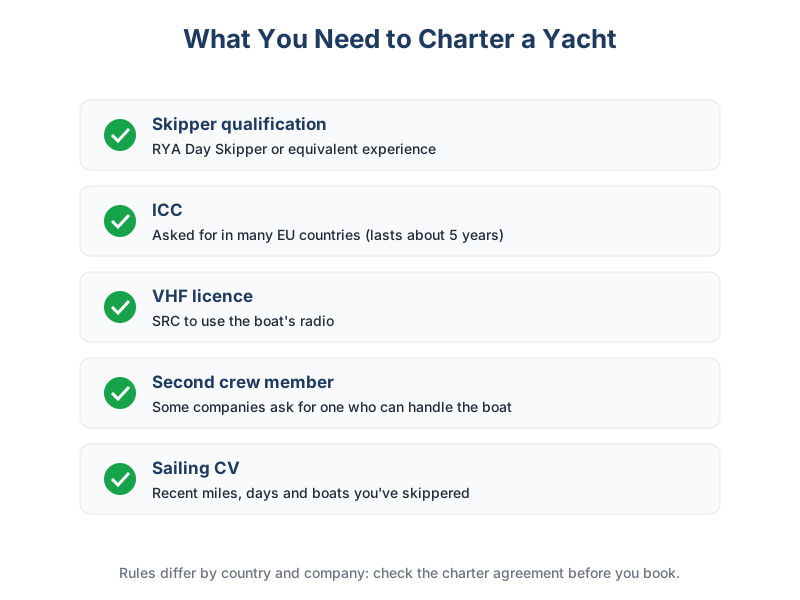
What qualifications do you need to charter a yacht?
- Skipper: usually RYA Day Skipper or equivalent, plus an ICC in many Mediterranean countries.
- VHF licence: an RYA/Ofcom SRC is often required to use the radio. See do I need a VHF licence?
- A competent second crew member: some charter companies ask for one. Check the charter agreement before you book.
Theory courses vs practical courses
RYA training is split in two. Shorebased (theory) courses teach navigation, tides, weather, the rules of the road and safety, in a classroom or online, with an exam paper at the end. Practical courses happen on a yacht over five days or more, and are assessed continuously by the instructor. You can do them in either order, but most people find the Day Skipper practical easier once they know the theory. The Yachtmaster exams are different again: an examiner tests you on board, not a course.
Other RYA schemes
| Scheme | Courses | For |
|---|---|---|
| Dinghy | Youth Stages, Adult Levels 1–2, Seamanship Skills, Day Sailing, Advanced | Small sailing boats and racing |
| Powerboat | Level 1, Level 2, Intermediate, Advanced | RIBs and small motor boats; Level 2 is the common licence for safety boats |
| Motor cruising | Helmsman, Day Skipper, Coastal Skipper | Motor yachts, with the same Yachtmaster exams at the top |
| Shorebased short courses | Essential Navigation, SRC (VHF), First Aid, Sea Survival, Radar, Diesel Engine | Skills every skipper needs |
| Inland waterways | Helmsman (Inland Waterways) | Canal and river boats; the basis for an ICC inland endorsement |
Going professional: commercial endorsement
To skipper a yacht for payment, for example running a charter or delivering boats, an RYA certificate needs a commercial endorsement. For most work that means a Yachtmaster certificate, plus the RYA Professional Practices and Responsibilities (PPR) course, a valid first aid certificate, an approved medical (ML5 or ENG1) and, for some roles, a sea survival course. Endorsements must be revalidated every five years. Check the current list with the RYA and the MCA before you apply.
How to choose a training centre
- Pick an RYA Recognised Training Centre (RTC): only these can issue RYA certificates.
- Ask about group size (five students is usual on a practical) and the age and size of the boat.
- Check where you'll sail: tidal UK waters teach more navigation than a calm, tideless sea.
- Look at dates and weather: early-season courses are cheaper but colder and windier.
- Ask what happens if the course is cut short by weather, and whether you can finish later.
Do you need a licence to sail in the UK?
Not for a pleasure boat under 24 m. Training is still the safest way to learn. Read do you need a licence to sail in the UK? for the details, and how inland waterways and commercial use differ.
How long does it take to qualify?
| Goal | Courses | Realistic timeline |
|---|---|---|
| Crew on a friend's yacht | Competent Crew | One week |
| Charter in the Med | Competent Crew, Day Skipper theory and practical | One season |
| Skipper at night and on passages | Plus Coastal Skipper (15 days, 300 miles, 8 night hours on board first) | One to two seasons |
| Yachtmaster Offshore | 50 days, 2,500 miles, 5 passages over 60 miles | Several seasons for most |
See how long Yachtmaster takes and compare Day Skipper vs Competent Crew. You can study the whole Day Skipper theory course free on this site.
Related guides
- Day Skipper vs Competent Crew
- ICC explained
- How long does Yachtmaster take?
- Do you need a sailing licence?