Exam guide
How to Pass the Yachtmaster Shorebased Exam — Papers and Tips
Published · Last checked October 2026
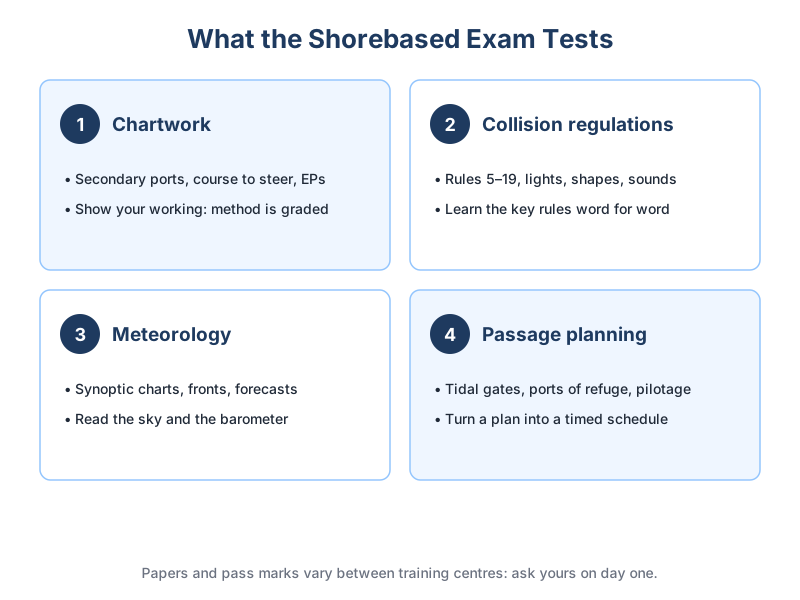
The 'Yachtmaster shorebased' exam is the set of papers at the end of the RYA Coastal Skipper/Yachtmaster Offshore theory course. To pass, get the chartwork method right every time, know the collision regulations almost perfectly, and be able to read a synoptic chart and plan a passage. Papers differ between training centres, but expect chartwork, collision regulations, meteorology and passage planning, marked by your instructor. You can resit any paper you fall short on.
What the papers look like
The RYA does not publish one paper structure, and two RYA training centres describe theirs differently:
| Cambridge University Yacht Club | Skippers Online | |
|---|---|---|
| Papers | Chartwork, Meteorology, Collision Regulations (IRPCS) | Chartwork (2 h), IRPCS (90 min), Passage Making Part A (90 min), Part B (2 h) |
| IRPCS pass mark | 80/100 | 60% |
| Chartwork | Graded; Average or above on every question | Graded; show a reasonable grasp |
Ask your centre for its exact papers and marks on day one. Our guide to the RYA theory exam pass mark explains the grading in detail.
Seven ways to pass first time
- Make chartwork automatic. Most marks are lost on method, not arithmetic. Do secondary port calculations, course to steer and estimated positions until you can lay each one out the same way every time.
- Show your working. Chartwork is graded on principle. A neat, labelled method with a small slip can pass; a right answer with no working may not.
- Learn the IRPCS word for word where it matters. Rules 5–19, lights and shapes, and sound signals come up every time. Drill them in the COLREGs trainer and navigation lights guide.
- Read a synoptic chart daily. Follow the real weather for a few weeks: fronts, the Shipping Forecast and advanced meteorology.
- Practise passage planning end to end. Tidal gates, bolt holes, night and fog pilotage: the passage planner walks you through it.
- Know your almanac. Exams are usually open book with the RYA training almanac and training charts only. Finding a tidal curve fast saves minutes on every question.
- Sit timed mocks. Do the Coastal Skipper practice exam and Yachtmaster Offshore practice exam against the clock and revise what they flag.
If you fall short
Resits are normal. Training centres describe getting feedback, revising the weak area and resitting with different questions; a near miss can sometimes be cleared with extra questions. Some centres charge an admin fee for resits outside course dates.
Related guides
- RYA theory exam pass mark
- Coastal Skipper vs Yachtmaster Offshore
- How long does Yachtmaster take?
- Secondary port calculations