Sail handling
When and How to Reef a Sailing Boat
Published · Last checked October 2026
Reef the first time you think about it. Signs you are overpowered include constant heeling beyond about 20° to 25°, heavy weather helm, the leeward rail in the water and the crew struggling. As a rough guide many cruising yachts take a first reef around force 4 to 5 upwind. It is much easier to reef early, in harbour or before the wind arrives, than on a pitching deck.

Slab reefing the mainsail
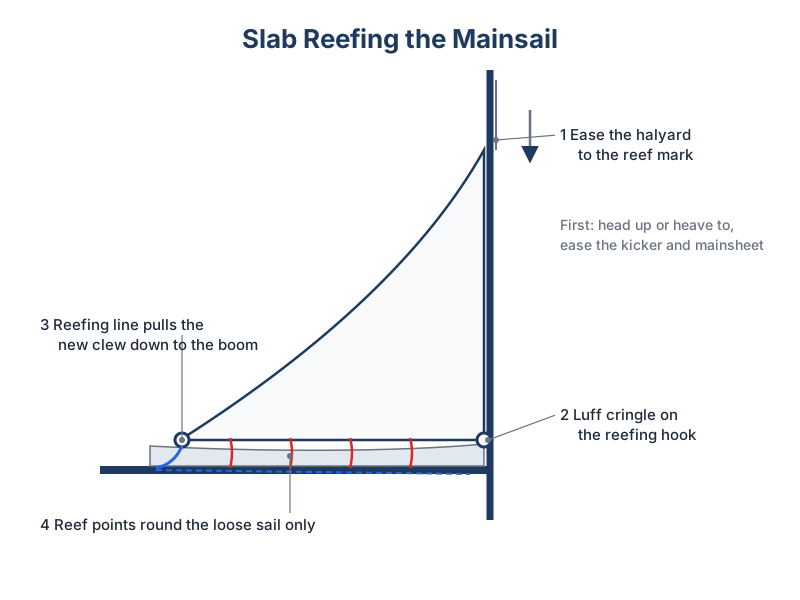
- Brief the crew, then head up onto a close-hauled course or heave to, so the main de-powers.
- Ease the kicker (vang) and mainsheet; take the weight of the boom on the topping lift if you have one.
- Lower the main halyard to the mark for the reef.
- Hook or pull down the luff cringle to the tack and re-tension the halyard.
- Haul the leech reefing line tight until the new clew is down on the boom.
- Re-trim the mainsheet and kicker; tidy the loose sail with reef points round the sail only, not the boom.
The headsail
Roller-furling headsails are reefed by easing the sheet and rolling some sail away, then moving the sheet lead forward if you can. Heavily furled sails set poorly, so a dedicated smaller headsail is better for serious weather.
Balance
Reef the main and headsail together to keep the helm balanced. Too much main gives weather helm; too much headsail gives lee helm and makes it hard to point.