Wind
How to Read Wind Direction When Sailing
Published · Last checked October 2026
Wind is always named by where it comes from: a westerly blows from the west. On a boat, read it from the ripples on the water (they run across the wind), the masthead wind indicator and telltales (they stream away from the wind), and flags and smoke ashore. On forecasts, a wind barb's shaft points to where the wind comes from, and each full barb adds 10 knots.
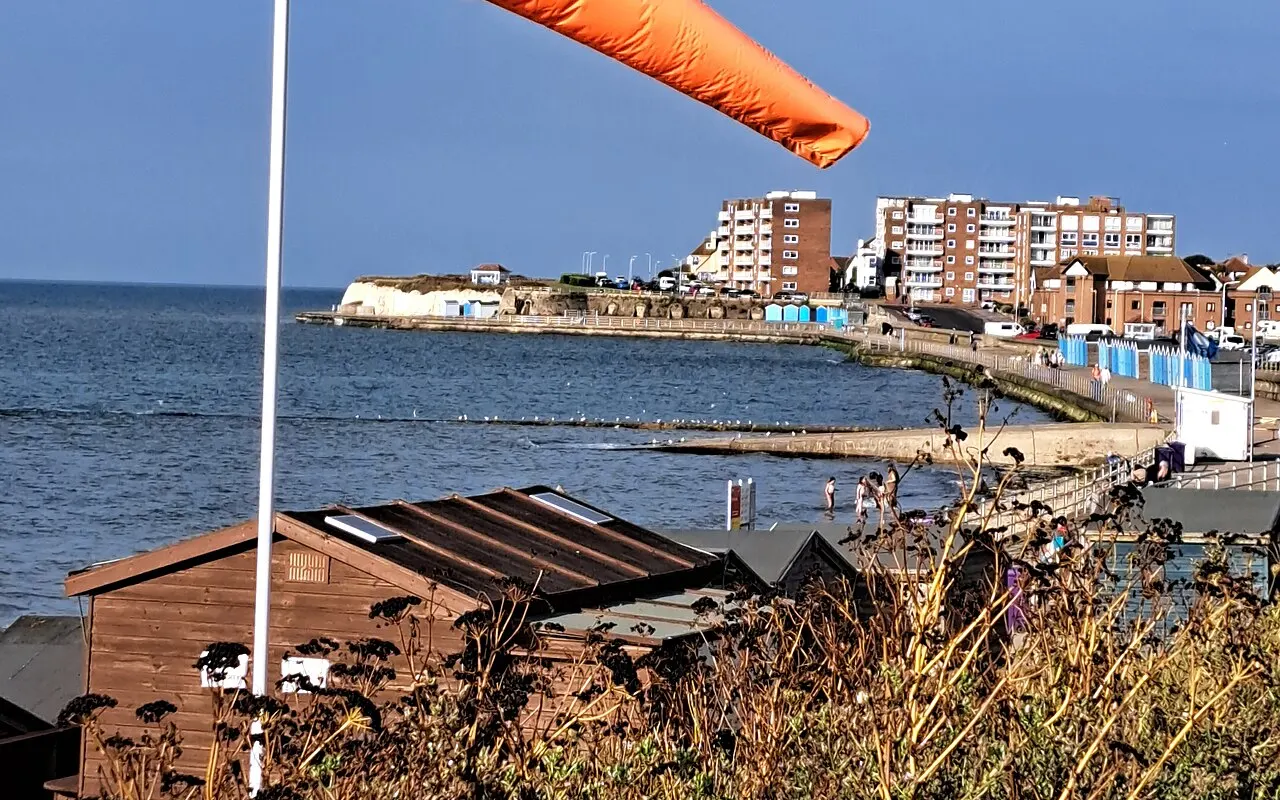
Signs of wind direction on the water
- Cat's paws and ripples: dark patches of ripples move downwind; the ripples' crests lie across the wind.
- White horses (breaking crests) appear from about force 4 and lean downwind.
- Flags and burgees on boats and ashore stream downwind.
- Moored boats lie head to the wind, unless the tide is stronger.
- Smoke and chimneys ashore show the wind over land, which can differ from the wind at sea.
Instruments on board
- Masthead wind indicator (Windex): the arrow points into the wind; the tabs show your best close-hauled angle.
- Electronic wind instrument: shows apparent wind angle and speed, and often calculates true wind once you are moving.
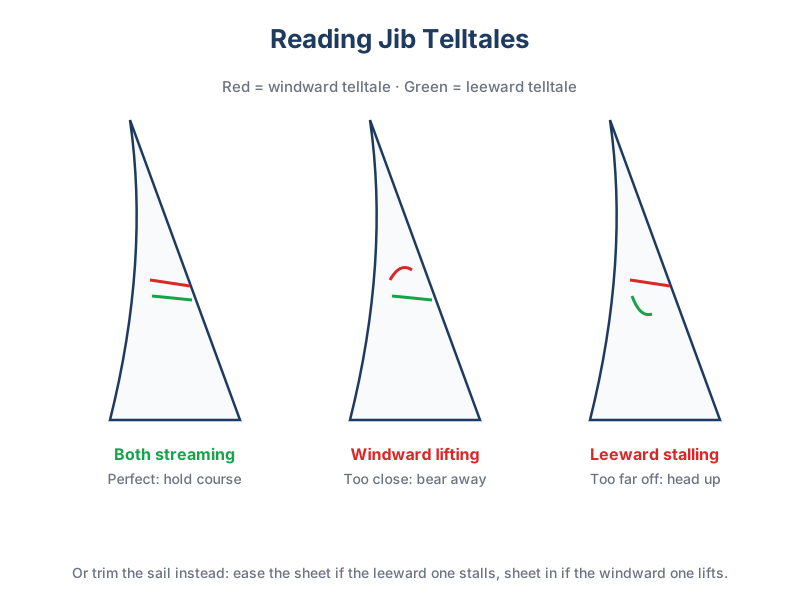
- Telltales: short wool or ribbon strips on the sails. Both sides streaming means the sail is trimmed right.
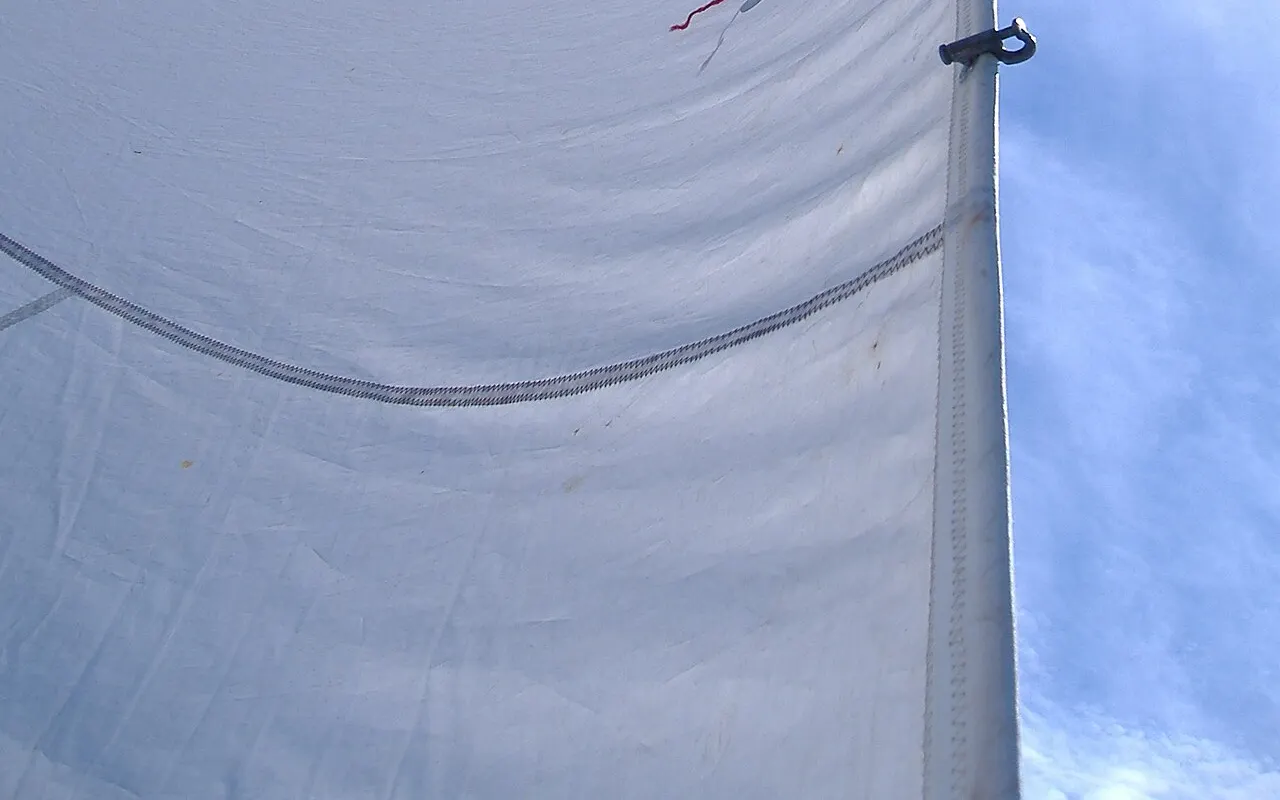
Reading telltales
| Telltale | Meaning | Fix |
|---|---|---|
| Both streaming aft | Perfect trim | Hold this course |
| Windward one lifting or spinning | Sailing too close to the wind (or sail too far out) | Bear away, or sheet in |
| Leeward one drooping or spinning | Too far off the wind (or sail too tight) | Head up, or ease the sheet |
True wind vs apparent wind
The true wind is what a stationary boat feels. Once you move, your own speed adds a headwind, and the two combine into the apparent wind: what your flags, vane and telltales show and what the sails use.
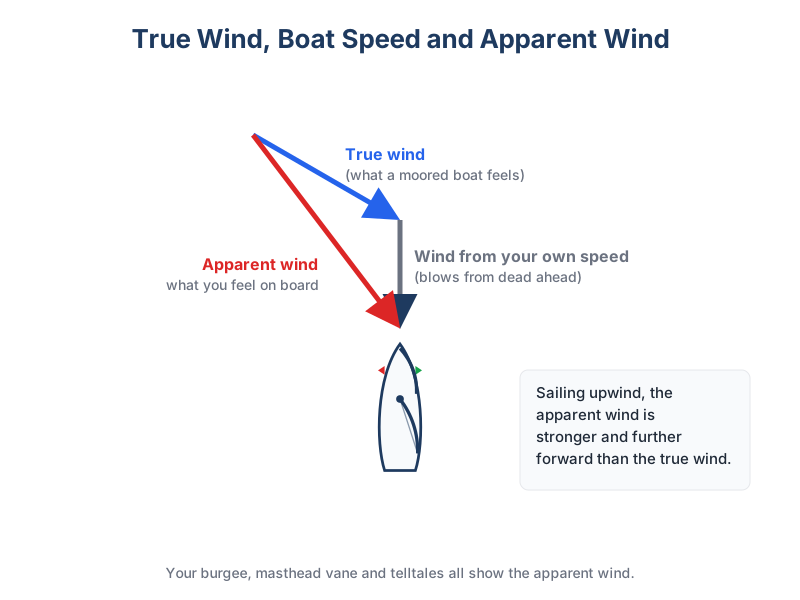
- Upwind, apparent wind is stronger than the true wind and further forward. It feels windier than it is.
- Downwind, apparent wind is lighter. It can feel calm on a run in a rising breeze, so reef before turning upwind.
Wind shifts: lifts and headers
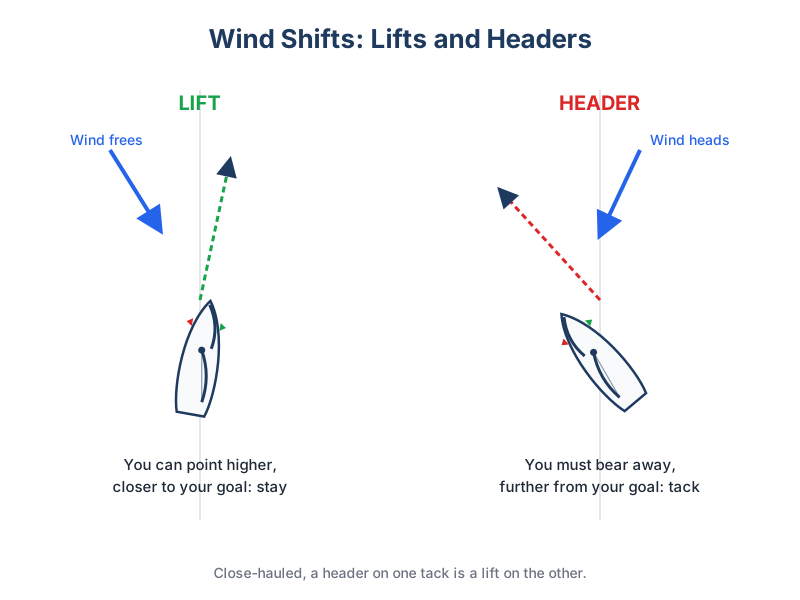
The wind is rarely steady in direction. Close-hauled, a lift lets you point higher and a header forces you to bear away. Keep an eye on the compass while you steer by the telltales: if your heading changes by 5° or more on the same trim, the wind has shifted. In a gusty offshore wind, shifts of 10° to 20° every few minutes are common.
Gusts and squalls: reading the water
- Dark patches on the water are gusts: more ripples make the water look darker. Watch them come towards you and be ready to ease the mainsheet.
- A gust often brings a shift too: in the northern hemisphere, gusts from higher up usually come with a veer.
- A squall line under a big cumulus or cumulonimbus brings a sudden increase and a shift, often with rain. Reef before it arrives.
- Glassy streaks mean lighter wind; avoid them in light weather.
How land changes the wind
| Effect | What happens |
|---|---|
| Sea breeze | On sunny days an onshore wind builds by early afternoon; see sea breezes explained |
| Headland effect | Wind speeds up and bends round headlands; often wind against tide too |
| Wind shadow | Calm patches behind cliffs, tall buildings and big ships |
| Funnelling | Wind accelerates through valleys, straits and between islands |
| Katabatic wind | Cold air drains down valleys at night, giving sudden offshore gusts |
The points of the compass
| Point | Degrees | Point | Degrees |
|---|---|---|---|
| N | 000° | S | 180° |
| NNE | 022.5° | SSW | 202.5° |
| NE | 045° | SW | 225° |
| ENE | 067.5° | WSW | 247.5° |
| E | 090° | W | 270° |
| ESE | 112.5° | WNW | 292.5° |
| SE | 135° | NW | 315° |
| SSE | 157.5° | NNW | 337.5° |
How to read wind barbs and arrows on a forecast
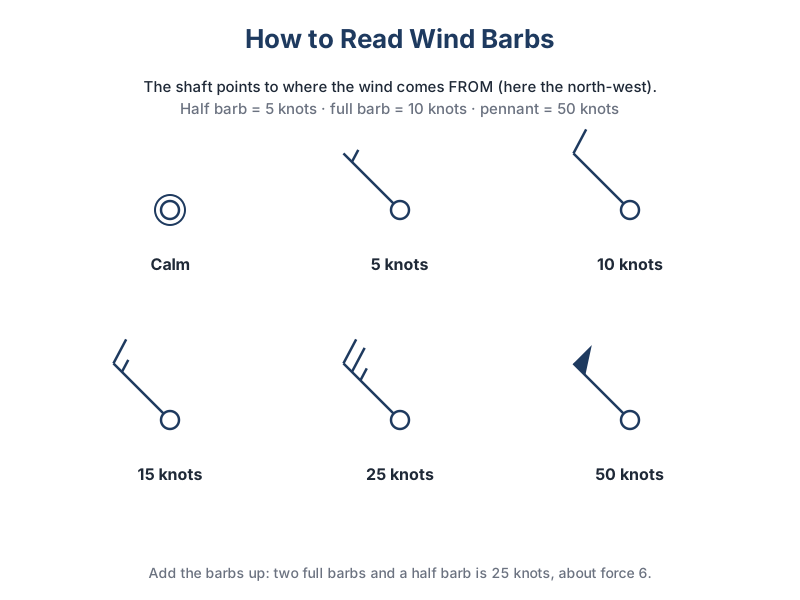
- The shaft points towards the direction the wind is coming from.
- Add up the feathers: half barb 5 knots, full barb 10 knots, triangle (pennant) 50 knots.
- Convert to Beaufort: 25 knots is force 6. See the Beaufort scale explained.
Wind arrows on apps (such as GRIB viewers) usually point the way the wind is blowing to, the opposite of a barb. Always check the legend.
Using wind forecast apps
- Check the time zone: many models show UTC, which is an hour behind UK summer time.
- Look at gusts as well as mean wind; reef for the gusts.
- Models smooth out local effects. Expect more wind round headlands and less in the lee of land than the app shows.
- Compare two models and the official forecast. If they disagree, plan for the worse one.
Wind direction words in forecasts
| Term | Meaning |
|---|---|
| Veering | Wind changing direction clockwise, e.g. south-west to west |
| Backing | Wind changing direction anticlockwise, e.g. west to south-west |
| Cyclonic | Direction changing a lot as a depression crosses the area |
| Variable | Direction changing and hard to predict, usually in light winds |
Decode a whole forecast with the forecast decoder, see each force at sea in the Beaufort explorer, and test yourself in the Weather & Radar ID game.