How sailing works
Can You Sail Into the Wind? Upwind Sailing
Published · Last checked October 2026
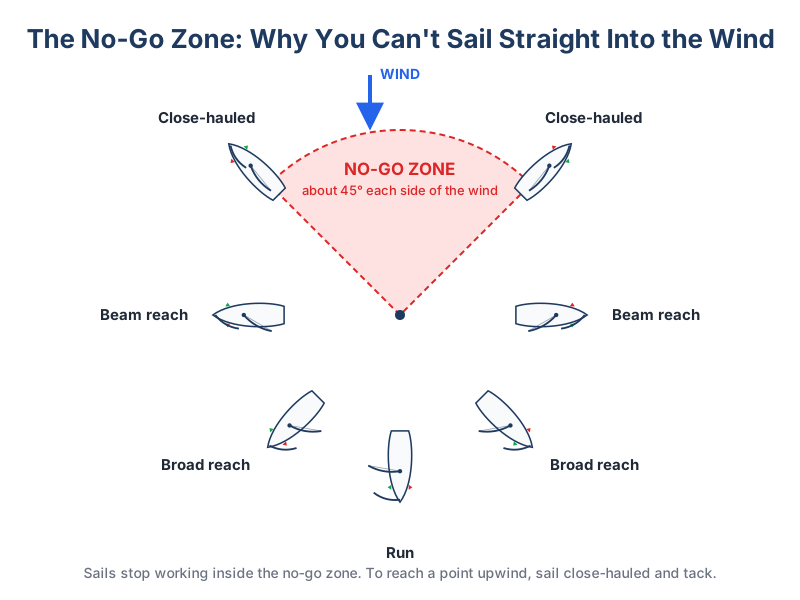
No sailboat can sail directly into the wind. A typical cruising yacht can sail at about 45° to the true wind; inside that angle, the no-go zone, the sails just flap. To reach a point upwind you beat to windward: sail close-hauled on one tack, then tack and sail close-hauled on the other, zigzagging towards your goal.
The no-go zone
Racing boats point higher, about 35° to 40°; a heavy cruiser or a boat with baggy old sails may manage only 50° or more. Point too high and the front of the sails lifts and flutters; bear away a little until the telltales stream evenly.
How does a sailboat sail upwind?
A sail sheeted in at an angle to the wind works like an aircraft wing standing on end. Air flowing round the curved sail is faster on the leeward side, creating lower pressure there, which produces lift: a force roughly at right angles to the sail. On its own that force would push the boat mostly sideways.
The keel turns it into forward motion. The keel resists sideways movement through the water, so the sideways part of the force mostly heels the boat, and the forward part drives it ahead. That's why sailboats lean when going upwind and why a boat without a keel or centreboard can't sail to windward.
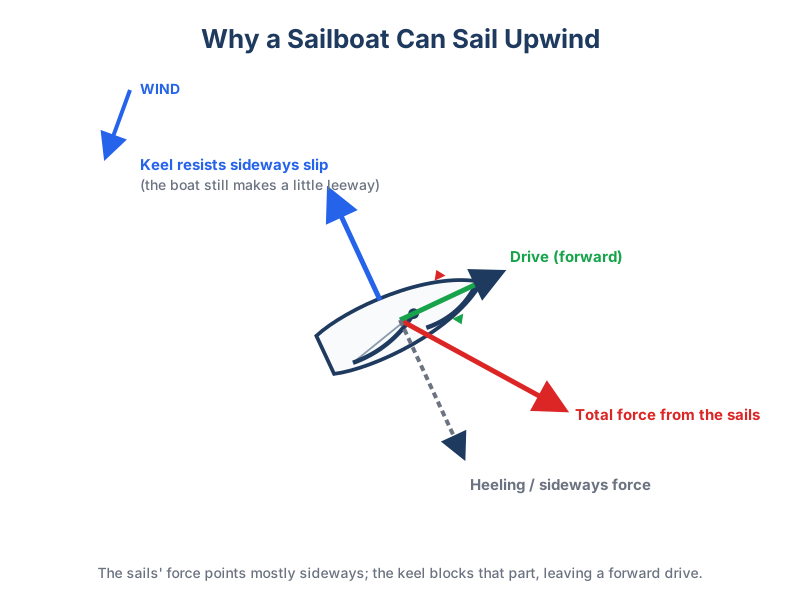
A little leeway remains: even a good keel lets the boat slip sideways by 3° to 10° when close-hauled, more in rough water or at low speed. Allow for it on the chart, as covered in the course to steer guide.
How to beat to windward
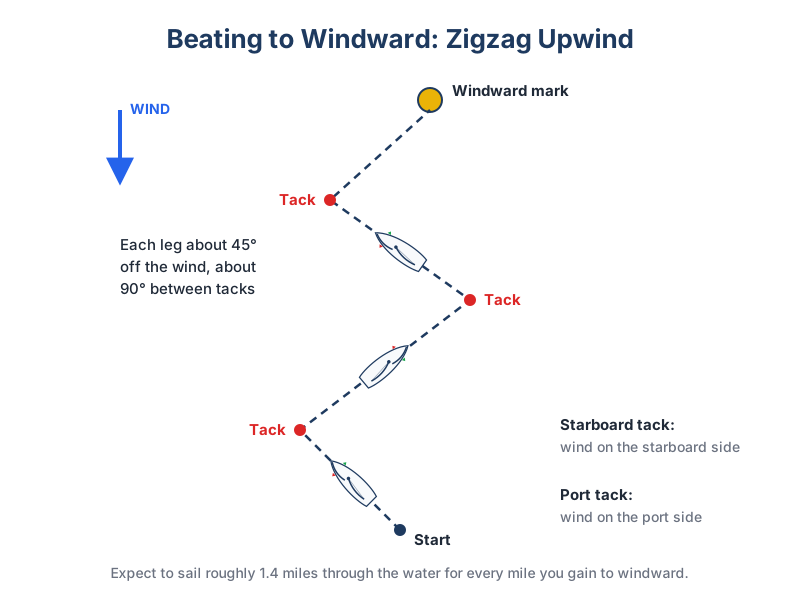
- Sheet both sails in hard and head up until the front of the jib just starts to flutter, then bear away slightly. You are close-hauled.
- Steer by the telltales, not the compass. Small wind shifts change your best course.
- When the goal is roughly abeam on the other side, tack (see how to tack and gybe).
- Sail the new tack close-hauled and repeat.
- Use the favoured tack: the one that points you closest to your goal. A wind shift that lets you point closer (a lift) is a reason to stay on that tack; a header is a reason to tack.
How to trim for sailing upwind
| Control | Light wind | Strong wind |
|---|---|---|
| Jib sheet | Slightly eased for power | In hard, or reef/furl the jib |
| Jib car | Forward (more depth) | Aft (flatter, twists the top open) |
| Mainsheet | Firm but the top batten parallel to the boom | In hard; spill wind with the traveller |
| Traveller | Up to windward of centre | Down to leeward to depower |
| Backstay / outhaul | Eased for a fuller sail | Tight to flatten the sails |
| Heel | Some heel helps the sails set | Reef when the boat heels past about 20° |
Use wind shifts: lifts and headers
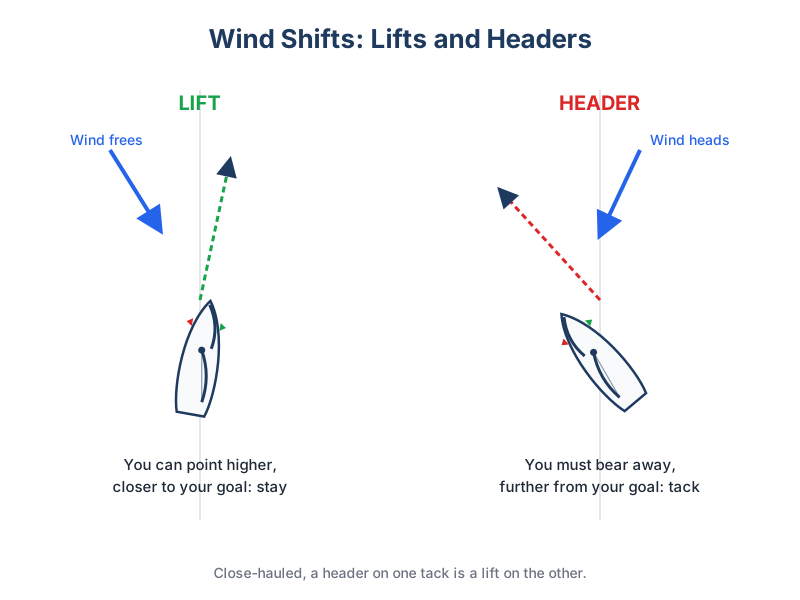
Close-hauled, the wind is never perfectly steady. If it shifts so you can point higher (a lift), stay on that tack. If it shifts so you must bear away (a header), that's the moment to tack: the same shift is a lift on the other tack. Watch the compass heading as you sail by the telltales; a change of 5° or more is a real shift.
Tide and beating
Tidal stream makes a big difference upwind. With the stream running against the wind (wind over tide), the sea is short and steep but the stream carries you upwind. With the stream on your lee bow (pushing on the leeward side of the bow), it pushes you up towards your goal. Plan long beats to go with the tide. Work out how the stream changes over the passage with the tide calculator.
A worked example
Your destination is 6 miles dead to windward. Your yacht sails at 6 knots close-hauled at 45°. Your speed made good towards the goal (VMG) is about 6 × 0.7 = 4.2 knots, so it takes about 1 hour 25 minutes. Add 5° of leeway and a 1-knot foul tide and the VMG drops to about 3 knots: roughly 2 hours. Wait for the tide to turn and the same beat could take under 1 hour 15 minutes.
How long does it take?
Because each leg is about 45° off the direct line, you sail roughly 1.4 miles through the water for every mile you gain to windward, more once leeway and tidal stream are added. A 10-mile beat in a 6-knot yacht can easily take three hours instead of under two.
Points of sail at a glance
| Point of sail | Angle to the true wind | Sails |
|---|---|---|
| In irons (no-go zone) | 0–45° | Flapping: can't sail |
| Close-hauled | About 45° | Sheeted in hard |
| Close reach | About 60° | Eased slightly |
| Beam reach | 90° | Eased about halfway |
| Broad reach | About 135° | Well out |
| Run | 180° | Fully out; watch for an accidental gybe |
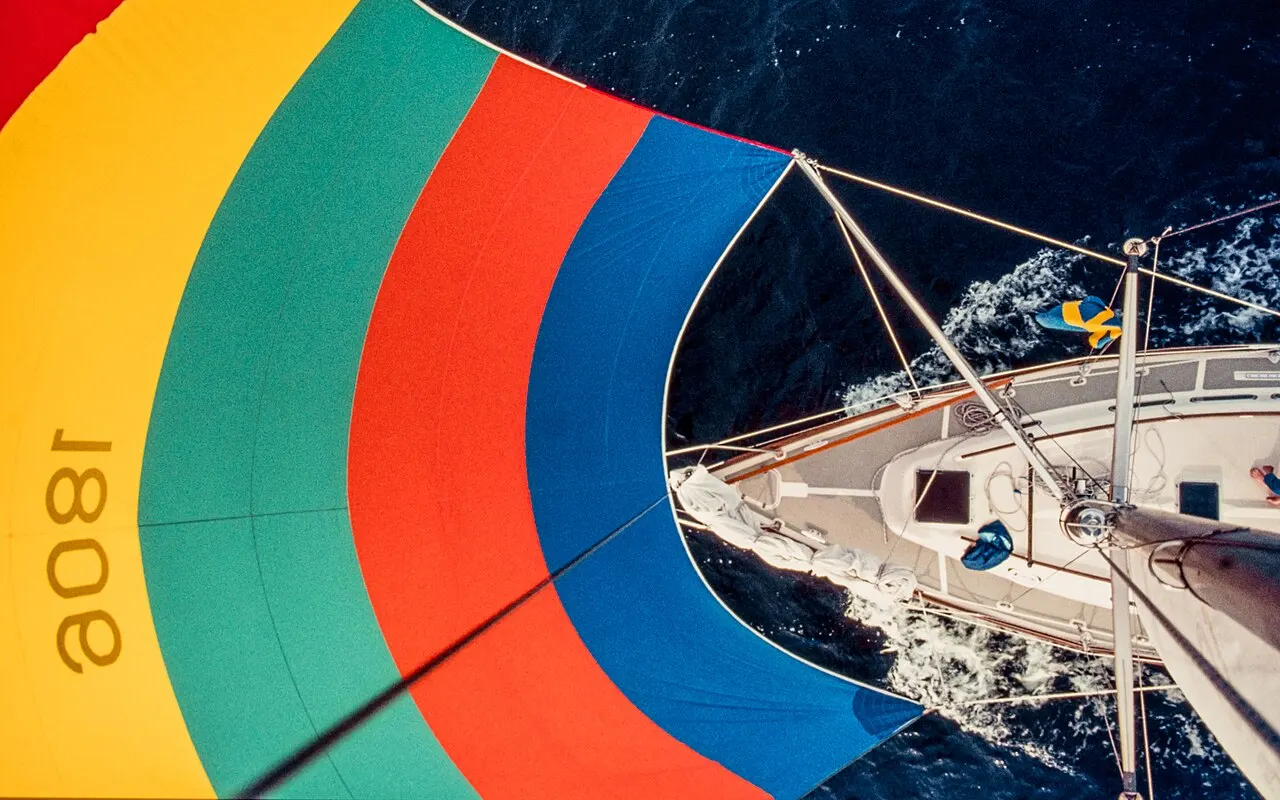
See the full set in points of sail explained and try each angle in the sail trim tool.