Sailing basics
Points of Sail Explained — Close-Hauled to Running
Published · Last checked October 2026
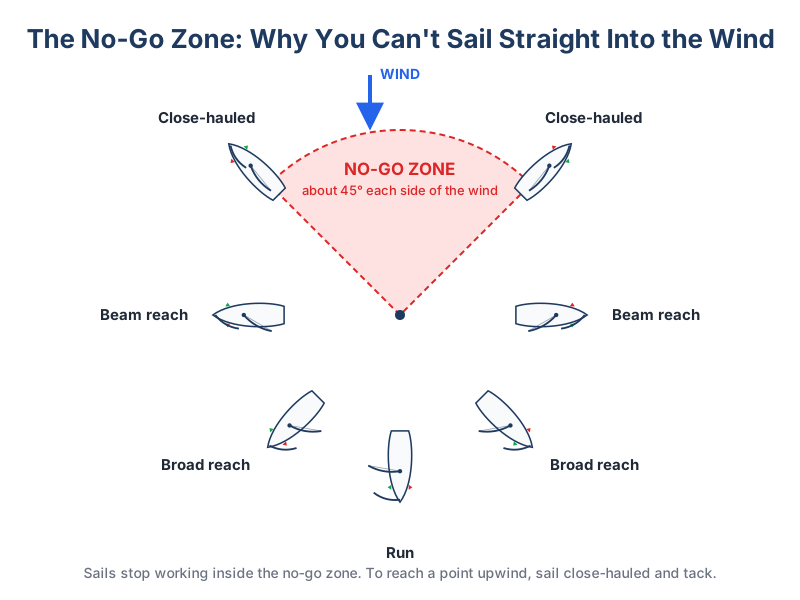
The points of sail describe the boat's angle to the wind. You cannot sail within about 45° either side of the wind (the no-go zone). Close-hauled is as close to the wind as you can sail, a beam reach has the wind on the side, a broad reach has it over the back quarter and a run has it from behind. Sails are pulled in tight close-hauled and let out progressively as you bear away.
| Point of sail | Angle to the true wind | Sails |
|---|---|---|
| In irons / no-go zone | Less than about 45° | Flapping: you cannot sail here |
| Close-hauled | About 45° | Pulled in tight |
| Close reach | About 60° | Slightly eased |
| Beam reach | 90° | Eased about halfway |
| Broad reach | About 135° | Well eased |
| Training run | About 160° | Fully out |
| Run | 180° | Fully out, perhaps goose-winged |
Tacks, tacking and gybing
- A boat is on starboard tack when the wind blows over her starboard side (the boom is out to port), and port tack when it comes over her port side.
- Tacking turns the bow through the wind, changing from one tack to the other.
- Gybing turns the stern through the wind. The boom swings across fast, so it must be controlled.
Getting upwind
To reach a destination upwind you zigzag, beating close-hauled on alternate tacks. Each tack turns you through about 90°.
Learn it in the points of sail lesson and fine-tune with the sail trim guide.
Related guides
Frequently asked questions
What is the fastest point of sail?
For most cruising yachts, a beam or broad reach. Dead downwind is usually slower, and close-hauled is slowest through the water.
Can a sailing boat sail directly into the wind?
No. Most yachts can sail no closer than about 40 to 45° to the true wind, so they zigzag (beat) to windward.