COLREGs
Right of Way Rules for Boats — Who Gives Way?
Published · Last checked October 2026
There is no 'right of way' at sea, only give-way and stand-on vessels. Between sailing boats, port tack gives way to starboard tack, and on the same tack the windward boat gives way. An overtaking vessel always keeps clear. Two power vessels meeting head-on both turn to starboard; when crossing, the one with the other on her starboard side gives way. Power generally gives way to sail, and everyone keeps clear of vessels that cannot manoeuvre.
Sailing vessels (Rule 12)
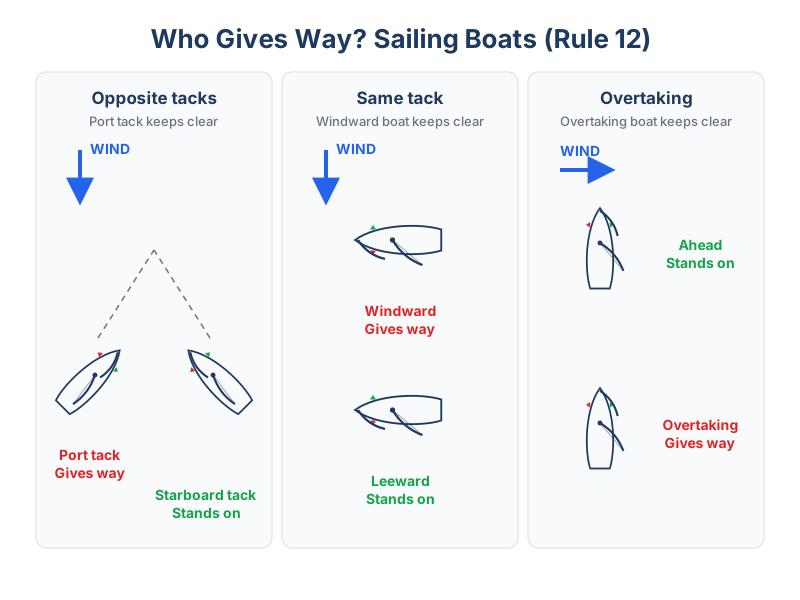
- On different tacks, the vessel on port tack (wind over her port side) keeps out of the way.
- On the same tack, the windward vessel keeps out of the way of the leeward one.
- If you are on port tack and cannot tell which tack the other boat is on, keep clear.
Any vessels
- Overtaking (Rule 13): the overtaking vessel keeps clear until finally past and clear, even a sailing boat overtaking a motor boat.
- Head-on (Rule 14): two power-driven vessels each alter to starboard and pass port to port.
- Crossing (Rule 15): the power-driven vessel with the other on her starboard side gives way and avoids crossing ahead.
The pecking order (Rule 18)
Except in narrow channels, traffic separation schemes and when overtaking, a vessel keeps out of the way of those above it in this list:
- Not under command
- Restricted in ability to manoeuvre
- Constrained by draught (others should not impede)
- Engaged in fishing
- Sailing
- Power-driven
Narrow channels (Rule 9)
Keep to the starboard side of the channel. A vessel under 20 m or a sailing vessel must not impede a vessel that can only navigate safely within the channel: in practice, keep out of the way of ships in channels.
Giving way and standing on
The give-way vessel acts early and substantially (Rule 16): a big, obvious alteration, ideally to starboard, not a series of small ones. The stand-on vessel holds her course and speed (Rule 17), but must act if the give-way vessel is clearly not doing so, and must take action herself if collision can no longer be avoided by the other alone.
Practise real situations in the who gives way trainer.
The rules in full
- Rule 5: Look-out
- Rule 7: Risk of collision
- Rule 8: Action to avoid collision
- Rule 9: Narrow channels
- Rule 10: Traffic separation schemes
- Rule 12: Sailing vessels
- Rule 13: Overtaking
- Rule 14: Head-on situation
- Rule 15: Crossing situation
- Rule 16: Action by give-way vessel
- Rule 17: Action by stand-on vessel
- Rule 18: Responsibilities between vessels
- Rule 19: Conduct of vessels in restricted visibility