COLREGs
Traffic Separation Schemes (Rule 10) for Yachts
Published · Last checked October 2026
A traffic separation scheme (TSS) splits shipping into one-way lanes. If you must cross one, do it on a heading as close as practicable to a right angle to the traffic flow, even if the tide carries you sideways. Avoid the separation zone, use the inshore traffic zone if you are under 20 m or sailing, and never impede a power-driven vessel following a lane.
The key points of Rule 10
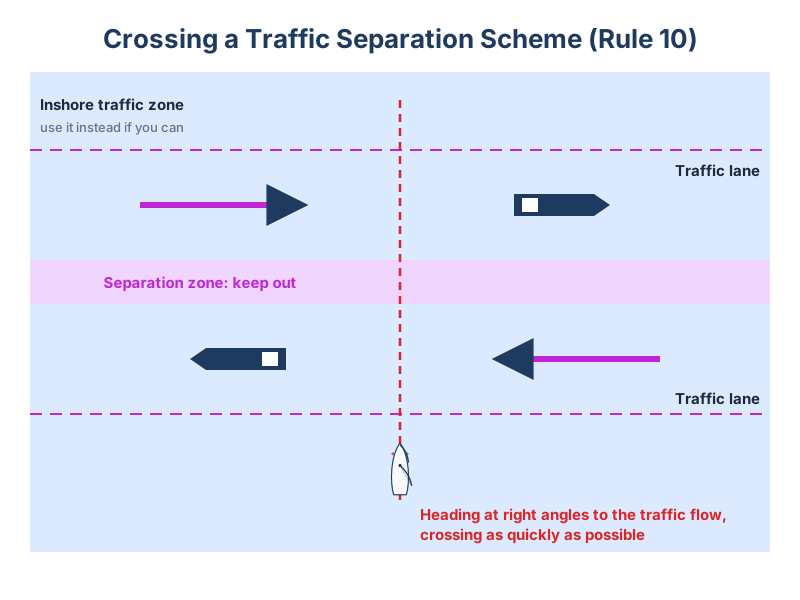
- Using a lane: go with the general direction of traffic flow and keep clear of the separation zone.
- Joining or leaving: normally at the ends; from the side at as small an angle as practicable.
- Crossing: on a heading at right angles to the general direction of traffic flow. It is the heading that matters, not the track, so the time spent in the lane is as short as possible and your intentions are obvious.
- Inshore traffic zones may be used by vessels under 20 m, sailing vessels and fishing vessels.
- Vessels under 20 m and sailing vessels shall not impede the safe passage of a power-driven vessel following a lane.
- Avoid anchoring in a TSS or near its ends.
Planning a crossing
- Choose a crossing point away from the ends and the main convergence areas.
- Plan to cross at a time when the tide will not set you into the lane ends, and in daylight with good visibility if you can.
- Motor-sail if the wind is light: you need predictable speed.
- Keep a good lookout, use AIS and radar if you have them, and monitor the VTS channel.
- Make early, obvious alterations, ideally passing astern of ships.
In the Dover Strait, the Channel Navigation Information Service (CNIS) monitors the scheme and broadcasts traffic information.
The rules in full
Related guides
Frequently asked questions
Can a sailing yacht sail along a TSS lane?
It may use a lane, going with the flow of traffic, but must not impede power-driven vessels following it. Most yachts stay clear and use the inshore traffic zone.
Why must you cross on a heading at right angles?
It minimises the time in the lane and makes your intention obvious to ships, even if the tidal stream means your track over the ground is not at right angles.