Boat handling
How to Moor a Sailboat: Pontoons and Buoys
Published · Last checked October 2026
To moor a sailboat alongside, approach slowly into the wind or tide (whichever is stronger), with fenders out and bow and stern lines ready. Stop the boat alongside, step ashore with the lines, take a turn round the cleats, then rig springs to stop the boat surging. To pick up a mooring buoy, approach it from downtide or downwind so you can stop with the buoy at the bow.
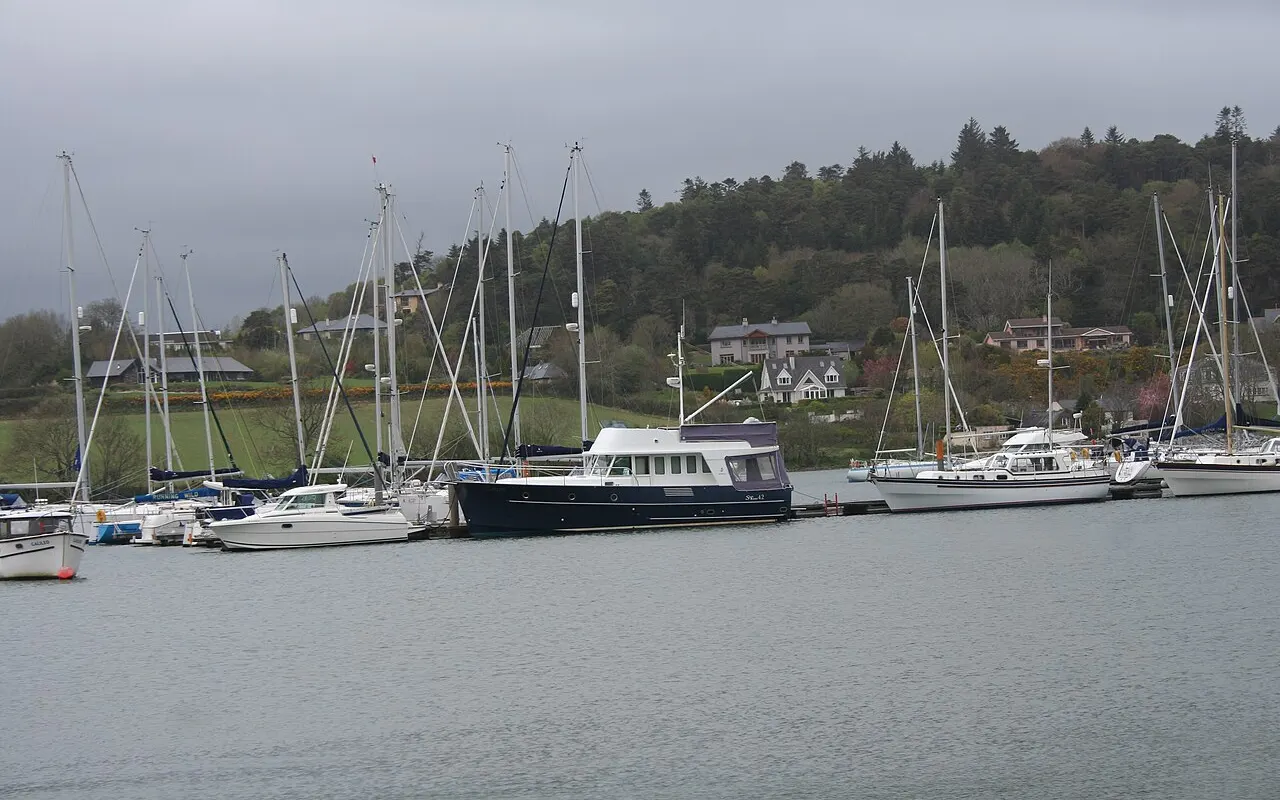
Before you come in
- Plan the berth: call the marina on VHF, ask for a berth and which side to have your fenders.
- Work out the wind and tide at the berth. Approach into whichever is stronger: it acts as your brake.
- Rig fenders on the berthing side at the widest part of the boat.
- Prepare lines: bow line and stern line led outside everything, coiled, with the end cleated on board. Rig springs too.
- Brief the crew: who steps off, with which line, and that nobody jumps or puts a hand or foot between the boat and the pontoon.
Mooring lines explained
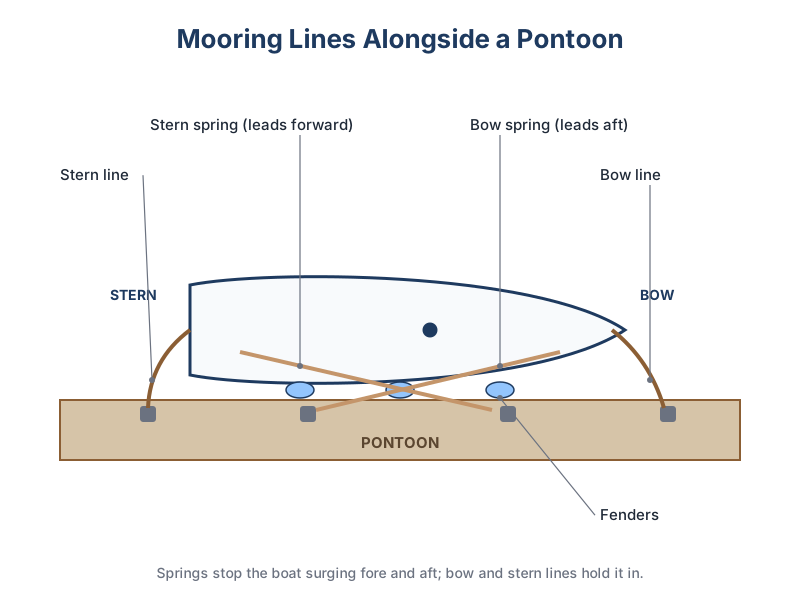
| Line | Runs from | Job |
|---|---|---|
| Bow line | Bow, forward to the pontoon | Holds the bow in |
| Stern line | Stern, aft to the pontoon | Holds the stern in |
| Bow spring | Near the bow, leading aft | Stops the boat moving forward |
| Stern spring | Near the stern, leading forward | Stops the boat moving back |
How to come alongside a pontoon
- Approach at about 30° to the pontoon, slowly: no faster than you are happy to hit it.
- Aim for the spot where the middle of the boat will stop.
- Just before arriving, turn parallel and give a short burst astern to stop.
- Crew step (don't jump) ashore from the shrouds with the bow and stern lines, and take a turn round the cleats.
- Rig the springs, adjust fenders, then tidy the lines on board.
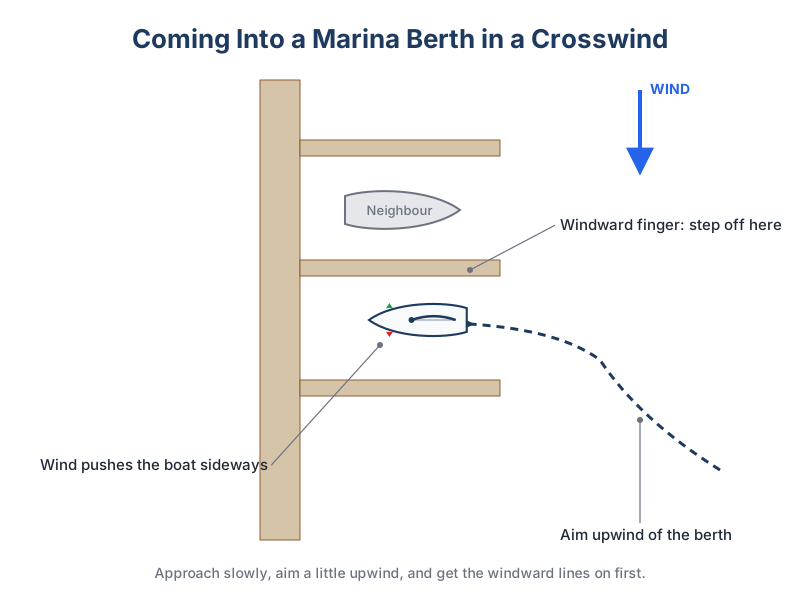
Docking with the wind blowing you off
Come in at a steeper angle and get a midships line ashore first, then motor gently ahead against it to pull the boat in. With the wind blowing you on, stop parallel a boat-width off and let the wind push you gently alongside.

How to pick up a mooring buoy
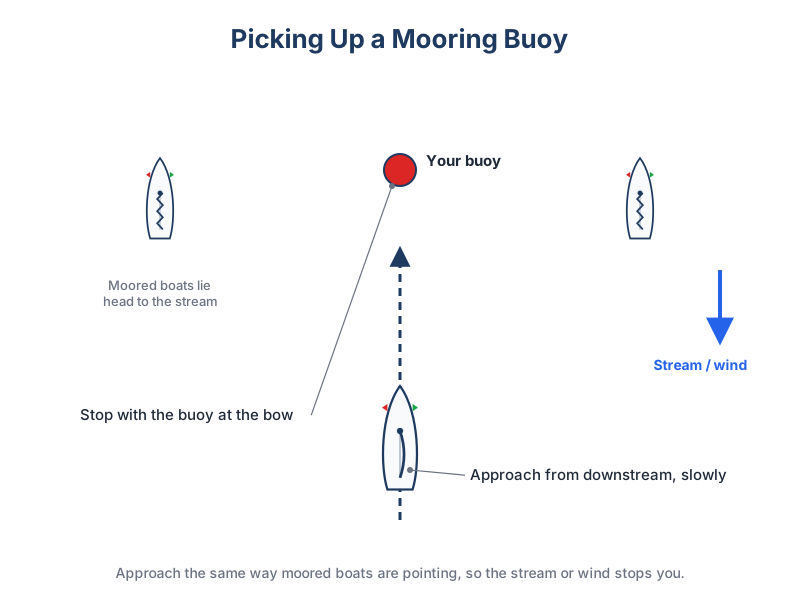
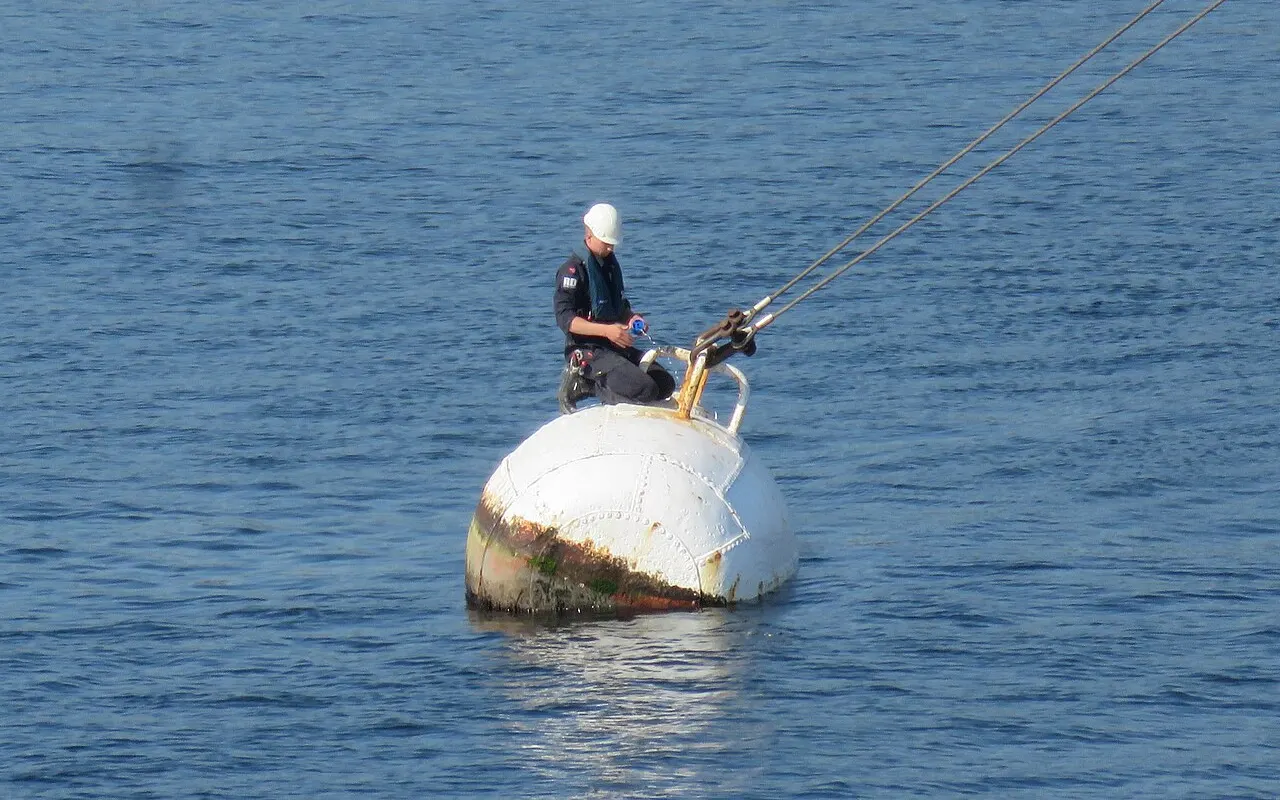
- Look at boats already moored: they lie head to the stronger of wind and tide. Approach the same way.
- Come in slowly, aiming to stop with the buoy at the bow.
- Crew point at the buoy the whole time (the helm loses sight of it under the bow).
- Pick up the pick-up line with a boathook and pass your own line through the ring or make fast the buoy's strop to the bow cleat.
- Use two lines (or a doubled line) in any wind, and check for chafe.
Med mooring (stern-to)
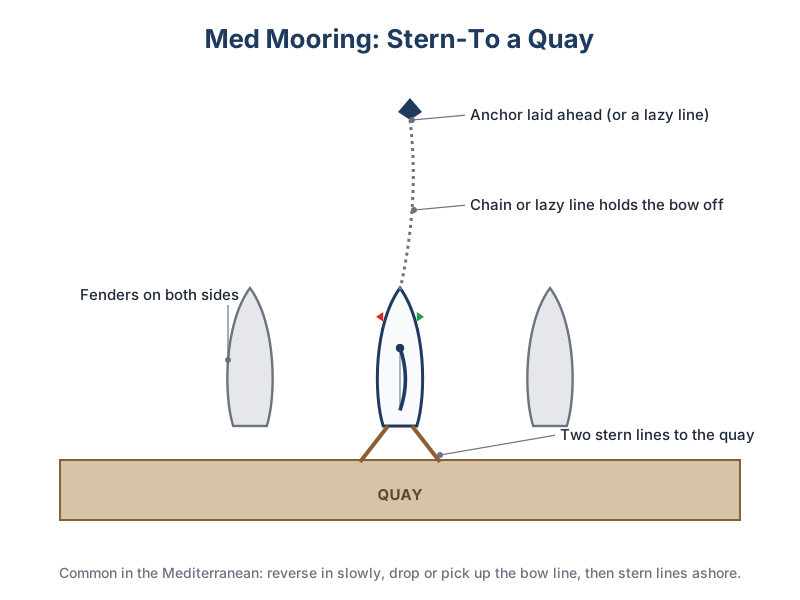
In much of the Mediterranean you berth stern-to a quay, held off at the bow by your own anchor or a lazy line (a line from a ground chain on the seabed, handed to you by the marina).
- Rig fenders on both sides and two stern lines ready to throw or hand ashore. Have the passerelle (gangplank) ready.
- Line up two to three boat lengths off the quay, stern towards it. Practise going astern in open water first: many yachts kick sideways (prop walk) in reverse.
- If you use your anchor, drop it about three to four boat lengths out and reverse slowly, paying out chain.
- Pass the stern lines ashore, then take up the anchor chain or pull the lazy line forward and make it fast at the bow.
- Adjust so the stern is a safe step off the quay, never touching it.
Rafting up
In busy harbours you may moor alongside another boat (rafting). Ask first, put out plenty of fenders, and run your own bow and stern lines ashore as well as breast lines and springs to the boat you're alongside. Cross other boats by their foredeck, not their cockpit, and keep your mast offset from your neighbour's so the rigging can't clash as you roll.
Moorings in tidal waters
Against a harbour wall or a fixed jetty the boat rises and falls with the tide. Use long lines and long springs so they stay slack enough at both high and low water, and check them at each change of tide. Floating pontoons rise with the tide, so lines there can be shorter. On a drying mooring, check the boat will sit on a safe, level bottom and that your keel type suits it.
Common mooring mistakes
- Coming in too fast. If in doubt, go round again.
- Jumping ashore. Step off when the boat is alongside; a fall between boat and pontoon is a serious injury.
- Fending off with hands or feet. Use fenders, never limbs.
- Lines led under the guardrails so they bind or chafe.
- Forgetting the springs, so the boat surges and snubs all night.
Mooring single-handed
- Rig a midships line led back to the cockpit, so you can step off with one line.
- Approach slower than usual and choose an easy berth: windward side of a pontoon, into the wind.
- Ask for help on the VHF or from neighbours. Most sailors are glad to take a line.
Leaving a berth
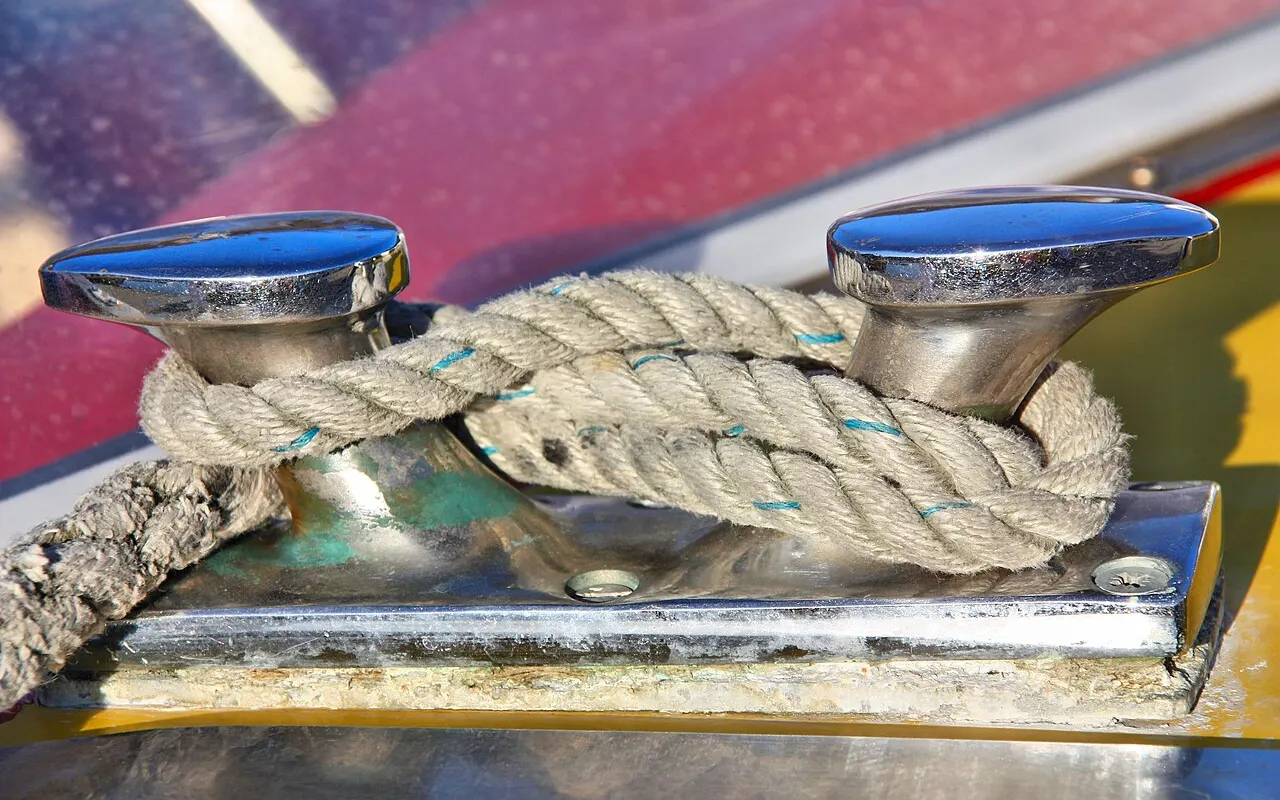
Single up to the lines you need, check wind and tide, and use a spring to swing the bow or stern out before motoring away. Learn the knots in the knot guide: the cleat hitch, bowline and round turn and two half hitches do almost all the work.