Sailing knots · Loop
How to Tie a Bowline Knot
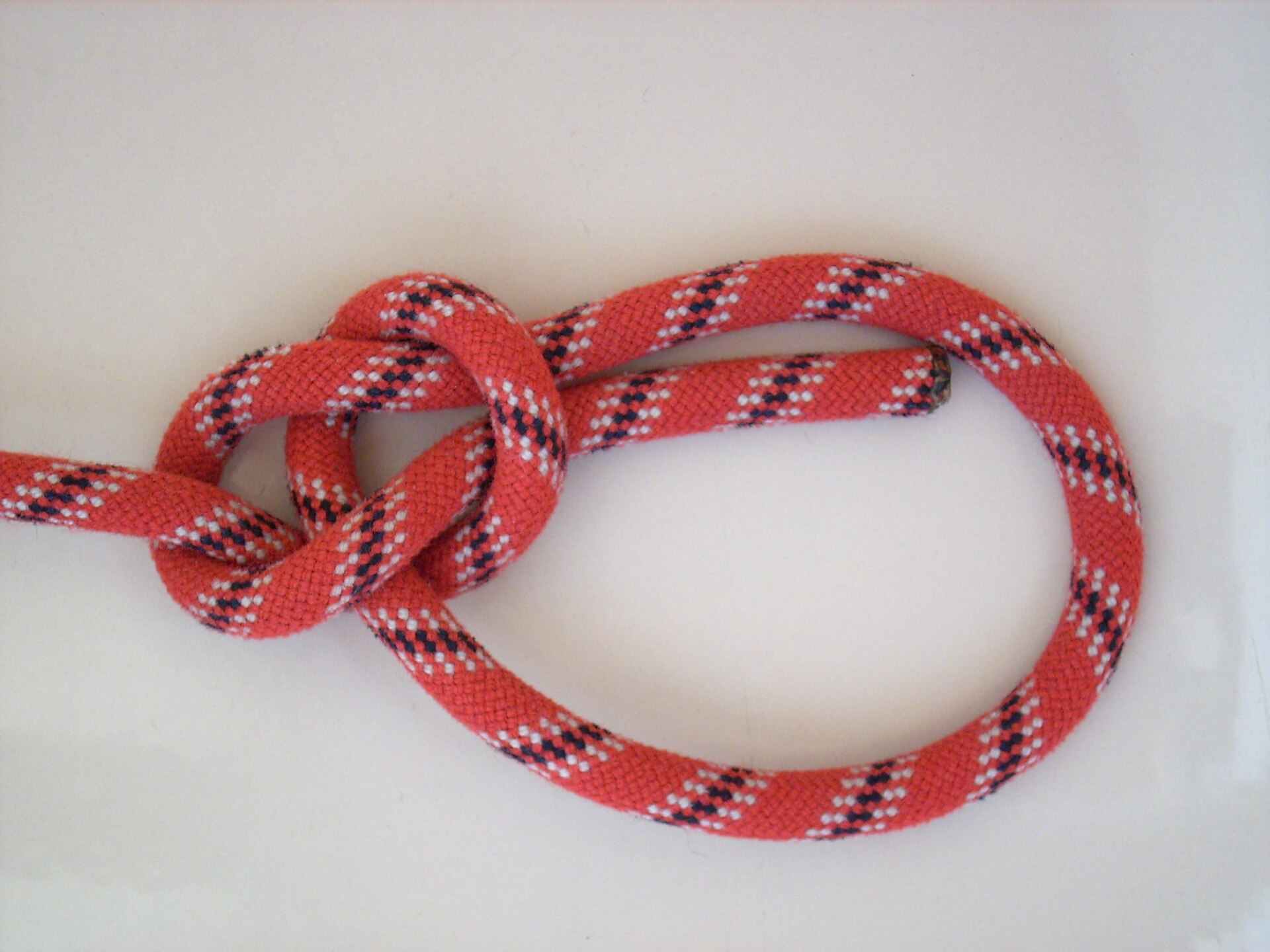
A bowline makes a fixed loop in the end of a rope that will not slip or tighten under load, yet unties easily afterwards. Make a small loop in the standing part, bring the end up through it, round behind the standing part, and back down through the small loop.
- Type
- Loop
- Used for
- Creating a fixed loop at the end of a line. Used for mooring, attaching sheets to sails, and rescue. Will not slip or jam under load.
- Strength retained
- ~65% of rope strength
How to tie a bowline, step by step
- 1
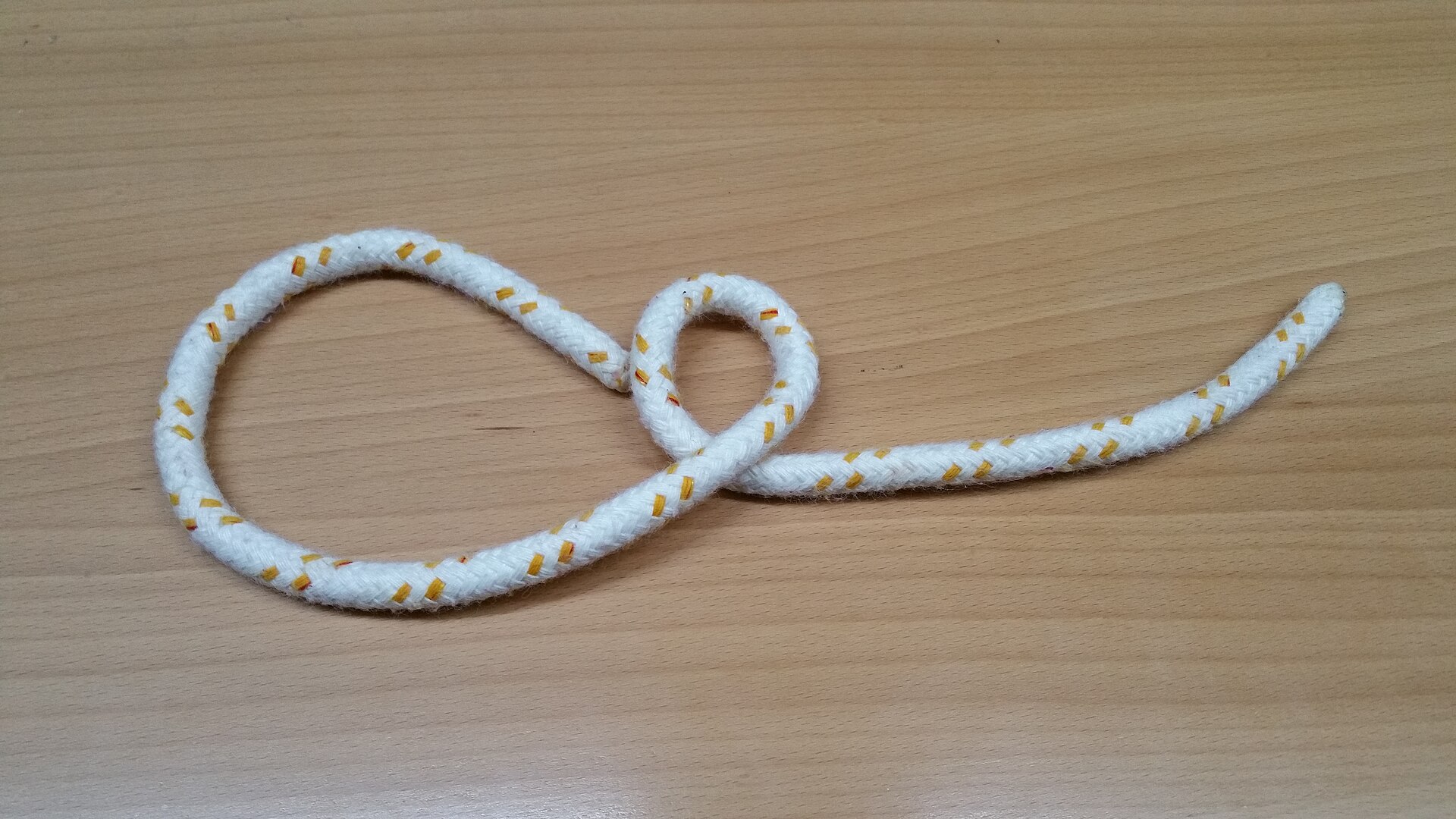
Make a small loop
Form a small overhand loop in the standing part (the 'rabbit hole'), with the working end lying on top. Leave enough tail for the size of loop you want.
Der Barbar, CC BY-SA 4.0 - 2
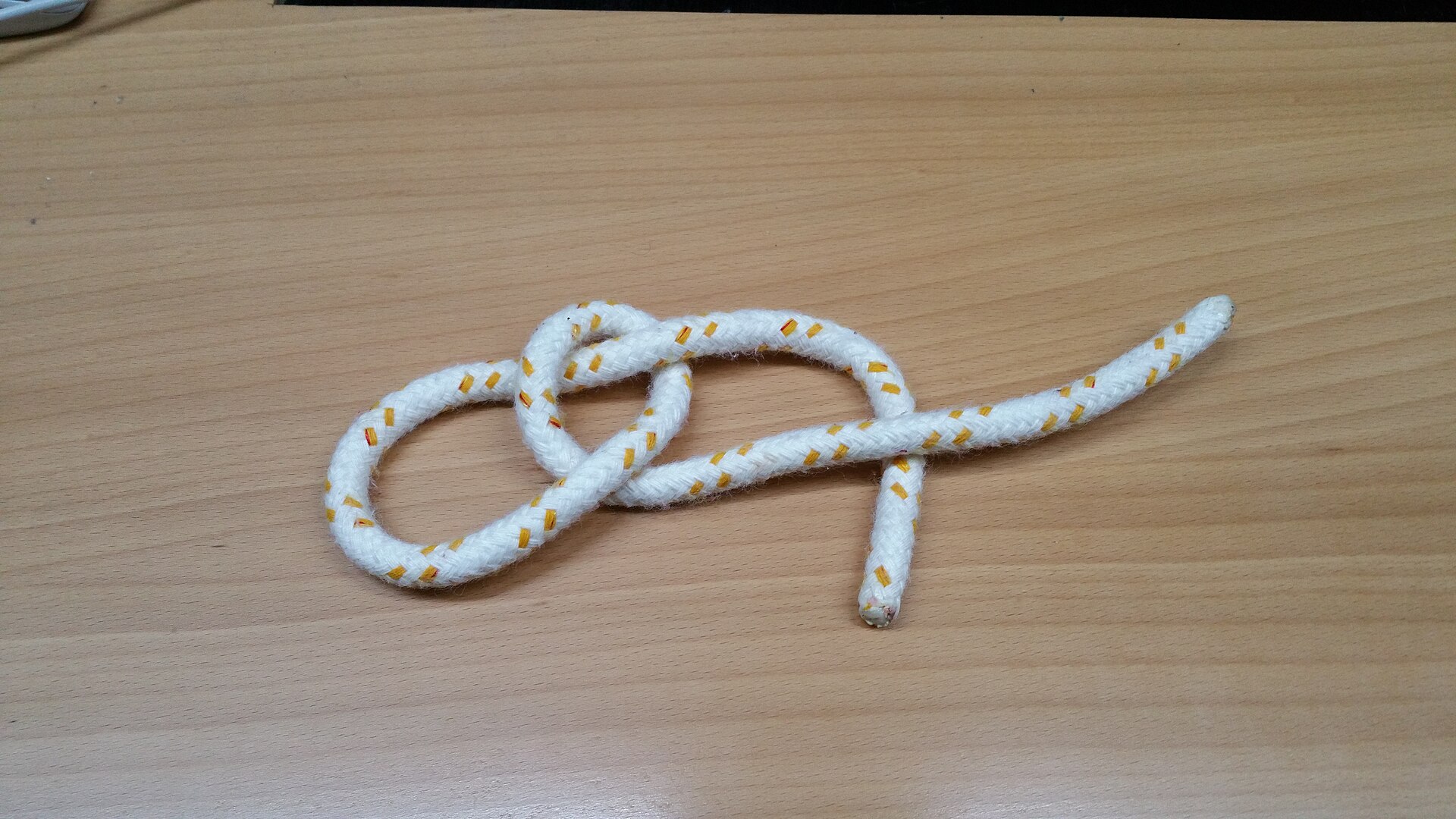
Up through the hole
Bring the working end up through the small loop from underneath — 'the rabbit comes out of the hole'.
Der Barbar, CC BY-SA 4.0 - 3
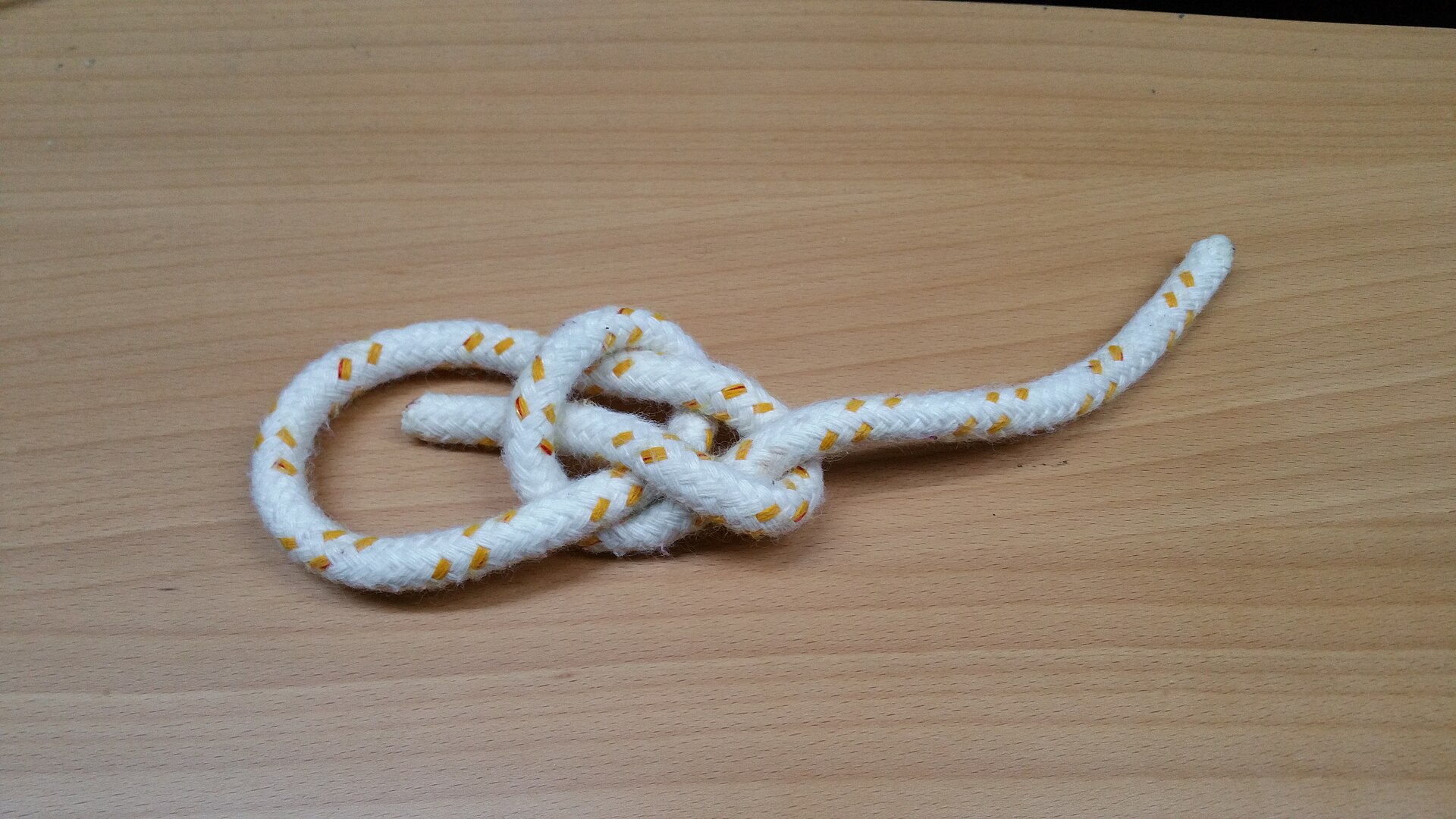
Round the tree and back down
Take the working end behind the standing part — 'round the tree' — then back down through the small loop the way it came up.
Der Barbar, CC BY-SA 4.0 - 4
Dress and tighten
Hold the working end and the side of the big loop together and pull against the standing part. Check the tail finishes inside the loop.
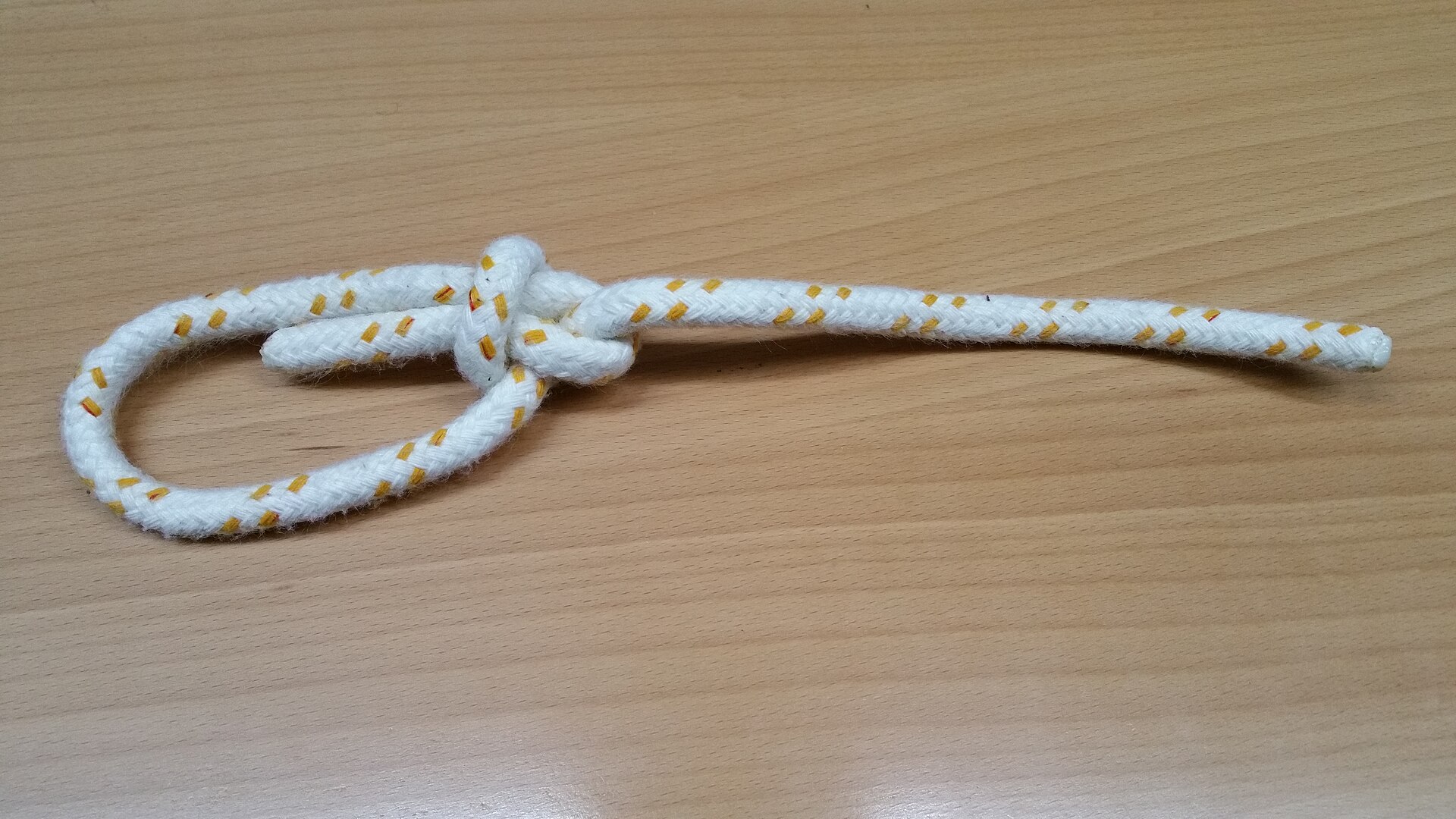
Der Barbar, CC BY-SA 4.0 - 5
Check the finished knot
You should see a fixed loop that cannot slip, with a collar around the standing part and the tail lying inside the loop.
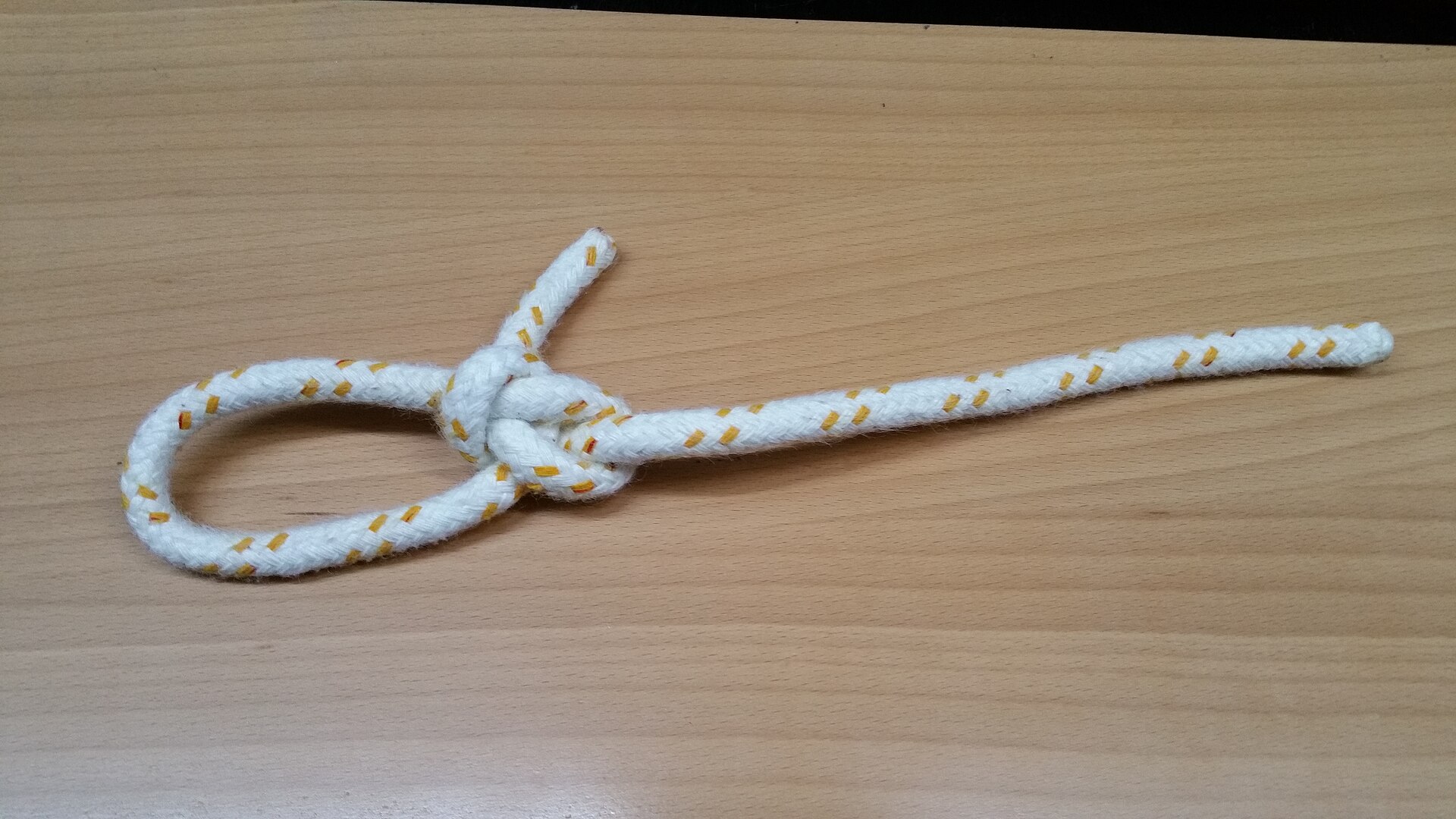
Der Barbar, CC BY-SA 4.0
Tip
Add a stopper knot (figure eight) on the tail for extra security in critical applications. A bowline can shake loose when not under load.
Common mistakes
- Making the small loop the wrong way round, so the end falls out when you load it. The working end must lie on top of the standing part when you form the loop.
- Finishing with the tail outside the big loop. This 'cowboy' or left-handed bowline is weaker and can catch on things.
- Trusting it when it is not under load. A bowline in a flogging sheet can shake loose, so check it often or back it up.
Related knots
- How to Tie a Figure Eight Stopper KnotStopper
- How to Tie a Round Turn and Two Half HitchesHitch
- How to Tie a Sheet BendBend
See all 8 knots in the knot guide or practise them in the knot game.