Anchoring
How to Anchor a Yacht — Scope, Holding and Technique
Published · Last checked October 2026
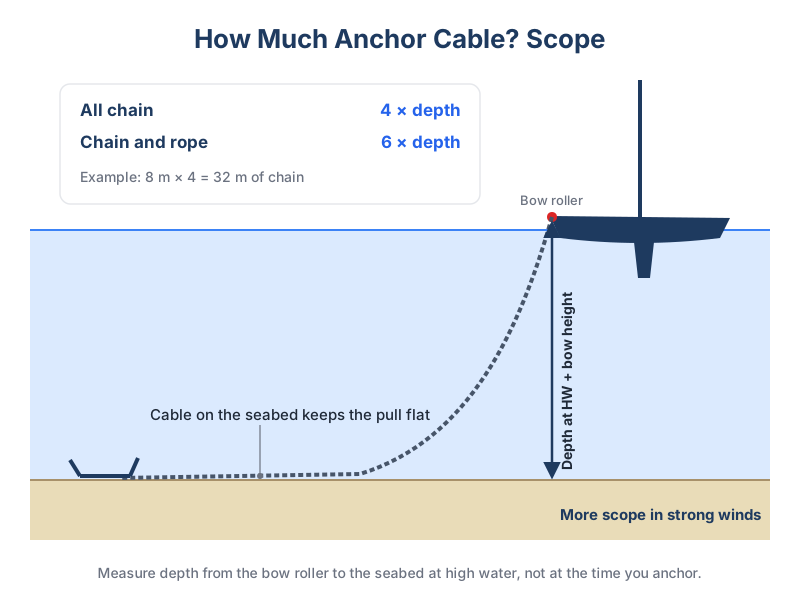
To anchor safely, pick a spot sheltered from the forecast wind with good holding (sand or mud) and swinging room, and work out the depth at high water. Approach head to wind or tide, stop, lower the anchor to the bottom, and pay out the cable as the boat falls back: at least 4 times the maximum depth with all chain, or 6 times with chain and rope. Then reverse gently to dig it in, take transits to check it holds, and hoist a black ball by day or an all-round white light at night.

Choosing the spot
- Shelter from the wind and swell forecast overnight, not just from the wind blowing now.
- Holding: sand and mud are good; weed, rock and soft silt are poor. Check the seabed letters on the chart (S, M, R, Wd).
- Depth at high water, plus enough water under the keel at low water.
- Swinging room clear of other boats, moorings and dangers when the wind or tide turns.
- Not in a channel, over cables, or where anchoring is prohibited.
How much cable (scope)
| Cable | Minimum | In strong winds |
|---|---|---|
| All chain | 4 × max depth | 6 × or more |
| Chain and rope | 6 × max depth | 8 × or more |
Setting and checking
- Approach slowly head to wind (or tide, if it is stronger) and stop where you want the anchor.
- Lower the anchor to the seabed; don't just drop the whole cable in a pile.
- Let the boat drift back, paying out cable steadily.
- Snub the cable to turn the boat, then reverse gently to dig the anchor in. Feel the cable for juddering, which means dragging.
- Take two transits or bearings and set an anchor alarm on the plotter.
- Hoist the anchor ball or switch on the anchor light.
Worked example
Related guides
Frequently asked questions
How much anchor chain should I let out?
At least four times the maximum depth (at high water) with all chain, more in strong winds or poor holding.
How do I know if my anchor is dragging?
Watch transits or bearings of fixed objects, set an anchor alarm on the GPS, and feel the chain: a vibrating, juddering chain often means the anchor is bumping over the seabed.