Boat handling
How to Heave To: Step-by-Step Guide
Published · Last checked October 2026
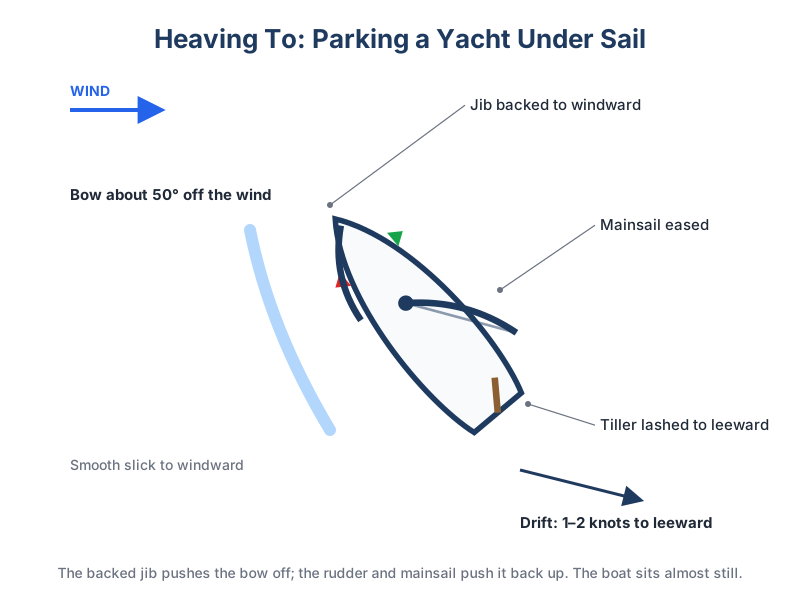
To heave to, sail close-hauled and tack without releasing the jib sheet, so the jib is held aback on the new windward side. Then ease the mainsail and lash the tiller to leeward (or the wheel to windward). The jib pushes the bow away from the wind and the rudder pushes it back, so the boat sits about 50° off the wind, drifting slowly sideways at 1 to 2 knots.
What does heave to mean?
Heaving to parks a sailing boat without dropping the sails or anchoring. It's the sailor's pause button: the motion becomes calmer, the boat steers itself, and the crew can reef, eat, rest, deal with a problem or take a fix. It's taught on RYA courses from Day Skipper practical upwards and is a standard heavy-weather tactic.
How to heave to, step by step
- Check there is sea room to leeward. You will drift downwind, slowly but continuously.
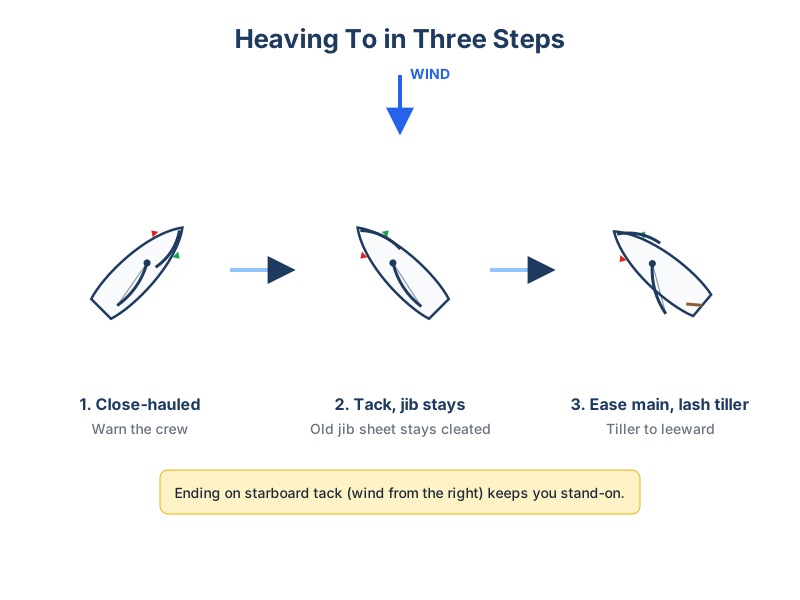
- Sail close-hauled.
- Warn the crew: "Ready to heave to."
- Tack, but leave the old jib sheet cleated. Don't release it and don't sheet in the new one. The jib backs against the shrouds on the new windward side.
- Ease the mainsheet until the mainsail is barely drawing.
- Put the tiller to leeward (wheel to windward) and lash it there.
- Let the boat settle. Adjust the mainsheet and tiller until it lies steadily 45° to 60° off the wind with little forward speed.
What heaving to looks like
- The boat forereaches (moves forward) slowly and drifts to leeward at about 1 to 2 knots.
- A smooth slick forms on the windward side as the keel slides sideways. It calms breaking waves approaching from windward.
- The motion is much easier than sailing to windward, and the boat heels less.
When to heave to
| Situation | Why it helps |
|---|---|
| Reefing | The boat is steady and the mainsail is depowered, so it's easy to pull down a reef |
| Rest, meals, navigation | The boat looks after itself while the crew eat, sleep or plot |
| Heavy weather | Waits out a blow with an easy motion and sea room to leeward |
| Man overboard | Stops the boat quickly close to the casualty (part of the RYA heave-to recovery method) |
| Waiting for tide or daylight | Holds you off a harbour entrance until it's safe to go in |
Heaving to vs other heavy-weather tactics
| Tactic | What you do | When it suits |
|---|---|---|
| Heaving to | Jib backed, main eased, helm to leeward | Moderate gales with sea room; resting and reefing |
| Forereaching | Sail slowly close-hauled under tiny sail, no backed jib | Boats that won't heave to; making slow progress |
| Lying a-hull | All sail down, helm lashed, boat lies beam-on | Not recommended: exposes the beam to breaking seas |
| Running off | Run downwind under bare poles or a scrap of sail, often towing a drogue | Big breaking seas with plenty of sea room downwind |
| Sea anchor | A parachute-shaped anchor off the bow holds the boat head to sea | Multihulls and long offshore passages |
Heaving to after a man overboard
The RYA teaches heaving to as one way of stopping a yacht near someone who has fallen in. It keeps the boat close, slows it right down and leaves the crew free to act.
- Shout "Man overboard!", throw a lifebuoy and danbuoy, and point at the casualty without taking your eyes off them.
- Tack straight away without releasing the jib sheet, so the boat heaves to close upwind of the casualty.
- Press the DSC distress button and send a Mayday. See how to make a Mayday call.
- The boat drifts slowly downwind towards the casualty. Check for lines in the water, then use the engine if needed to make the final approach.
- Recover them with a lifting sling or the man overboard recovery gear your boat carries.
How to practise heaving to
- Try it in a force 3 to 4 first, on both tacks, and note where the tiller and mainsheet end up.
- Then try it with one reef in and a partly furled genoa, which is how you'll use it in a blow.
- Time how far you drift in 10 minutes with the GPS, so you know how much sea room you need.
- On a wheel-steered boat, find a quick way to lock the wheel (a brake or a line round a spoke).
How to get going again
Release the tiller lashing, let go of the backed jib sheet and sheet it in on the leeward side, trim the main and bear away. You're sailing again on the same tack.
Common problems
- Boat keeps tacking itself: ease more mainsail or put the tiller less far to leeward.
- Boat sails off fast on a reach: sheet the main in a little and push the tiller further to leeward.
- Modern fin-keel boat won't settle: try a smaller or partly furled headsail, or a reefed main. Practise in moderate winds before you need it.
Heaving to is one of several heavy-weather tactics. It also goes well with when and how to reef.