Survival
What Is a Liferaft and How Does It Work? A Sailor's Guide
Published · Last checked October 2026
A liferaft is an inflatable survival craft packed in a canister or valise. To launch it, tie the painter to a strong point, throw the raft over the leeward side and pull the painter all the way out until a sharp tug fires the gas cylinder, which inflates the raft in under a minute. It has a canopy, ballast pockets to resist capsize and a basic survival pack. You board it only as a last resort, when the yacht is sinking.
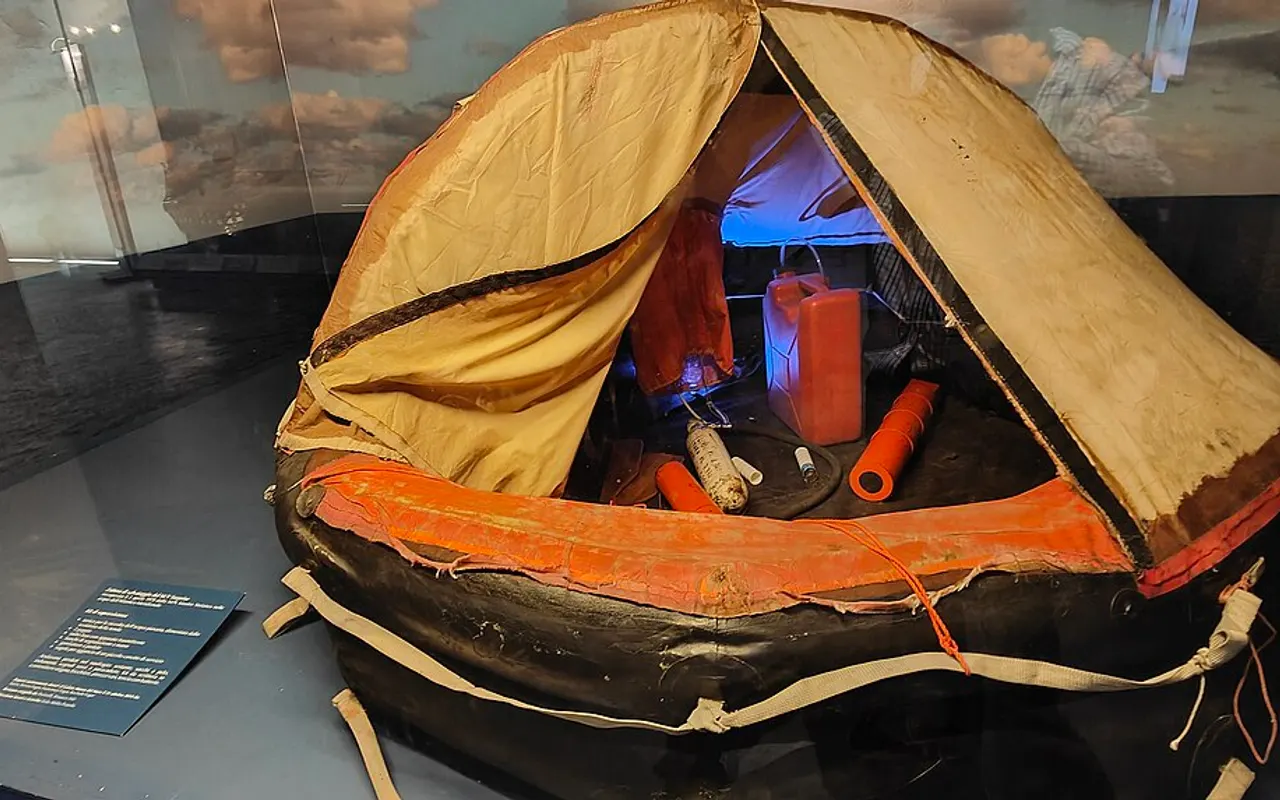
What a liferaft is
A liferaft is a buoyancy tube and canopy folded around a CO2 cylinder. Rafts are sized by the number of people they carry, typically 4, 6 or 8 for yachts. They are stored on deck in a hard canister on a cradle, or in a soft valise below. Offshore rafts (ISO 9650-1) have better equipment packs than coastal rafts.
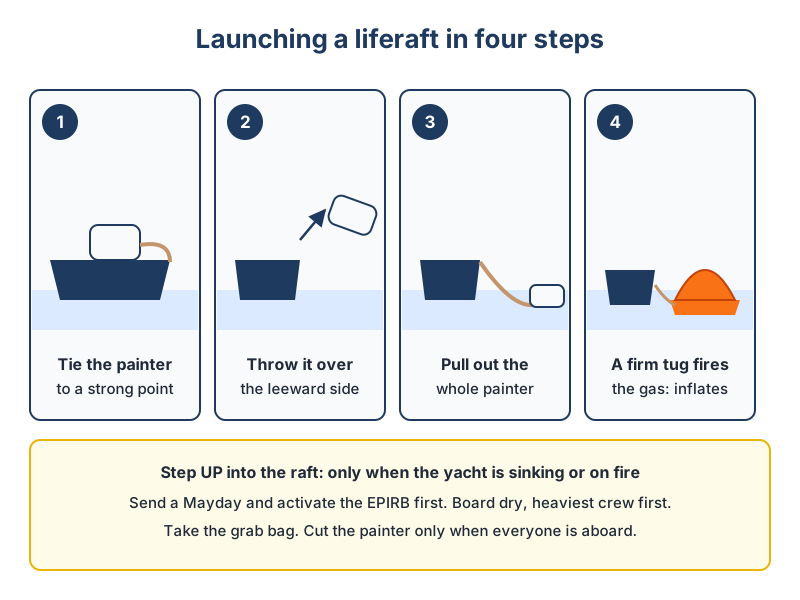
How to launch it
- Decide to abandon only if the yacht is definitely sinking or on fire. 'Step up into the liferaft': stay with the boat as long as it floats.
- Send a DSC distress alert and Mayday first, and activate the EPIRB.
- Check the painter is tied to a strong point on the boat.
- Release the lashings and throw the raft over the leeward side, where the boat shelters it.
- Pull the painter out. It may be 10 m or more long. A final firm tug fires the cylinder.
- Pull the inflated raft alongside and board directly from the boat, keeping as dry as possible.
What is inside
| Item | Purpose |
|---|---|
| Sea anchor (drogue) | Slows drift and keeps the raft stable |
| Paddles, bailer and sponges | Manoeuvring and keeping dry |
| Flares and a torch | Signalling rescuers |
| Repair kit and pump | Fixing leaks and topping up tubes |
| Seasickness tablets, first aid kit | Survival; offshore packs add water and rations |
Hydrostatic release and servicing
Canister rafts are often secured with a hydrostatic release unit (HRU), which frees the raft automatically if the boat sinks before you can launch it. The painter's weak link then inflates the raft on the surface. Rafts must be serviced by an approved station at the interval set by the manufacturer, commonly every one to three years, and HRUs have expiry dates.
Surviving in the raft
Stream the drogue, close the canopy, take seasickness tablets straight away, keep warm and dry, and post a lookout. Use flares only when you can see or hear rescuers. Learn more in the sea survival lesson and fire, flooding and abandon ship.