ICC and inland waters
What Is CEVNI? The Inland Waterways Rules Explained
Published · Last checked October 2026
CEVNI (Code Européen des Voies de la Navigation Intérieure) is the European code of rules for inland waterways: rivers, canals and lakes. If you want to skipper a boat on European inland waters, such as the Rhine, French canals or Dutch waterways, you'll usually need an ICC with an inland endorsement, and to get that from the RYA you must pass the CEVNI test.
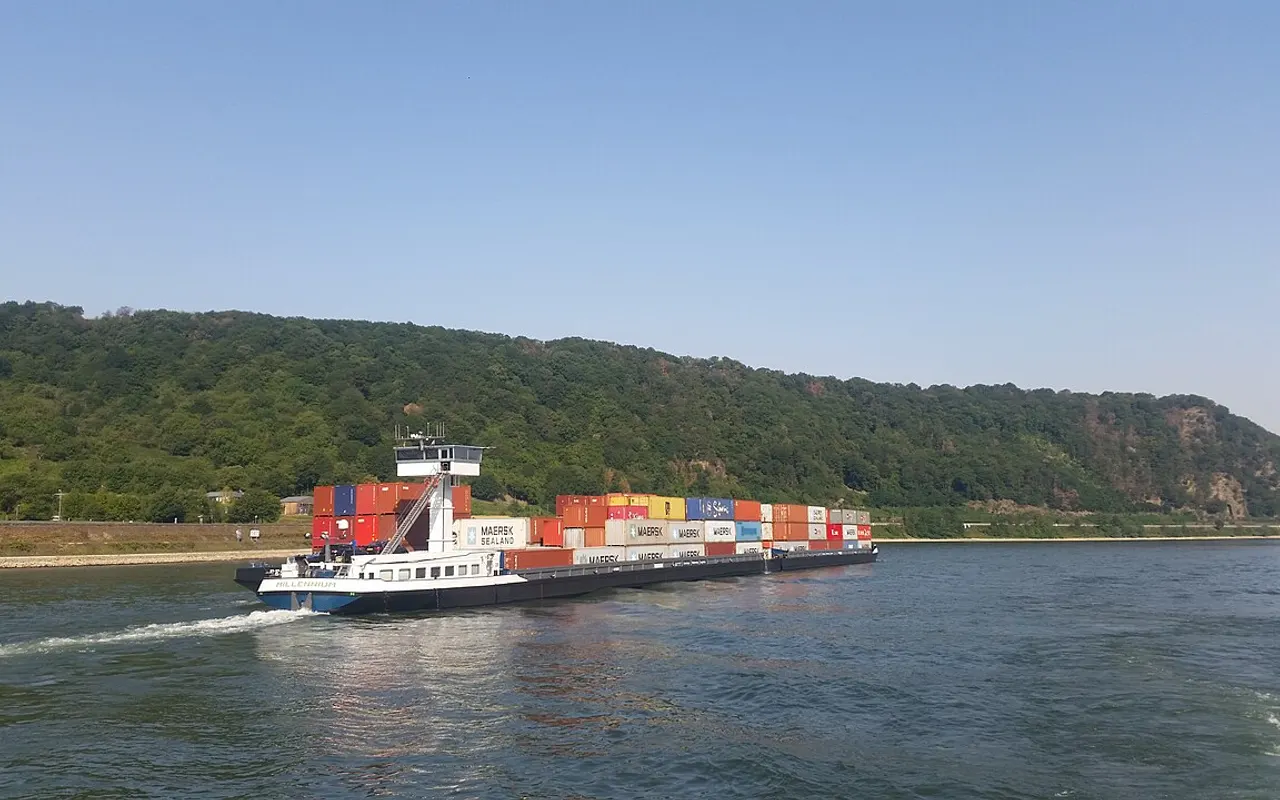
What CEVNI covers
CEVNI is drawn up by the UN Economic Commission for Europe (UNECE) and adopted, with local variations, by countries with linked inland waterways. Think of it as the inland counterpart to the COLREGs. It covers:
- Signs on banks and bridges: prohibitions (red), mandatory instructions, restrictions, recommendations and information (blue).
- Lights and day marks for different kinds of vessels, including vessels carrying dangerous goods (blue cones).
- Sound signals, which differ from sea signals in places.
- Rules of the road on rivers, including how small craft must keep clear of commercial traffic.
- Buoyage and marking of the fairway and its banks.
Do I need CEVNI?
Many European countries expect leisure skippers on their inland waters to carry an ICC endorsed for inland use. For UK residents, the RYA issues the ICC; to add the inland ("C") category you pass the CEVNI test as well as showing practical competence. Requirements vary by country and change, so check with the charter company and the RYA before you go.
How the RYA CEVNI test works
- Study the RYA CEVNI handbook, which explains the signs, lights and rules.
- Take the test: a multiple-choice paper, online or at an RYA training centre.
- Pass, and the CEVNI endorsement can be added to your ICC application.
Key differences from sea rules
| Topic | At sea (COLREGs) | Inland (CEVNI) |
|---|---|---|
| Who gives way | Power gives way to sail in most cases | Small craft keep clear of commercial vessels |
| Signs | Few, mostly buoyage | Many bank and bridge signs with legal force |
| Blue flag/light | No special meaning | Shows which side a vessel is passing on |
| Sound signals | Defined in COLREG Rule 34 | Similar, plus extra inland signals |
Common CEVNI signs to learn first
| Sign | Look | Meaning |
|---|---|---|
| A.1 | Red-bordered white board with a red horizontal bar | No entry |
| A.5 | Red-bordered sign with a crossed-out anchor | No anchoring |
| B.1 | Blue-bordered sign with an arrow | Proceed in the direction shown |
| E.5 | Blue sign with a white P | Berthing (mooring) permitted |
| C.1 | Red-bordered sign showing a reduced depth | Depth of water is limited |
Signs fall into groups: A (prohibitions), B (mandatory), C (restrictions), D (recommendations) and E (information). Learning the colour logic (red for 'don't', blue for 'do' or 'information') gets you most of the way.
Locks, bridges and commercial traffic
Inland skippers spend a lot of time at locks and lifting bridges. Red and green lights control entry, and you'll often wait for commercial barges to enter first. Keep fenders out on both sides, have lines ready fore and aft, and never tie off solidly in a rising or falling lock. Barges are long, slow to stop and have big blind spots, so keep well clear.
CEVNI for UK sailors chartering in Europe
Popular inland cruising grounds such as the Canal du Midi, the Dutch waterways, Belgian canals and the River Rhine all use CEVNI-based rules. Charter companies ask for different paperwork in each country, so check whether you need an ICC with the inland (C) endorsement, a local licence, or just a handover briefing.