Anchoring
How Much Anchor Chain to Let Out: Scope Explained
Published · Last checked October 2026
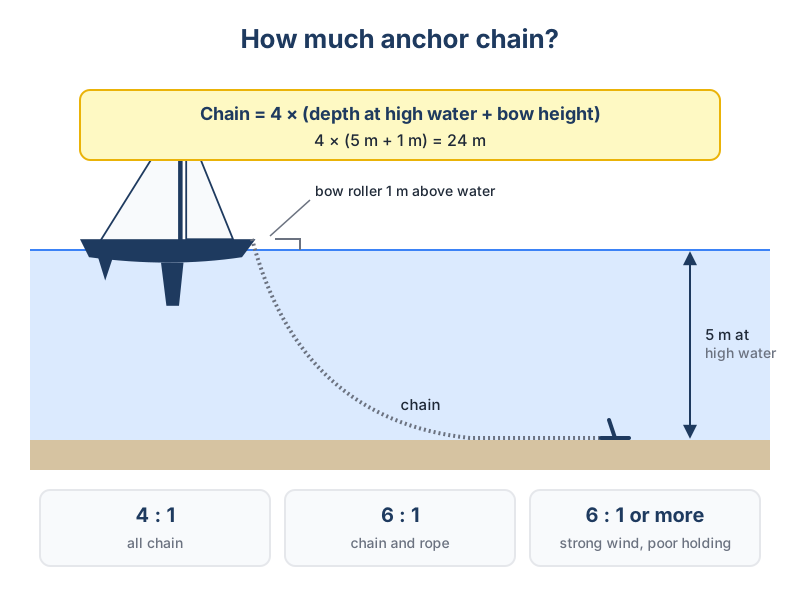
Let out at least four times the maximum depth of water for all-chain, and around six times for a chain-and-rope rode. Measure depth at high water, not the depth when you arrive, and add the height of the bow roller above the water. So in 5 m at high water with a 1 m bow, let out at least 24 m of chain. In strong wind or poor holding, increase the scope to 6:1 or more if swinging room allows.
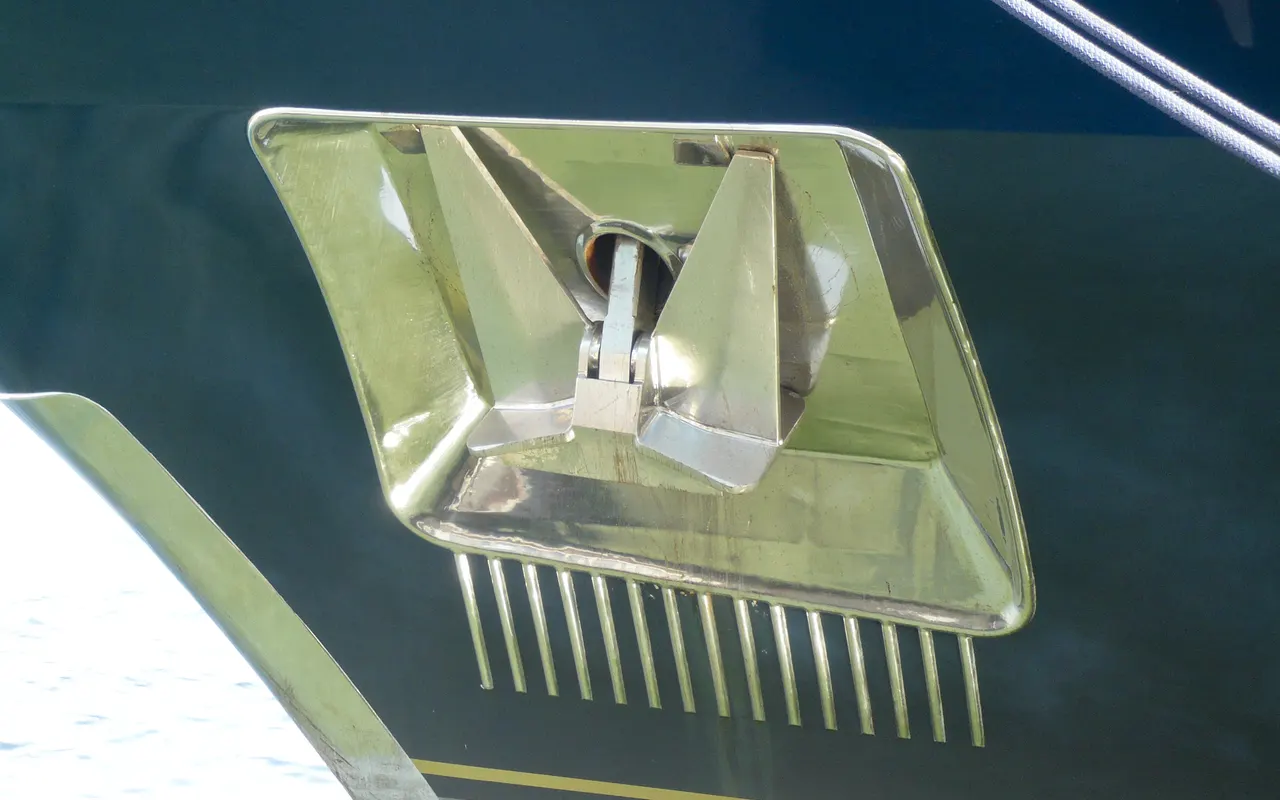
What scope means
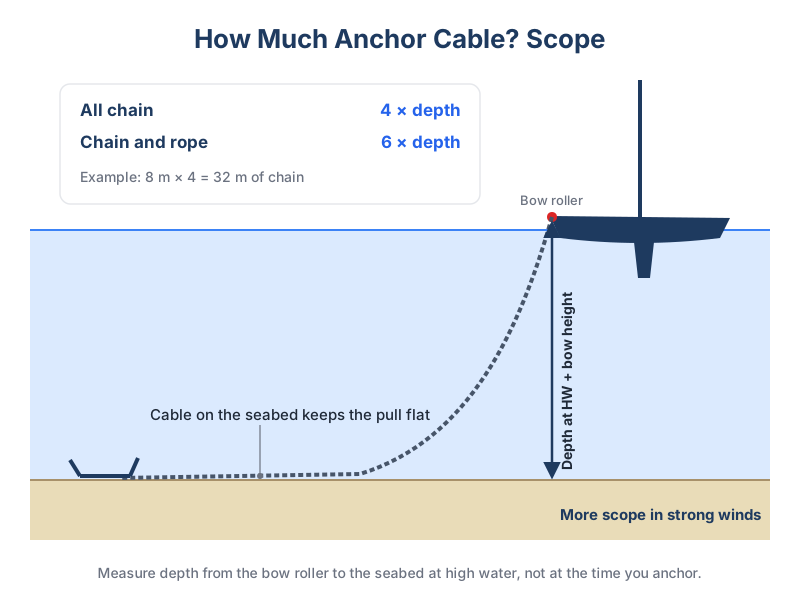
Scope is the ratio of the length of rode let out to the vertical distance from the bow roller to the seabed. A longer scope pulls on the anchor more horizontally, which is what makes it dig in and hold. A short scope lifts the shank and can break the anchor out.
The calculation
- Find the depth now from the echo sounder, and check the tide table for how much more water there will be at the next high water.
- Add the height of the bow roller above the water (freeboard).
- Multiply by the scope ratio: 4 for all-chain, 6 for chain and rope.
Example: 3 m now, rising 2 m by high water, 1 m freeboard. Maximum distance is 6 m. All-chain at 4:1 is 24 m; rope rode at 6:1 is 36 m. The rule of twelfths helps if you need the height at a time between tides.
| Conditions | All chain | Chain and rope |
|---|---|---|
| Settled, good holding, lunch stop | 4:1 | 6:1 |
| Overnight, moderate breeze | 5:1 | 7:1 |
| Strong wind or poor holding | 6:1 or more | 8:1 or more |
Things that change the answer
- Swinging room: more chain means a bigger circle. Check the boat will clear other boats, rocks and shallows at low water.
- Holding ground: sand and mud hold well; weed and rock less so.
- Wind forecast: if it is going to blow, let out more before it does.
- Marking chain: paint or tag the chain every 5 or 10 m so you know what is out.
The how to anchor a yacht guide covers the full process, and the anchoring lesson works through examples.