Pressure
How to Read a Barometer for Sailing
Published · Last checked October 2026
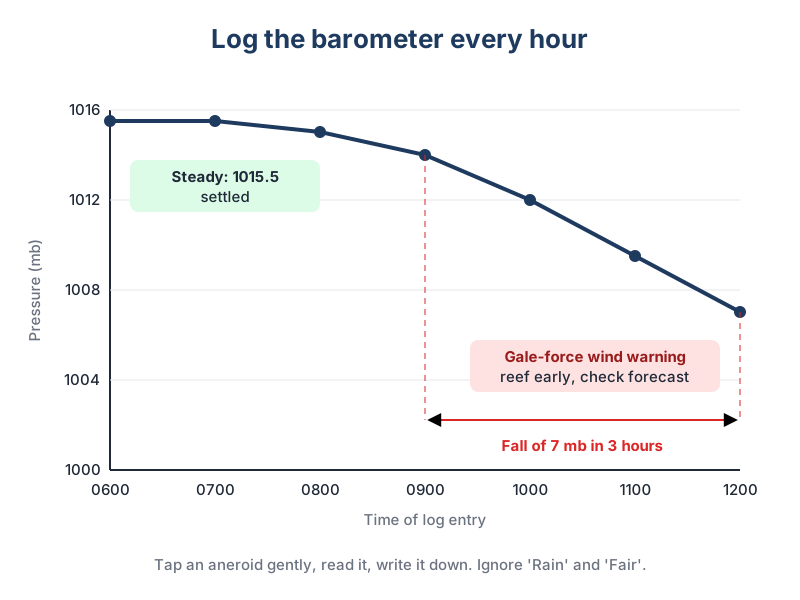
To read a barometer for sailing, tap it gently (for an aneroid dial), note the reading in millibars and log it every hour. Ignore the 'Rain' and 'Fair' words on the dial: what matters is the trend. Steady pressure means settled conditions; a slow fall means change on the way; a fall of more than about 6 mb in three hours warns of gale-force wind. Compare your trend with the forecast to spot weather arriving early.
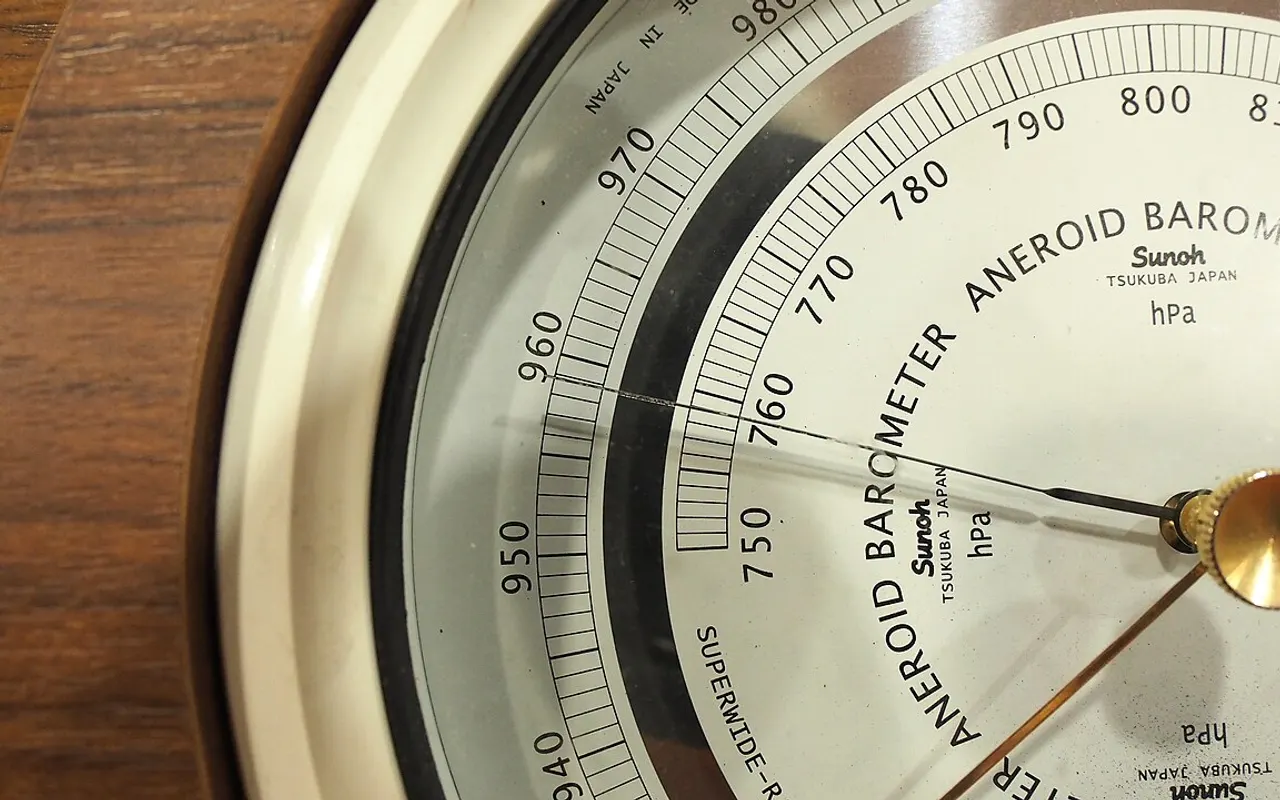
Types of barometer aboard
- Aneroid dial: the traditional brass barometer with a moving needle and a setting hand. Reliable, no power needed.
- Barograph: a recording barometer that draws or stores a pressure trace. The trace makes trends obvious.
- Electronic: built into chartplotters, instruments, watches and phones. Many show a three-hour or 24-hour graph, which is ideal.
Any of these will do the job. What counts is that you read it regularly and write the figure down.
Setting and reading an aneroid barometer
- Set it to sea-level pressure once by comparing with a nearby coastal station report or a reliable app, using the adjusting screw on the back.
- Before each reading, tap the glass lightly. The needle can stick, and tapping lets it settle.
- Read the pointer against the millibar scale, not the weather words.
- Turn the brass setting hand so it lies over the needle. Next time you read it, the gap between the two shows how far pressure has moved.
- Record the reading and time in the logbook.
Interpreting the trend
| Trend (3 hours) | Likely meaning | What to do |
|---|---|---|
| Steady | Settled weather continues | Carry on, keep logging |
| Slow fall, 1 to 3 mb | Low or front approaching | Check the next forecast |
| Fall of 3 to 6 mb | Wind freshening, front near | Reef early, plan a refuge |
| Fall over 6 mb | Gale-force wind likely | Seek shelter, prepare the boat |
| Sharp rise after a fall | Front or low passed | Expect a veer and gusty showers |
A falling barometer combined with a backing wind, thickening high cloud and a growing swell is the classic sign of an approaching depression in the UK. A rising barometer with the wind veering northwest and clearing skies usually marks the cold air behind it.
Using the barometer with the forecast
A barometer does not replace the forecast; it checks it. Note the forecast pressure for your area and time. If your readings fall faster or earlier than forecast, the system is probably deeper or quicker than expected. That is your cue to act on the worse end of the forecast. The weather awareness lesson and the guide to the millibar pressure change explain the numbers in more detail.
Remember that pressure also has a small daily rhythm, rising and falling by around 1 mb twice a day in temperate latitudes. Do not read too much into a single small dip.