Mooring lines
What Are Spring Lines on a Boat and How Do They Work?
Published · Last checked October 2026
Spring lines are mooring lines that run diagonally from the boat to the pontoon, stopping it moving forwards or backwards along the berth. The fore spring runs aft from the bow area to the pontoon, preventing the boat moving forward; the aft spring runs forward from the stern area, preventing it moving back. Together with bow and stern lines they hold a boat neatly alongside, and they can also be used to pivot the boat when berthing or leaving.
The four main mooring lines
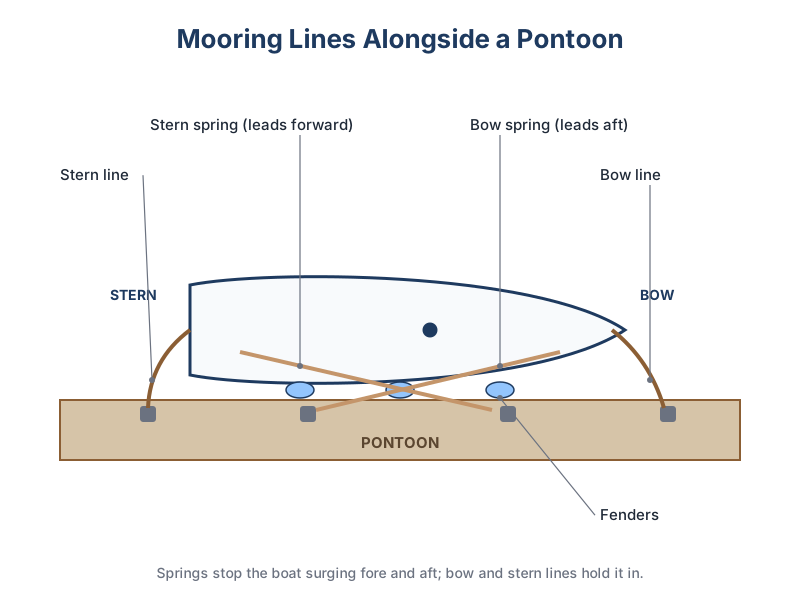
| Line | Runs from | Stops the boat |
|---|---|---|
| Bow line | Bow, forward to the pontoon | Bow swinging out |
| Stern line | Stern, aft to the pontoon | Stern swinging out |
| Fore spring (bow spring) | Bow or midships, aft to the pontoon | Moving forward |
| Aft spring (stern spring) | Stern or midships, forward to the pontoon | Moving backward |
Naming varies. Some sailors name springs by where they lead on the boat, others by the direction they stop. What matters is that the crew agree before arrival.
Why springs matter
Bow and stern lines alone let a boat surge back and forth in wind, wash or tidal stream, which chafes lines and bangs fenders. Because springs run almost parallel to the boat, they control that surge with little slack. Being long, they also cope better with a rise and fall of tide against a fixed wall than short lines do.
Using springs to berth and leave
- Arriving: get a midships line or aft spring on first. With gentle forward power and the helm turned away from the pontoon, the boat is pulled in parallel and held there while the crew fit the other lines.
- Leaving: motoring against a spring pivots the bow or stern away from the pontoon, so you can depart even when wind or tide is pinning you on. See how to leave a berth with a spring.
Rigging tips
- Lead springs through fairleads to avoid chafe on the toe rail.
- Make them long: a spring roughly the length of the boat gives a good angle.
- Rig springs to separate cleats on the pontoon where possible, so one failure does not release both.
- In strong tide or surge, double up the springs before leaving the boat.
Springs are practised in the berthing lesson and covered on the Day Skipper practical.