Forecasts
What Is a Gale Warning? UK Sea Areas Explained
Published · Last checked October 2026
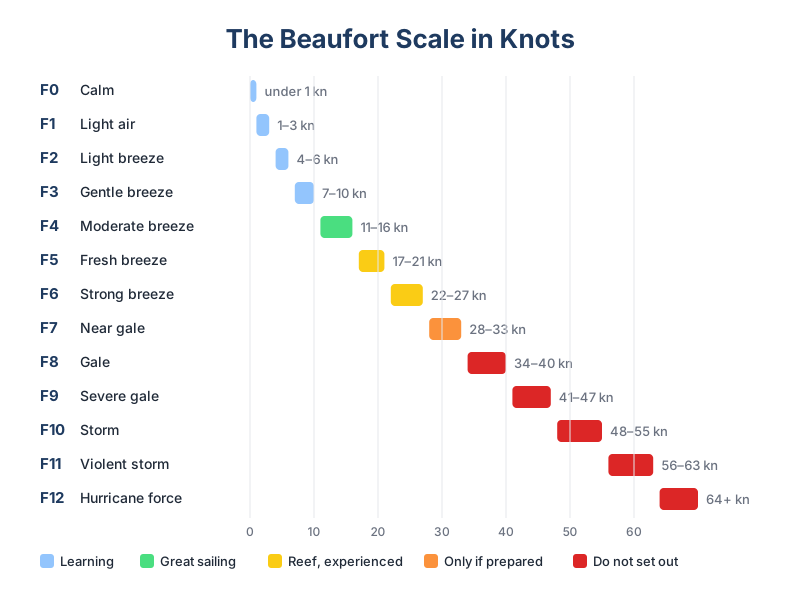
A gale warning is issued by the Met Office when mean winds of at least force 8 (34 to 40 knots) or gusts of 43 knots or more are expected in a sea area. Warnings use set timings: 'imminent' means within 6 hours, 'soon' means 6 to 12 hours, and 'later' means more than 12 hours from issue. They are broadcast on BBC Radio 4, by the coastguard on VHF and online.
What counts as a gale
On the Beaufort scale, force 8 is a gale: mean wind of 34 to 40 knots, with moderately high waves and blowing spray. The Met Office issues a gale warning when it expects force 8 or more, or frequent gusts of at least 43 knots, in any of the shipping forecast sea areas.
| Term | Beaufort force | Mean wind |
|---|---|---|
| Gale | 8 | 34 to 40 knots |
| Severe gale | 9 | 41 to 47 knots |
| Storm | 10 | 48 to 55 knots |
| Violent storm | 11 | 56 to 63 knots |
| Hurricane force | 12 | 64 knots or more |
Timing words: imminent, soon, later
- Imminent: expected within 6 hours of the time of issue.
- Soon: expected in 6 to 12 hours.
- Later: expected more than 12 hours from issue.
Note that the clock starts from when the warning was issued, not when you heard it. A 'soon' warning issued four hours ago might now be only a couple of hours away.
Where to hear gale warnings
- BBC Radio 4 broadcasts gale warnings at the first programme junction after receipt, and with each shipping forecast.
- HM Coastguard announces them on VHF channel 16, then broadcasts details on a working channel. Listen for the 'Sécurité' call. See the VHF radio basics lesson.
- Navtex prints them automatically for your coverage area.
- Met Office website and app carry current warnings for every sea area.
What to do when one is issued
For most leisure yachts, a gale warning for your sea area is a clear reason not to set out. If you are already at sea, act early: decide whether you can reach a safe harbour well before the wind arrives, without having to enter a difficult harbour mouth in breaking seas. Otherwise, sea room is your friend.
- Plot your position and assess the nearest safe, accessible refuge.
- Reef early and change to smaller headsails while it is still easy.
- Secure everything below and on deck, and prepare food and hot drinks.
- Brief the crew, wear lifejackets and harnesses, and rig jackstays.
- Keep listening to updates and log the barometer hourly.
The heavy weather sailing lesson covers tactics if you are caught out.