Wind and tide
What Is Wind Over Tide? Why It Makes Seas Dangerous
Published · Last checked October 2026
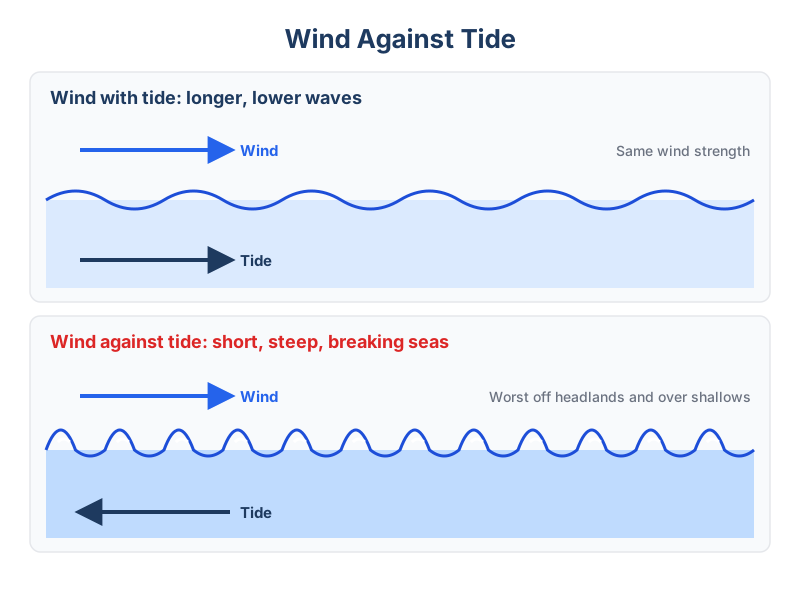
Wind over tide (or wind against tide) happens when the wind blows in the opposite direction to the tidal stream. The opposing flow shortens and steepens the waves, so a moderate breeze can raise a short, steep, breaking sea. It is worst at spring tides, off headlands and in tidal races. Sailors avoid it by timing passages so wind and tide run the same way.
Why it happens
Waves are created by wind blowing across the water. When the tidal stream flows the same way as the wind, it stretches the waves out and they become longer and gentler. When the stream flows against the wind, it compresses them: the wavelength shortens while the height stays the same or grows, so the waves become steep. Steep waves break more readily, and the sea becomes short, lumpy and uncomfortable.
| Wind with tide | Wind against tide | |
|---|---|---|
| Wave length | Longer | Shorter |
| Wave steepness | Gentle | Steep, often breaking |
| Apparent wind | Lower over the ground | Higher |
| Comfort and safety | Usually fine | Uncomfortable to dangerous |
Where it is worst
- Headlands and tidal races, such as Portland Bill, St Alban's Head, the Needles Channel and the Pentland Firth, where streams are fastest.
- Harbour bars and river entrances, especially on the ebb with an onshore wind.
- Narrow channels like the Solent, the Alderney Race and the Menai Strait.
- Spring tides, when streams run much faster than at neaps. See spring and neap tides.
Even force 4 against a strong spring stream can produce a sea that a small yacht will find hard work. Force 6 or more against a race can be genuinely dangerous.
Planning around it
- Check the forecast wind direction and strength for the passage.
- Use tidal stream atlases or chart tidal diamonds to see when the stream turns. See the tidal heights lesson and course plotting lesson.
- Time headlands and races for slack water or a fair stream running with the wind.
- Give races a wide berth if timing is poor; the inshore passage at slack water may be calmer.
- For harbour entrances, avoid the strong ebb against an onshore blow.
Wind over tide at anchor
At anchor or on a mooring, wind against tide makes boats lie awkwardly, sometimes sheering about or riding over their cable. Boats with different keels lie differently, so give neighbours extra room and check your swinging circle.