Navigation lights
What Is a Tricolour Light? Masthead Lights for Sailing Yachts
Published · Last checked October 2026
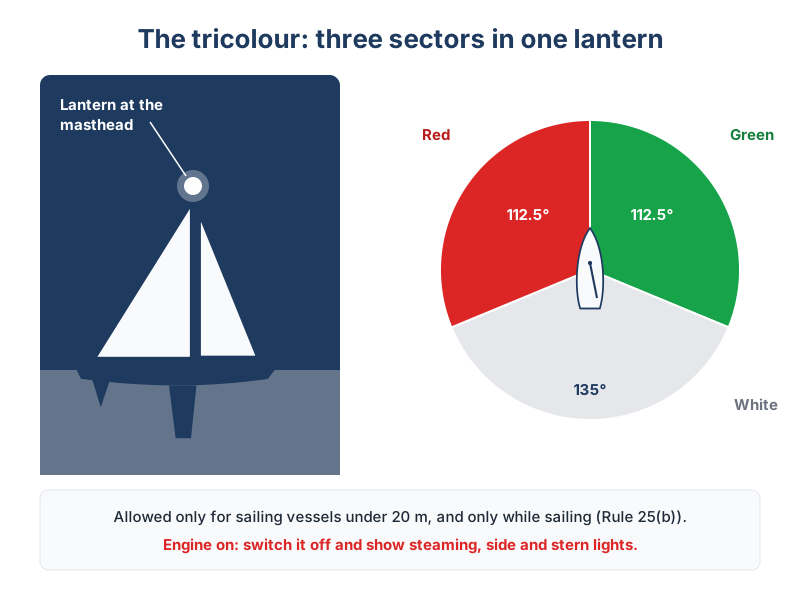
A tricolour light is a single lantern at the top of a sailing boat's mast that combines red and green sidelights and a white sternlight in one unit. Under COLREGs Rule 25(b), a sailing vessel under 20 metres may use it instead of separate sidelights and sternlight, but only when sailing. When the engine is propelling the boat, the tricolour must be switched off and power-driven lights shown.
How a tricolour works
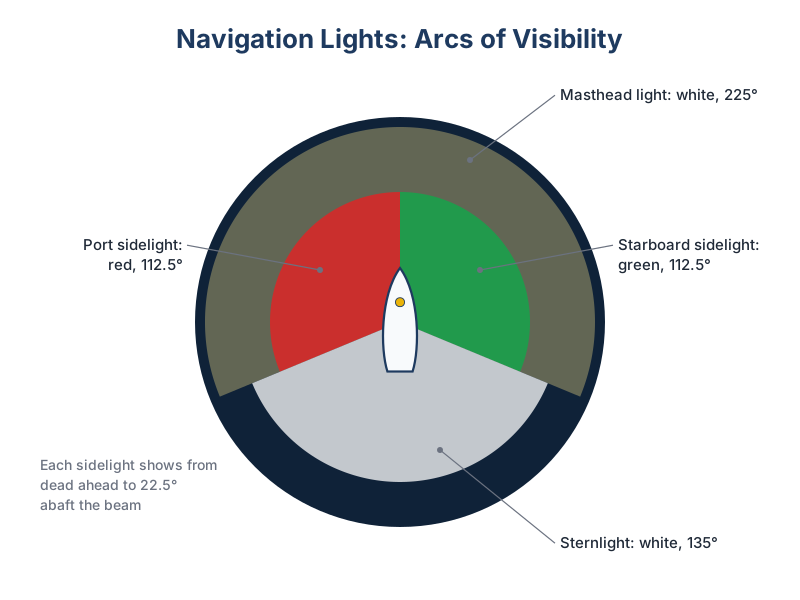
The lantern has three sectors with the same arcs as normal navigation lights: red over 112.5 degrees on the port side, green over 112.5 degrees on the starboard side, and white over 135 degrees astern. Seen from another vessel, it looks exactly like the corresponding deck lights, just much higher.
Advantages and drawbacks
| Masthead tricolour | Deck-level lights | |
|---|---|---|
| Visibility in waves | Better: above wave tops and sails | Can be hidden by waves, sails or heel |
| Power use | One lamp | Three lamps |
| Close-range visibility | High above a nearby small boat's eye line | At eye level close by |
| Judging distance | Harder: no reference near the hull | Easier near the water |
| Maintenance | Needs a trip up the mast | Easy to reach |
| Use under engine | Not allowed | Required with steaming light |
Many skippers use the tricolour offshore and the deck lights in harbours, busy estuaries and when motoring.
Rules for using one
- Only for sailing vessels under 20 m (Rule 25(b)).
- Only when sailing. With the engine propelling the boat, you are power-driven.
- Never with sidelights and sternlight lit as well.
- Never with the optional all-round red over green masthead lights of Rule 25(c).
- Must meet the same minimum ranges as the lights it replaces: for a boat under 12 m, sidelight sectors 1 mile and sternlight sector 2 miles.
Many masthead units combine a tricolour with an all-round white anchor light and sometimes a strobe. The anchor light is fine at anchor; a white strobe should be used only to attract attention in distress or under Rule 36 if it cannot be mistaken for a navigation aid.
Common mistakes
- Leaving the tricolour on when you start the engine and add the steaming light.
- Switching both tricolour and deck lights on 'to be safe'.
- Using the tricolour in a crowded harbour where boats close by cannot see it.
- Not checking the lamp before a night passage and only noticing it is out at sea.
See what lights a sailing boat shows at night and revise in the night sailing lesson.