Visibility
Fog at Sea — Types, Forecasting and What to Do
Published · Last checked October 2026
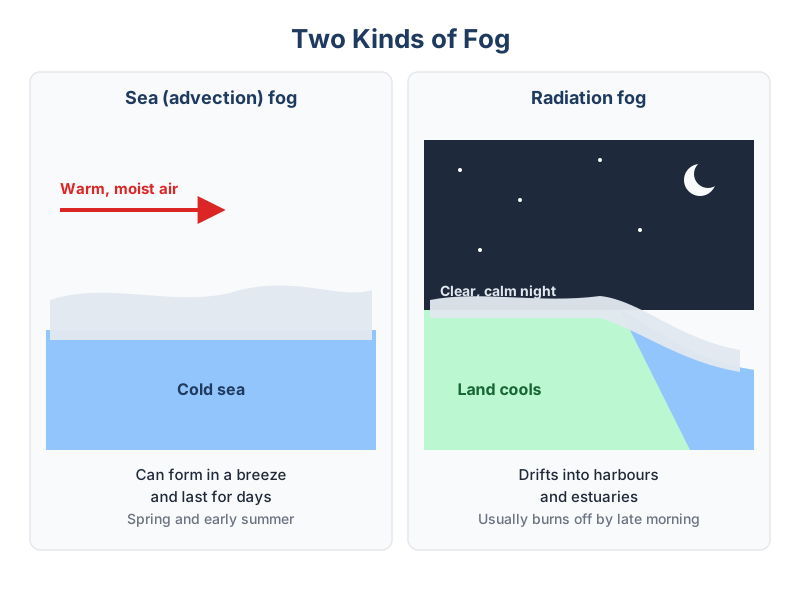
Sea (advection) fog forms when warm, moist air blows over a colder sea; it is common in spring and early summer, can last for days and is not cleared by wind. Radiation fog forms over land on clear, calm nights; it drifts into harbours and estuaries but usually burns off by late morning. If fog comes down at sea, slow to a safe speed, sound your fog signal, post a lookout, use radar and AIS, and get out of shipping lanes.
| Type | How it forms | When it clears |
|---|---|---|
| Advection (sea) fog | Warm, moist air moves over a colder sea | Only when the air mass changes; persists in wind up to force 5 or 6 |
| Radiation fog | Land cools on a clear, calm night | Usually burns off by late morning; rarely goes far offshore |
| Frontal fog | Rain falling into cold air ahead of a warm front | When the front passes |
| Sea smoke | Very cold air over relatively warm water | As the air warms |
Forecasting fog
Watch the dew point. When the air temperature is close to the dew point and the air is moving over colder water, sea fog is likely. A warm-sector south-westerly over the cold spring sea of the western Channel is a classic recipe.
If fog comes down
- Fix your position immediately and note it in the log.
- Switch on navigation lights and start your fog signal: one prolonged and two short blasts every 2 minutes under sail.
- Slow to a safe speed (Rule 6) and post a lookout, listening as well as looking.
- Use radar and AIS, and hoist a radar reflector. Make sure you can be seen.
- Everyone on deck wears a lifejacket. Have the liferaft ready and the engine running.
- Head for shallower water, out of shipping lanes, or anchor if safe.
- Under Rule 19, if you hear a fog signal forward of the beam, slow to bare steerageway and navigate with extreme caution.
The fog rules in full
- Rule 6: Safe speed
- Rule 19: Conduct of vessels in restricted visibility
- Rule 35: Sound signals in restricted visibility
Related guides
Frequently asked questions
Does wind blow fog away?
Not sea fog. Advection fog can persist in winds of force 5 or 6. Only a change of air mass, such as a cold front, clears it.
What is the sound signal for a sailing boat in fog?
One prolonged blast followed by two short blasts, at least every 2 minutes.