Racing for beginners
How Sailing Races Work: Starts, Courses and Scoring for Beginners
Published · Last checked October 2026
A sailing race starts with a timed countdown signalled by flags and sounds. Boats jostle behind an imaginary start line and try to cross it at full speed just as the start signal goes. They then sail a set course round marks, usually beginning upwind, and finish through another line. Results are scored by finishing place (or corrected time under a handicap), and over a series the lowest total points wins.
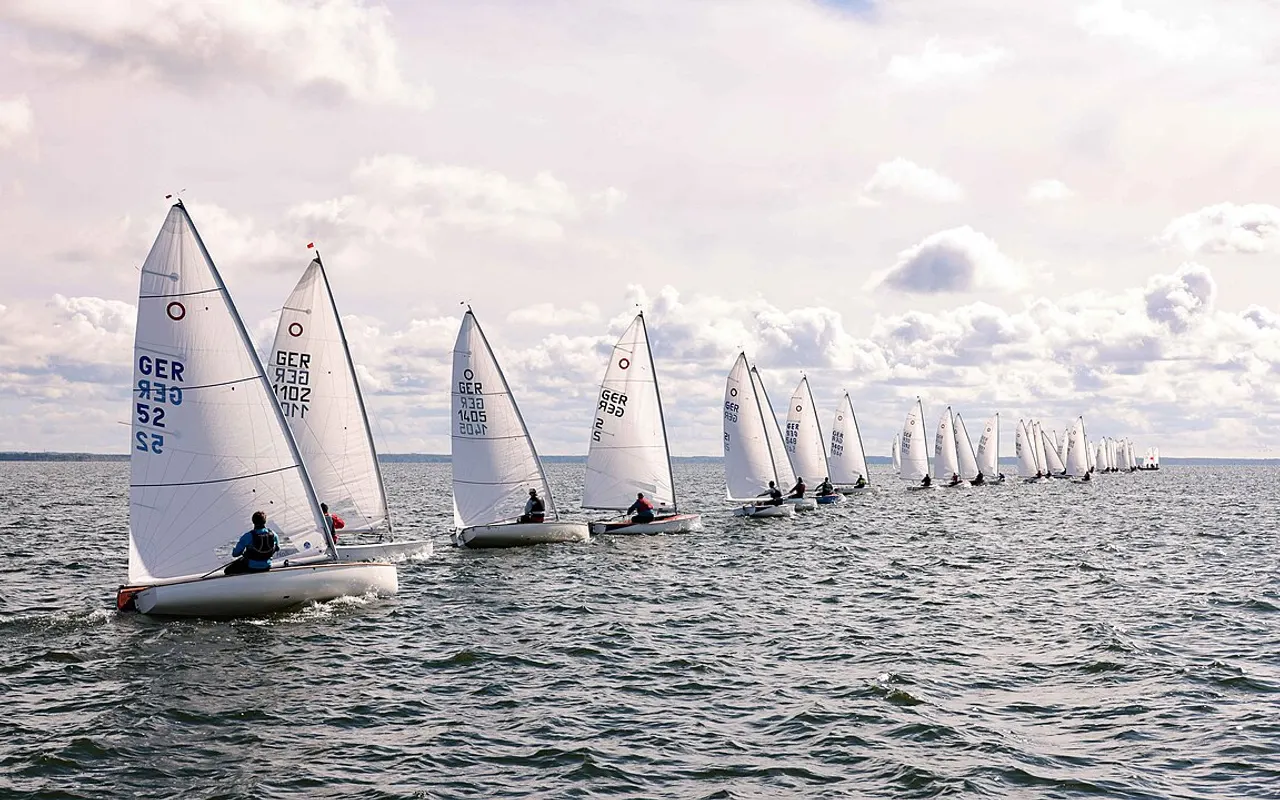
The start sequence
Most races use a five-minute sequence from the Racing Rules of Sailing (RRS 26):
| Time to start | Signal | Meaning |
|---|---|---|
| 5 minutes | Class flag up, one sound | Warning signal |
| 4 minutes | P (or I, Z, U, black) flag up, one sound | Preparatory signal: rules for the start now apply |
| 1 minute | Preparatory flag down, one long sound | One minute to go |
| 0 | Class flag down, one sound | Start |
If you're over the line early, you must return and restart. An individual recall is signalled with flag X.
The course
The classic course is windward–leeward: a beat upwind to a windward mark, then a run back down. Club courses often add reaching legs. Sailing instructions tell you which side to leave each mark (to port or to starboard) and how many laps.
The rules you meet first
- Port tack gives way to starboard tack (RRS 10).
- Windward boat keeps clear of a leeward boat on the same tack (RRS 11).
- Mark-room: at a mark, the inside boat that's overlapped gets room to round (RRS 18).
- Break a rule and you can usually take a penalty turn on the spot instead of being disqualified.
Scoring and handicaps
In one-design racing (every boat the same), you score your finishing place: 1 point for first, 2 for second. Lowest total wins. Mixed fleets use a handicap: dinghies in the UK often use the RYA Portsmouth Yardstick, and keelboats use systems like IRC, which convert elapsed time into corrected time.
How to get started
Join a club's weekday evening series, crew for someone first, and ask to borrow the sailing instructions. Racing is the fastest way to improve your sail trim and boat handling.
Common racing flags
| Flag | Meaning |
|---|---|
| AP (answering pennant) | Racing postponed |
| N | All races abandoned |
| X | Individual recall: one or more boats were over the line early |
| First Substitute | General recall: the whole fleet must restart |
| S | Course shortened |
| Blue flag/shape | Committee boat is on station at the finish |
Types of sailing race
- Fleet racing: the most common format; many boats race the same course.
- Match racing: two boats race head to head, as in the traditional America's Cup.
- Team racing: teams of two to four boats; the team's combined positions decide the winner.
- Offshore and coastal racing: longer races, often overnight, such as the Fastnet or the Round the Island Race.
- Pursuit racing: slower boats start first, so the first boat home wins outright.
Starting tactics for beginners
Pick an end of the line that's favoured (closer to the wind), stay near the line in the last minute, and keep clear air so you're not sailing in another boat's wind shadow. Knowing how to trim a jib and use telltales gives you speed off the line, and good tacking and gybing wins places on every leg.