Sail trim
How to Use Telltales on a Sailboat: Jib and Main Trim
Published · Last checked October 2026
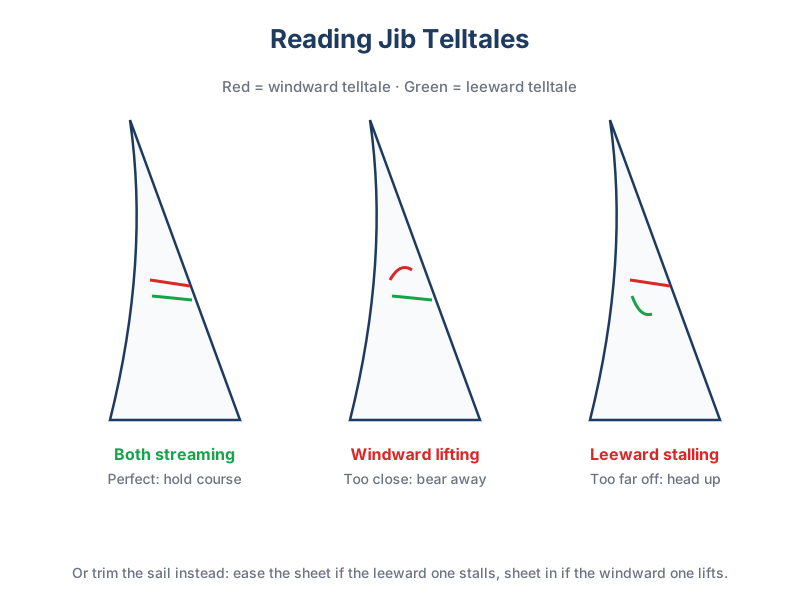
Telltales are short strips of wool or ribbon on a sail that show the airflow. On the jib, aim to have both windward and leeward telltales streaming straight aft. If the windward one lifts or spins, sheet in or bear away. If the leeward one droops or spins, ease the sheet or head up. On the main, leech telltales should stream most of the time; if the top one hides behind the sail, ease the mainsheet or kicker.
Where telltales go
- Jib luff: three pairs, one on each side, about 15 to 30 cm back from the luff, at roughly a quarter, half and three-quarter height.
- Mainsail leech: one at the end of each batten pocket.
- Mainsail luff (optional): a few just behind the mast, though they are disturbed by the mast's turbulence.
Windward telltales are on the side the wind hits. Leeward ones are on the other side; you see them through the sailcloth or a clear window.
Reading jib telltales
| What you see | Meaning | Fix (trim) | Fix (steer) |
|---|---|---|---|
| Both streaming aft | Good flow | Nothing | Nothing |
| Windward lifting or spinning | Sail under-trimmed or pointing too high | Sheet in | Bear away |
| Leeward drooping or spinning | Sail over-trimmed, flow stalled | Ease the sheet | Head up |
| Top windward lifts first, bottom streams | Too much twist | Move the car forward | - |
| Bottom windward lifts first | Too little twist | Move the car aft | - |
A useful memory aid for tiller steering: if a telltale misbehaves, move the tiller towards it. Windward telltale lifting: tiller to windward, so the boat bears away. Leeward telltale stalling: tiller to leeward, so the boat heads up.
Reading mainsail leech telltales
- All streaming: good. The leech is open and air is leaving cleanly.
- Top telltale hiding behind the sail for long periods: the leech is too tight. Ease the mainsheet or kicker slightly, or drop the traveller.
- All streaming permanently even when sheeted hard: the leech may be too open. Sheet in or tighten the kicker for more power.
Upwind, many trimmers aim for the top leech telltale to stream about half the time.
Upwind and downwind
Telltales are most useful upwind and on a reach. On a broad reach or run the airflow across the sail breaks down, so the jib luff telltales become unreliable. Downwind, ease the sail until the luff starts to curl, then sheet in a touch.
Combine telltales with the jib setup in how to trim a jib and the sail trim lesson.