Wind
What Is Apparent Wind? True vs Apparent Wind Explained
Published · Last checked October 2026
Apparent wind is the wind you actually feel on a moving boat. It combines the true wind with the headwind made by the boat's own speed. Upwind, apparent wind is stronger and comes from further forward than the true wind; downwind it is lighter and further aft. Sails, telltales and the masthead wind indicator all respond to apparent wind, so you trim to it, while forecasts and the Beaufort scale describe the true wind.
How apparent wind is made
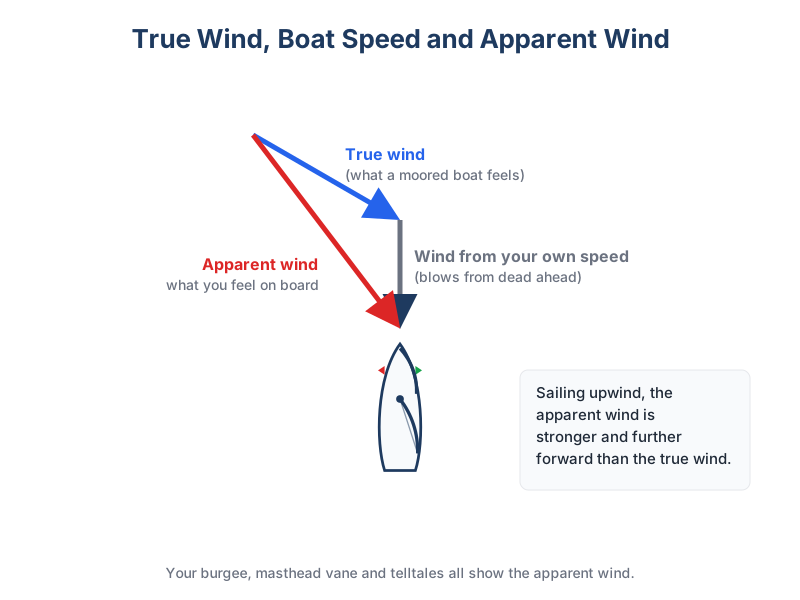
Stand still on a windless day and you feel nothing. Cycle at 10 knots and you feel a 10-knot headwind. On a boat the same thing happens: the boat's motion creates a headwind equal to its speed. Add that to the true wind as a vector and the result is the apparent wind.
| Point of sail | True wind angle | Apparent wind | Feels like |
|---|---|---|---|
| Close-hauled | About 45 degrees | Roughly 17 knots, about 30 degrees | Windier, from ahead |
| Beam reach | 90 degrees | Roughly 13 knots, about 63 degrees | Slightly stronger, further forward |
| Run | 180 degrees | About 6 knots, dead astern | Much lighter |
Why it matters
- Sail trim: sails see only apparent wind. As you speed up, the apparent wind moves forward and you need to sheet in.
- Reefing decisions: upwind the wind feels stronger than it is; downwind it feels gentler. Turning from a run to a beat can be a shock. Reef before you turn upwind.
- Gusts: a gust first lifts the true wind, which moves the apparent wind aft. That is why gusts are often lifts, explained in how to read wind direction.
- Fast boats: catamarans and foiling dinghies can drag the apparent wind so far forward that they sail with sheets in even on a reach.
True wind and instruments
Masthead units measure apparent wind speed (AWS) and angle (AWA). The instrument system then uses boat speed and heading to calculate true wind speed (TWS), true wind angle (TWA) and true wind direction (TWD). These calculated values are only as good as the calibration of the log and compass. The weather forecast, the Beaufort scale and passage planning use true wind.
Study the vectors in the weather awareness lesson.