Sailing terms
What Does Luffing Mean in Sailing? Sails, Luffing Up and Rules
Published · Last checked October 2026
Luffing has three related meanings in sailing. The luff is the leading edge of a sail. A sail is luffing when that edge flutters or backs because it is eased too far or the boat is pointing too close to the wind. And to luff up is to steer towards the wind, which spills wind from the sails and slows the boat. The fix for a luffing sail is either to sheet in or to bear away slightly.
1. The luff of a sail
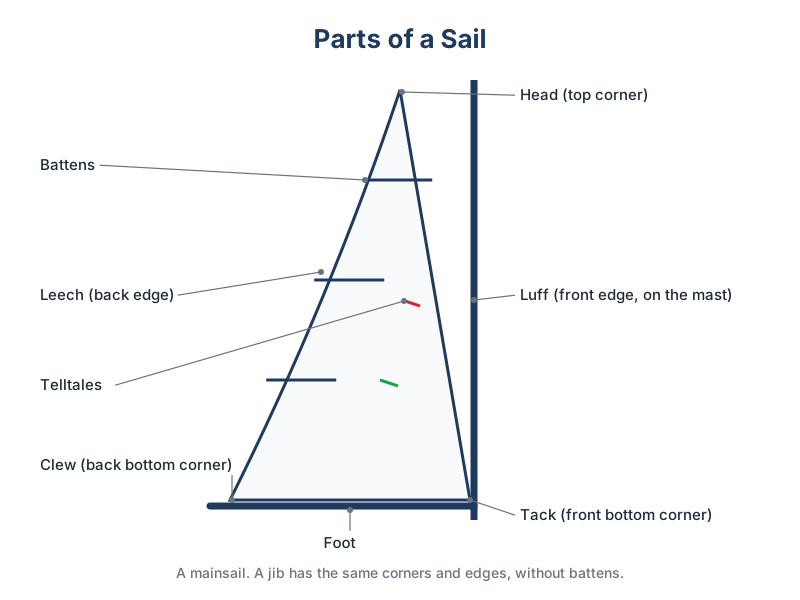
Every triangular sail has three edges. The luff runs from the tack (bottom front corner) up to the head. The leech is the back edge and the foot is the bottom. On a mainsail the luff runs up the mast; on a jib it runs up the forestay. Luff tension, set with the halyard or cunningham, moves the sail's fullness forward or aft. More detail in parts of a sailboat.
2. A sail that is luffing
When the wind hits the sail from the wrong side of the luff, the front of the sail bubbles, flaps or backs inwards. The sail has stopped producing drive along that edge. There are two causes and two fixes:
| Cause | Fix |
|---|---|
| Sheet eased too far for the course | Sheet in until the flutter just stops |
| Steering too close to the wind | Bear away a few degrees |
| Luff tension too loose (scalloping between hanks) | Tighten the halyard |
Telltales give you warning before the sail visibly flaps: the windward ones lift first. See how to use telltales.
3. Luffing up
To luff up (or just 'luff') is to turn the bow towards the wind. Sailors do it deliberately to:
- Depower in a gust: a short luff spills wind and reduces heel.
- Slow down on the approach to a mooring or pontoon.
- Start a tack, which begins as a steady luff through the wind.
- Defend a position when racing: under the Racing Rules of Sailing, a leeward boat may luff a windward boat, within limits.
Luff too far and you end up head to wind and stopped, known as being in irons. See how to get out of irons.
Luffing in the rules
The COLREGs do not use the word, but a leeward sailing vessel has right of way over a windward one on the same tack. Racing rules let a right-of-way leeward boat luff, provided she gives the other boat room to keep clear. Cruising sailors should simply avoid sudden course changes near other vessels; read right of way rules.