Chart basics
What Is a Compass Rose on a Nautical Chart?
Published · Last checked October 2026
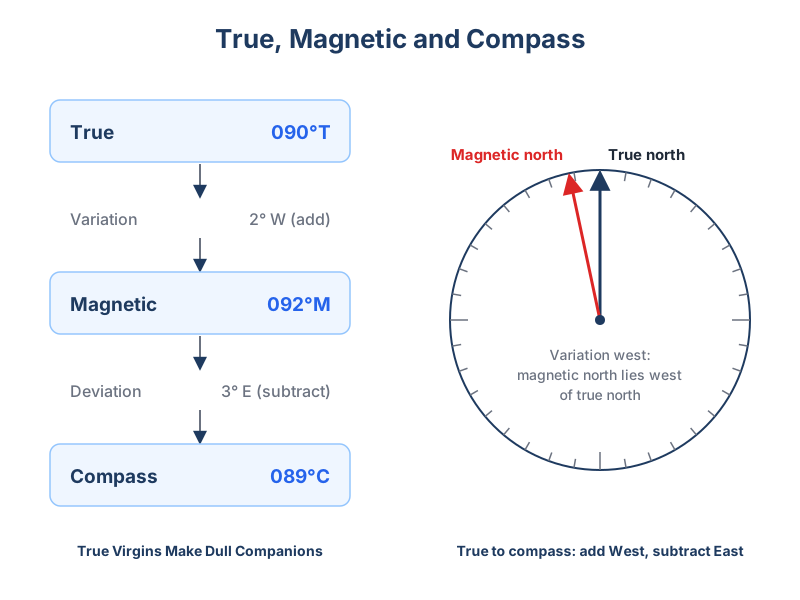
A compass rose is the circle printed on a nautical chart showing directions from 000° to 360°. The outer ring is aligned to true north; the inner ring is aligned to magnetic north. In the middle it states the local magnetic variation, the year it applied and how much it changes each year. You use it to convert between true and magnetic directions and, with a parallel rule, to measure courses.
Reading the compass rose
- Outer ring: true directions, with 000° pointing to true (geographic) north, usually marked with a star.
- Inner ring: magnetic directions, offset from the outer ring by the variation.
- Centre text: variation and annual change, for example 'Var 1°15'W 2020 (9'E)'.
- Some roses also have an innermost ring of old compass points (N, NNE, NE and so on).
Updating the variation
Magnetic north moves, so the variation printed on the chart needs bringing up to date. Multiply the annual change by the years since the date shown, then apply it in the direction given.
| Step | Value |
|---|---|
| Rose says | Var 1°15'W 2020 (9'E) |
| Years to 2026 | 6 |
| Change | 6 × 9' = 54' East |
| Updated variation | 1°15'W − 54' = 0°21'W, so about 0° W |
Around much of the UK variation is now very small and decreasing westerly, and in some places has become easterly. Always check the chart in use.
Using the rose to plot
With a parallel rule you walk the rule from your course line to the centre of the nearest rose and read the direction off the true or magnetic ring. With a Breton plotter you use the chart's meridians instead, but you still take the variation from the rose. Remember that the rose covers variation only, not your boat's deviation; see variation and deviation.
Learn more in the charts, buoys and compass lesson.