Compass
Magnetic Variation and Deviation Explained (True to Compass)
Published · Last checked October 2026
Variation is the angle between true north and magnetic north. It depends on where you are and changes slowly over the years; you read it from the compass rose on the chart. Deviation is the error in your own boat's compass caused by the boat's metal and electrics, and it changes with your heading. True ± variation = magnetic; magnetic ± deviation = compass.
Converting between true, magnetic and compass
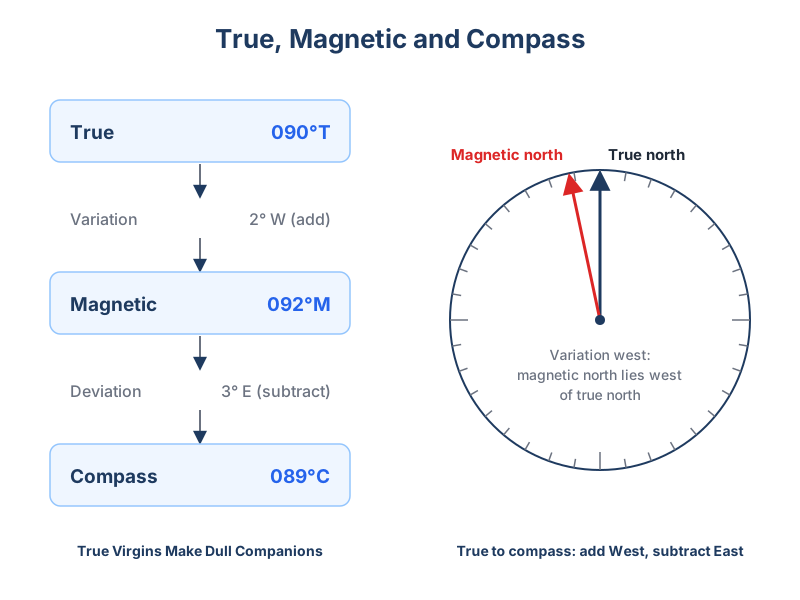
| Direction | West variation or deviation | East variation or deviation |
|---|---|---|
| True → magnetic → compass | Add | Subtract |
| Compass → magnetic → true | Subtract | Add |
- CADET: Compass to true, Add East.
- Variation west, magnetic best; variation east, magnetic least: going from true to magnetic, westerly variation makes the magnetic figure bigger.
Example
The chart course is 245°T. Variation is 2°W, so the magnetic course is 247°M. The deviation card shows 3°E on that heading, so the compass course is 244°C.
Reading variation from the chart
The compass rose prints variation for a given year and its annual change, for example '1°35'W 2018 (8'E)'. Work forward to this year: 8 years at 8' east per year moves it 64' east, so it is now about 0°31'W. In much of the UK, variation is now small, so it is easy to forget to apply it at all.
Deviation
Deviation comes from steel, engines, speakers and electronics near the compass. It is found by swinging the compass (comparing compass bearings with known bearings on different headings) and recorded on a deviation card. A hand-bearing compass has its own deviation depending on where you stand; use it away from the engine and rigging.