Pilotage
What Is a Transit in Navigation? Leading Lines Explained
Published · Last checked October 2026
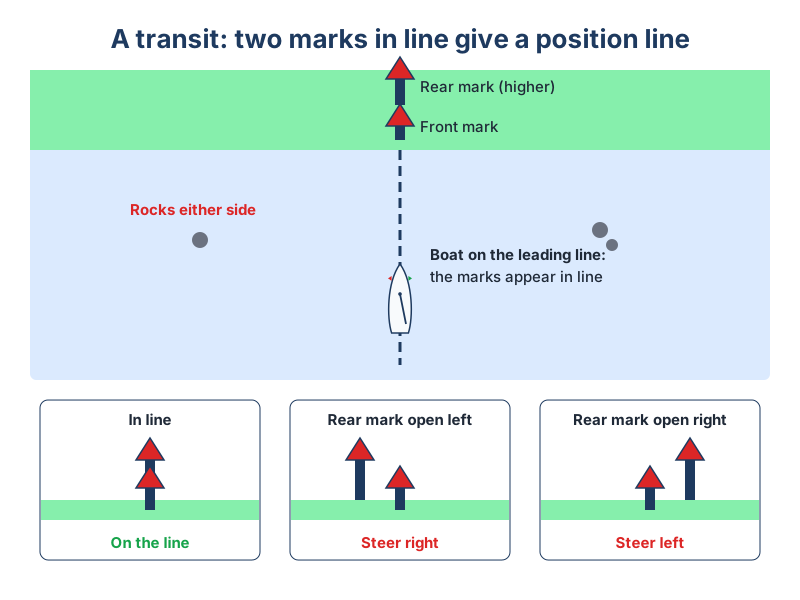
A transit is formed when two fixed, charted objects appear exactly in line from your boat. You are then somewhere on the straight line through both of them, which makes a very accurate position line with no compass error involved. Transits are used for safe approaches (leading lines), for knowing when to turn, for checking compass deviation and for spotting whether you are being set sideways by tide.

How a transit works
If a beacon on the shore and a church tower behind it line up, you must be on the extension of the line joining them. Because you need no compass to see this, the position line is free of deviation, variation and reading errors. The further apart the two objects are, and the closer you are to the nearer one, the more sensitive the transit is.
Types of transit
- Leading lines: two marks or lights, often with the rear one higher, set up to lead you safely along a channel. The chart shows the line and its bearing.
- Natural transits: any two charted features, such as a headland and a hilltop, that you pick yourself.
- Clearing lines: a transit that marks the edge of danger. Keeping the objects 'open' one way keeps you safe. See clearing bearings.
- Turning transits: a line you watch for so you know exactly when to alter course.
Using a leading line
- Find the two marks on the chart and confirm the bearing of the line.
- Identify both marks by eye, or by their light characteristics at night.
- Steer to keep the front mark directly in front of the rear one.
- If the rear mark appears to move right of the front one, you have drifted right of the line: steer left to get back on, and vice versa.
- Note where you leave the line before you start.
| Use | How |
|---|---|
| Position line | Draw the line through both objects on the chart |
| Compass deviation check | Compare the steering compass reading on the transit with the charted bearing (corrected for variation) |
| Cross-track set | Watch the objects open while you hold a steady heading |
| When to turn | Alter when a pre-planned transit comes on |
Transits in pilotage plans
A good pilotage plan uses transits wherever possible, because they need no instruments and work in daylight with no calculation. Combine them with depth and clearing bearings for a safe entry. More in the buoyage and lights lesson.