Ropework
Clove Hitch vs Round Turn and Two Half Hitches
Published · Last checked October 2026
Use a clove hitch for light, temporary jobs where you want quick adjustment, such as hanging fenders on a guardrail. Use a round turn and two half hitches for anything under real load, such as tying a mooring line to a ring, post or pile. The round turn takes the strain so you can tie or untie it while the line is loaded, and it will not slip or work loose the way a clove hitch can.
The short answer
| Clove hitch | Round turn and two half hitches | |
|---|---|---|
| Best for | Fenders, temporary ties, quick adjustment | Mooring to rings, posts, piles and rails under load |
| Security | Can slip or roll off a smooth rail or under changing load | Very secure |
| Tie or untie under load? | Difficult | Yes: the round turn holds the load |
| Adjusting length | Very easy | Slower |
| Rope used | Very little | A little more |
The clove hitch
A clove hitch is two turns around a rail or post, the second crossing over the first and tucked under itself. It is quick to tie and easy to adjust, which is why it is used for fenders: you can slide the line through to raise or lower the fender as you come alongside. Its weakness is that it can slip along a smooth stainless rail and can roll undone if the load comes from different directions or the rail is a ring.
- Add a half hitch round the standing part to make it more secure.
- Tie it with a slipped finish if you want to release it in one pull.
- Avoid using it alone for anything that would be dangerous if it let go.
Round turn and two half hitches
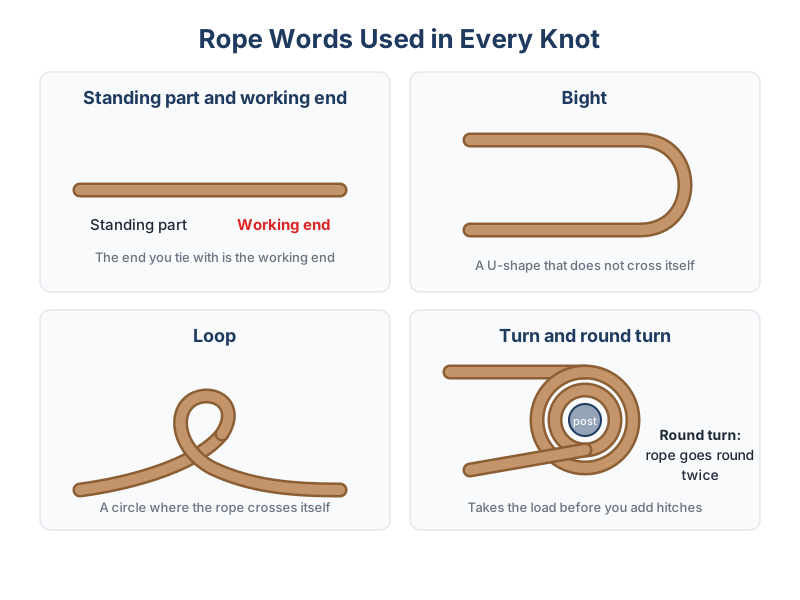
- Pass the working end around the ring or post twice, making a full round turn.
- Hold the load on the round turn: friction will now take most of the strain.
- Pass the working end around the standing part and through itself to make a half hitch.
- Make a second half hitch the same way, so the two together form a clove hitch on the standing part.
- Snug it up and leave a reasonable tail.
Because the round turn grips the post, you can take a big load, such as a surging boat, on the turn alone while you tie the half hitches. To release it, undo the half hitches and ease the line round the post under control.
Which to use when
- Fenders on guardrails: clove hitch, ideally with a half hitch, or a dedicated fender hitch.
- Mooring to a ring on a harbour wall: round turn and two half hitches.
- Tying the tender's painter to a pontoon rail: round turn and two half hitches.
- Temporarily tying off a line to a stanchion while you work: clove hitch.
Both knots appear in the RYA syllabus for Competent Crew and Day Skipper, and you will be asked to tie them on the practical course. The skill an instructor looks for is not just tying them but choosing the right one. A fender left on a slipping clove hitch drifts up out of position just as you come alongside; a mooring line on a clove hitch to a ring can roll undone overnight as the boat moves with the tide. Swap to a round turn whenever a line takes real weight.
See both in context in essential sailing knots and practise in the knots and ropework lesson.