Chartwork
Dead Reckoning vs Estimated Position — What's the Difference?
Published · Last checked October 2026
A dead reckoning (DR) position is worked out from your last known position using only the course steered and the distance run through the water. An estimated position (EP) goes further and allows for the tidal stream and leeway, so it is a much better estimate of where you really are. On the chart a fix is a circle, an EP a triangle, both with a dot and the time.
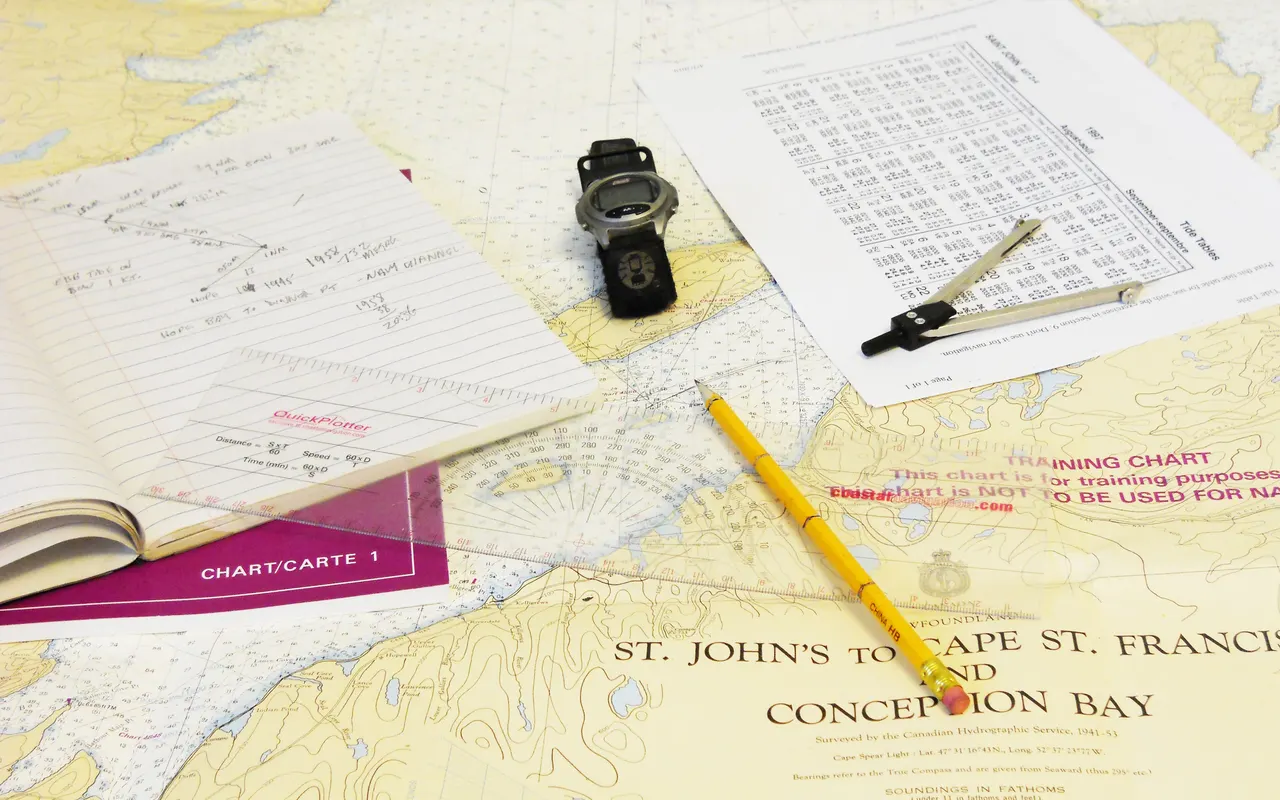
Plotting an EP
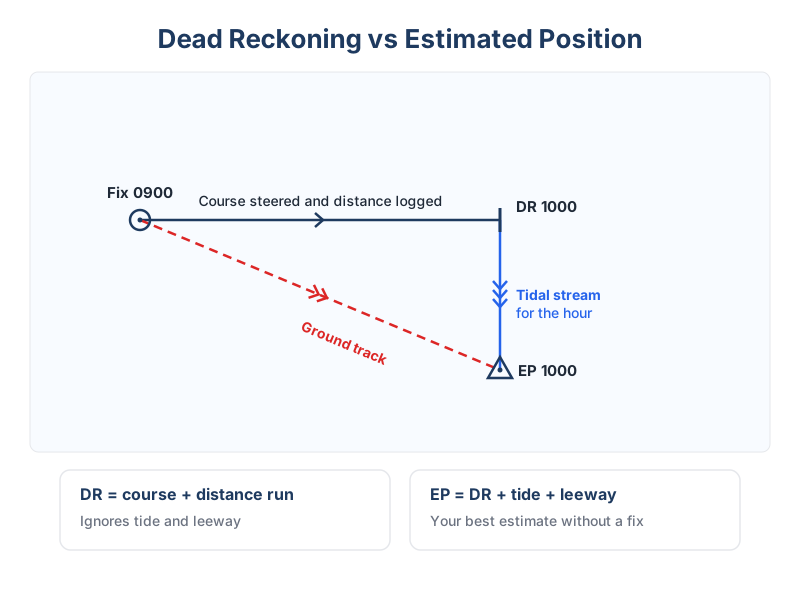
- From your last fix, draw the water track: the course steered, corrected for leeway, for the distance logged (one arrowhead).
- From the end of that line, draw the tidal stream for the same period (three arrowheads).
- The end of the tide line is your EP. Mark it with a triangle, a dot and the time.
- The line from the fix to the EP is your ground track (two arrowheads).
| Line | Arrowheads |
|---|---|
| Water track | One |
| Ground track | Two |
| Tidal stream | Three |
Why it still matters with GPS
An hourly EP in the log means that if the GPS or plotter fails you know where you are to within a mile or two. It also catches GPS errors: if the GPS position and your EP disagree badly, find out why before you get close to danger.
Related guides
Frequently asked questions
Is DR still used?
Rarely on its own in tidal waters. An EP is almost always more accurate because it includes the tide and leeway.
What does leeway mean?
Leeway is the sideways drift caused by the wind pushing the boat. You allow for it by plotting the water track a few degrees downwind of the heading.