Berthing
How to Leave a Berth Using a Spring Line
Published · Last checked October 2026
To leave a berth with a spring, rig a slipped line around a pontoon cleat and back to the boat, fender the end that will touch, then motor gently against the spring. Motoring ahead against a bow spring swings the stern out; motoring astern against a stern spring swings the bow out. Once the boat is angled well clear, go to neutral, slip the line, pull it in fast and drive away cleanly.
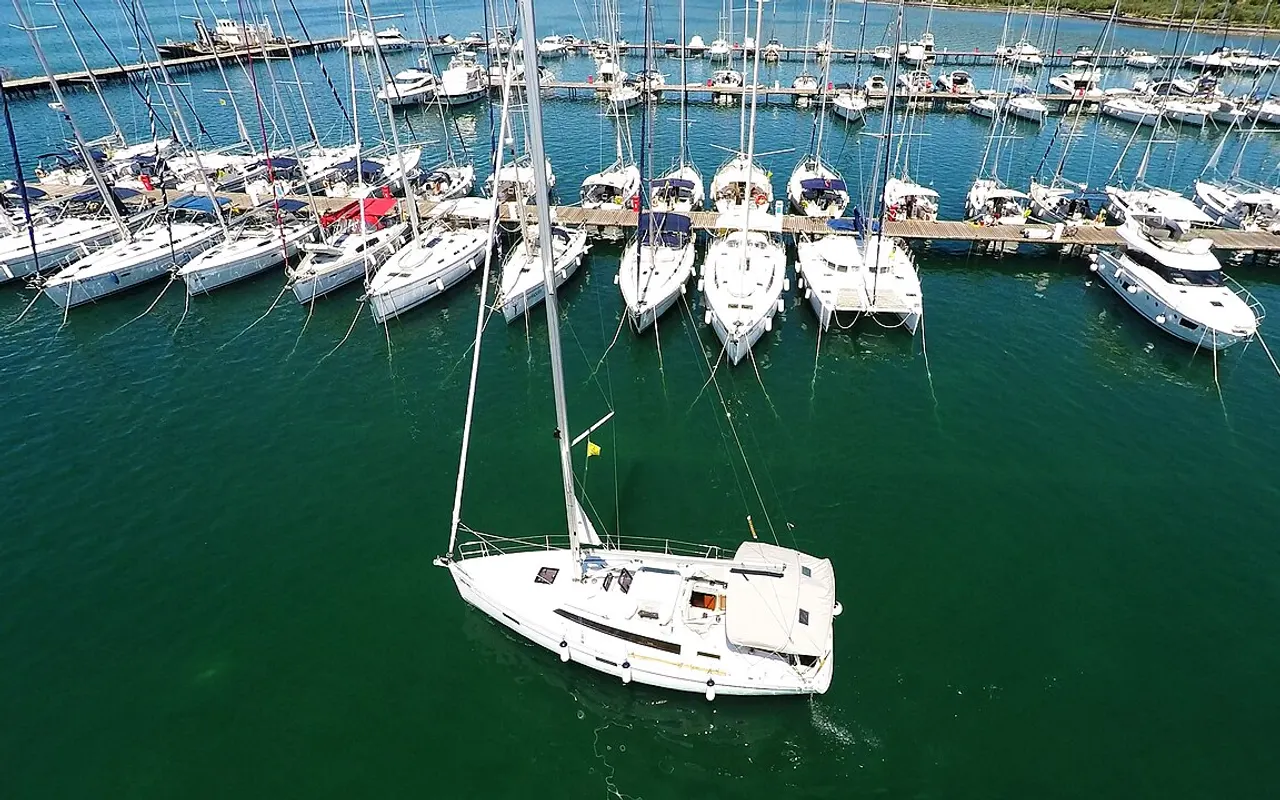
When you need to spring off
If wind or tidal stream is pushing the boat onto the pontoon, simply letting go and motoring off will often just drag the hull along the berth. Springing off uses the engine to pivot the boat against a line so one end points clear into open water before you leave.
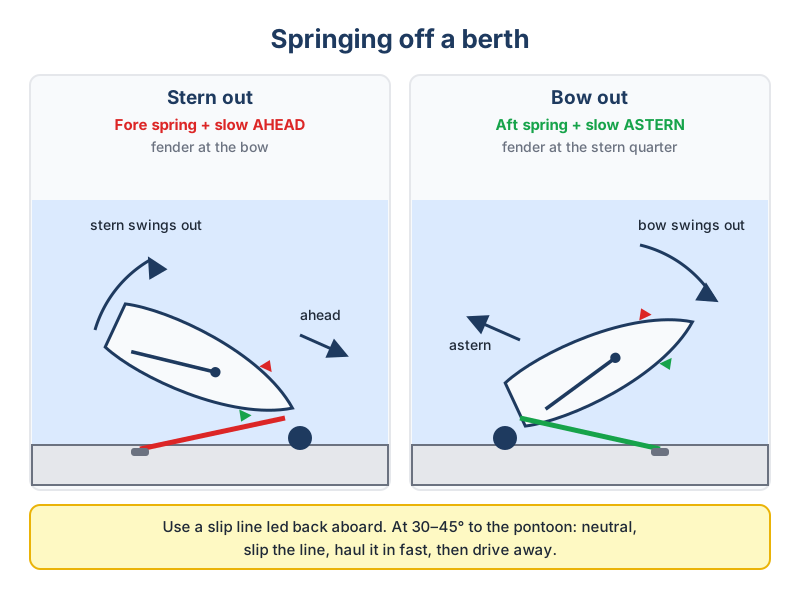
Springing the stern out (bow spring)
This is usually the preferred method because the bow, which is hard to fender and to control in wind, stays against the pontoon while the stern swings out.
- Rig a bow spring as a slip line: from a bow cleat, round the pontoon cleat aft of the bow, and back to the boat so it can be released from on board.
- Put a large fender right at the bow, where it will pivot against the pontoon.
- Remove all other lines, keeping a crew member ready with the spring.
- Engage ahead gently. The boat pivots on the bow and the stern swings out.
- When the boat is at around 30 to 45 degrees to the pontoon, go to neutral, slip the spring and haul it aboard quickly so it cannot reach the propeller.
- Motor astern clear of the berth, then ahead once the bow is clear.
Springing the bow out (stern spring)
Rig a slip line from the stern quarter forward to a pontoon cleat, fender the stern quarter well, and motor gently astern. The boat pivots on the stern and the bow swings out. This is useful when there is no room astern, but beware that the bow may blow back down if the wind is strong.
| Spring | Engine | End that swings out |
|---|---|---|
| Bow spring (fore spring) | Ahead | Stern |
| Stern spring (aft spring) | Astern | Bow |
Common mistakes
- Too much power: gentle revs are enough. Heavy throttle can crush the fender or break a cleat.
- A line that will not slip: tie it as a loop round the cleat, never with a knot on the pontoon.
- Slow recovery: a trailing line wraps round the propeller very quickly.
- No brief: tell the crew who slips, who fends and when, before anything moves.
For more on how springs work, read what are spring lines, then practise in the berthing lesson.