Anchoring
How to Work Out Depth at Anchor: Low Water and Scope
Published · Last checked October 2026
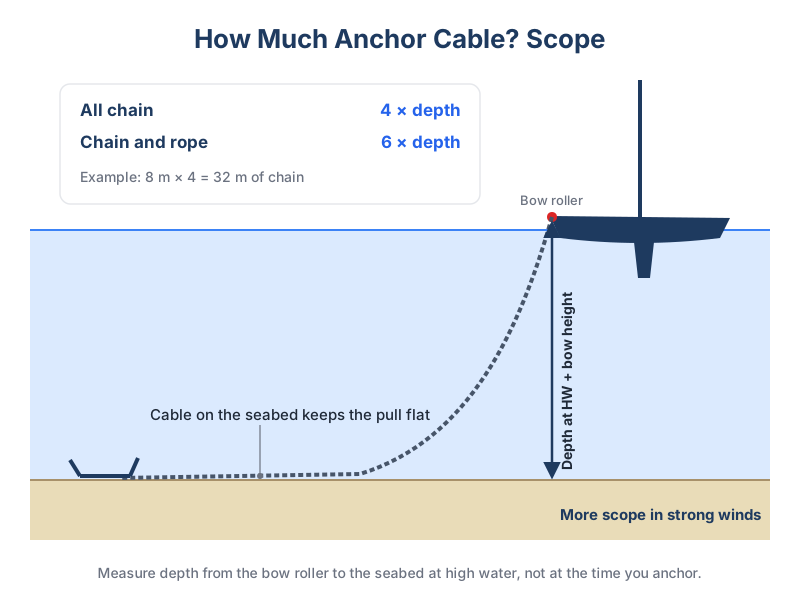
To work out depth at anchor, read the depth on the echo sounder (corrected to below the waterline), find the height of tide now and at the next low water, and subtract the fall. Depth at low water = depth now − (height now − height at LW). That must exceed your draught plus a safety margin. Then let out enough scope for the depth at high water, typically at least four times the depth with all chain.
Step 1: know what the echo sounder shows
Echo sounders can be set to show depth below the transducer, below the keel or below the waterline. Know which yours shows, and convert to depth below the waterline for tidal sums. If it reads below the transducer, add the transducer depth.
Step 2: work out the depth at low water
- Note the depth now (below the waterline) and the time.
- Find the height of tide now from the tide table and curve.
- Find the height of the next low water.
- Fall to come = height now − height at LW.
- Depth at LW = depth now − fall to come.
- Check depth at LW ≥ draught + clearance (allow more if swell is expected).
| Item | Value |
|---|---|
| Echo sounder (below waterline) | 6.0 m |
| Height of tide now | 4.2 m |
| Height of next LW | 0.9 m |
| Fall to come (4.2 − 0.9) | 3.3 m |
| Depth at LW (6.0 − 3.3) | 2.7 m |
| Draught + 0.5 m clearance | 2.1 m |
| Result | 0.6 m to spare: OK |
Check the next day's low water too if you are staying, and remember that a low spring tide can be much lower than tonight's neap. Overnight, the tide may also go from neaps towards springs.
Step 3: work out the depth at high water and the scope
Similarly, depth at HW = depth now + (height at HW − height now). Scope is based on the deepest water you will see. A common rule is at least 4:1 for chain and 6:1 or more for chain-and-rope rode, measured from the bow roller to the seabed. Add more in strong winds or poor holding.
- Allow for swinging room: the boat circles the anchor at the length of scope plus the boat length.
- Check charted depths around the swinging circle, not just under the boat.
- Set an anchor alarm and note transits ashore.
More detail in how to anchor a yacht and the anchoring lesson.