COLREGs Rule 9
Narrow Channel Rule 9 Explained for Sailors and Skippers
Published · Last checked October 2026
Rule 9 of the COLREGs says that in a narrow channel or fairway every vessel should keep as near to the outer limit on its starboard side as is safe and practicable. Vessels under 20 metres and sailing vessels must not impede a vessel that can safely navigate only within the channel. You must not cross if that impedes such a vessel, should avoid anchoring in the channel, and must use set sound signals when overtaking or approaching a blind bend.
What counts as a narrow channel
The COLREGs do not define 'narrow channel'. In practice it means a buoyed channel or fairway where a large vessel's freedom to manoeuvre is limited, such as the approach to Portsmouth or the River Orwell. If a ship would struggle to leave it safely, treat it as narrow.
The main parts of Rule 9
- 9(a) Keep to starboard: stay as near the starboard outer limit as is safe and practicable.
- 9(b) Small and sailing vessels: a vessel under 20 m or a sailing vessel shall not impede a vessel that can safely navigate only within the channel.
- 9(c) Fishing vessels: shall not impede any other vessel navigating within the channel.
- 9(d) Crossing: do not cross if it impedes a vessel that can only navigate within the channel.
- 9(e) Overtaking: only when the overtaken vessel must act to allow it, signalled by sound.
- 9(f) Bends: sound one prolonged blast approaching a bend where vessels may be hidden.
- 9(g) Anchoring: avoid anchoring in a narrow channel if circumstances allow.
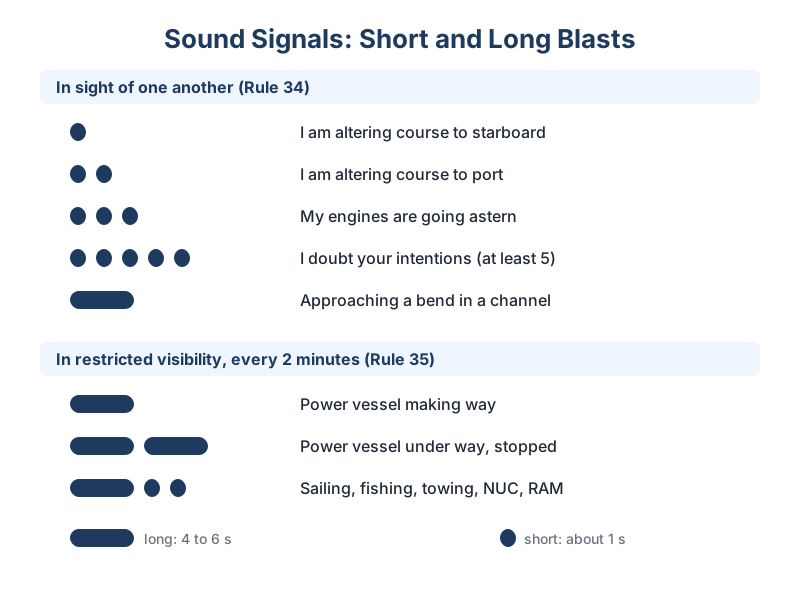
Overtaking and bend signals
| Signal | Meaning |
|---|---|
| Two prolonged, one short | I intend to overtake you on your starboard side |
| Two prolonged, two short | I intend to overtake you on your port side |
| Prolonged, short, prolonged, short | Agreement from the vessel being overtaken |
| Five or more short and rapid | Doubt: I do not understand your intentions |
| One prolonged | Approaching a bend or obscured area |
A short blast lasts about one second and a prolonged blast four to six seconds.
Practical channel sailing
On a small yacht you can usually sail just outside the buoyed channel where there is enough depth, leaving the deep water for ships. Check the chart and tide height first. If you must tack up a channel, keep tacks short on the starboard side and stop short of the middle when shipping is near.
- Plan the passage so you know the depth just outside the channel at your time of arrival.
- Listen to the port VTS channel for ship movements.
- Cross at right angles, quickly, behind a ship rather than ahead of it.
- Show the correct signals if motor-sailing: a cone point down by day.
Revise channel pilotage in the pilotage planning lesson and read the vessel constrained by draught guide.