Ropework
Sheet Bend Knot Explained — Joining Two Ropes Safely
Published · Last checked October 2026
A sheet bend is the standard knot for joining two ropes, especially ropes of different thickness or stiffness. Make a bight in the thicker rope, pass the thinner rope up through it, round behind both parts of the bight, then tuck it under itself. For a big difference in size or slippery rope, take an extra turn to make a double sheet bend. It is quick to tie, holds well and is easy to untie.
How to tie a sheet bend
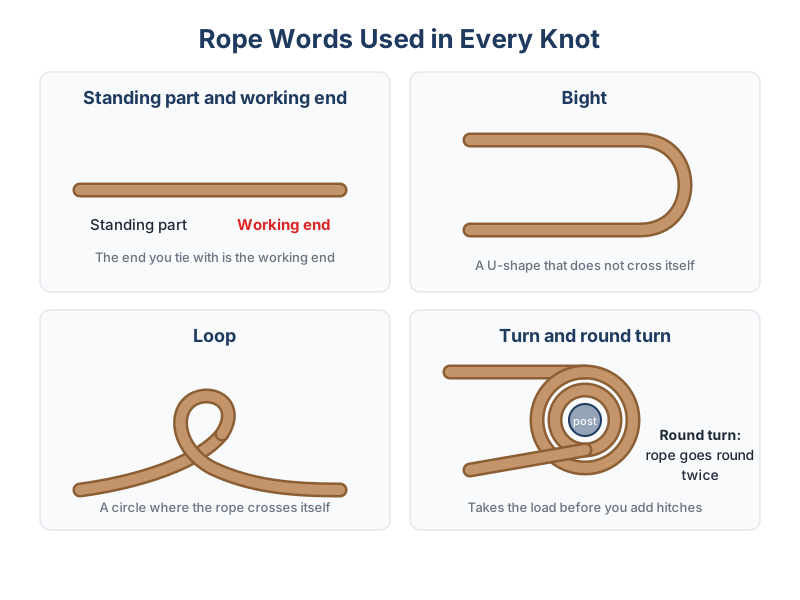
- Form a bight (a U-shape) in the end of the thicker or stiffer rope and hold it.
- Pass the end of the thinner rope up through the bight from underneath.
- Take it round behind both legs of the bight.
- Tuck it under itself, across the front of the bight, without going through the bight again.
- Pull the standing parts firmly. Check that both short ends finish on the same side of the knot.
If the two tails end up on opposite sides, you have tied a left-handed sheet bend. It is weaker, so retie it.
The double sheet bend
For ropes of very different size, slippery modern line, or when the knot will be loaded and unloaded repeatedly, take the thin rope round behind the bight a second time before tucking it under itself. The extra turn adds grip and makes the knot much less likely to slip.
Uses on a boat
- Extending a mooring line or warp with a second line.
- Joining a light heaving line to a heavy mooring rope so it can be hauled across.
- Tying a line to a loop or eye, such as the clew of a sail or a loop in a flag (the 'becket bend').
- Making a temporary repair to a broken line.
| Situation | Best knot | Notes |
|---|---|---|
| Two ropes, different sizes | Sheet bend | Double it if very different |
| Two ropes, same size, light load | Sheet bend | Quick and easy to undo |
| Heavy load such as a tow | Two interlocking bowlines | Easy to untie after strain |
| Binding round a sail | Reef knot | Never for joining ropes |
Sheet bend vs bowline
Look closely and a sheet bend has the same structure as a bowline: the bight plays the part of the bowline's small loop. That is why it shares the bowline's virtues of holding well and untying easily, and also its weakness: it can loosen if left unloaded and shaken about, so leave decent tails.
Practice and checks
Practise the sheet bend with two ropes of different colour and size so you can see clearly where each part goes. Then try it with the ropes reversed, putting the bight in the thinner rope, and notice how much less secure it feels: the bight should always go in the thicker or stiffer rope. On the RYA syllabus it is one of the core knots for Competent Crew. Before trusting it with a load, check that the knot has set firmly, the tails are on the same side and at least several rope diameters long.
See all the essential knots in essential sailing knots and practise in the knots and ropework lesson.