Ropework
How to Tie a Reef Knot — and When Not to Use It
Published · Last checked October 2026
To tie a reef knot, cross the right end over the left and tuck it under, then cross the left end over the right and tuck it under: 'right over left, left over right'. Pull tight and the two ends lie flat alongside their own parts. On a boat it is used for tying reef points round a reefed sail and bundling sails or gear. It is not a safe knot for joining two ropes under load.
Step by step
- Take one end in each hand. Cross the right end over the left end and tuck it under, as if starting to tie a shoelace.
- Now cross the end that is in your left hand over the one in your right hand and tuck it under.
- Pull both ends evenly. The finished knot is flat and symmetrical, with each end lying alongside its own standing part.
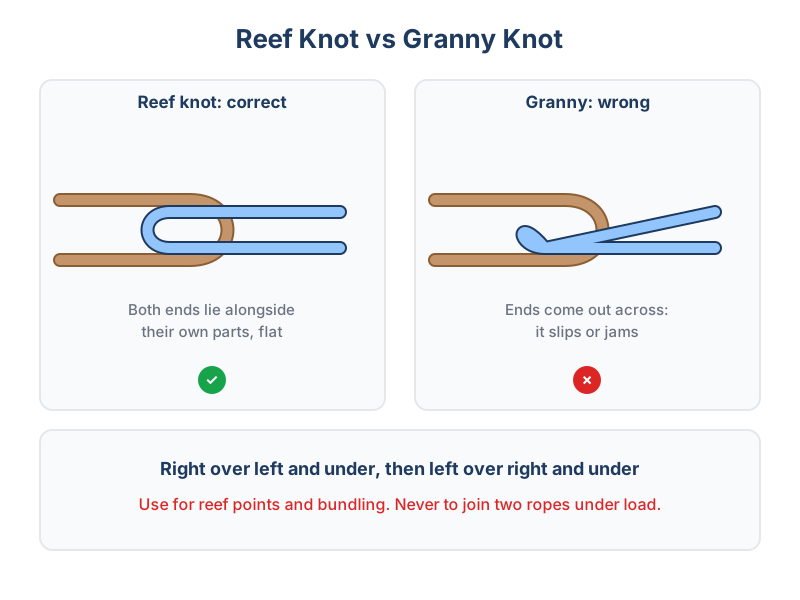
If the ends stick out at an angle across the knot, you have tied a granny knot (right over left twice). It slips and jams. Untie it and repeat the second cross the other way.
What a reef knot is for
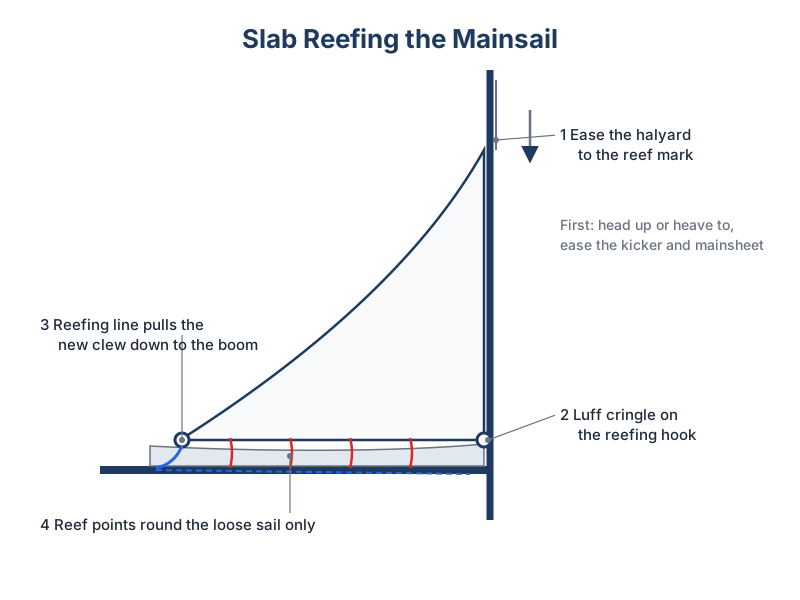
The name comes from reefing: when you reduce sail, the loose fold of sail along the boom is tied up with short lines called reef points, and each is tied with a reef knot. It lies flat against the sail, holds well when tied around something, and can be released quickly by pulling one end back over the knot, which 'capsizes' it.
- Tying reef points or sail ties around a lowered or reefed sail.
- Bundling a furled sail, cover or bag.
- Tying a bandage or sling in first aid, where it lies flat against the body.
Why not to join ropes with it
| Reef knot | Sheet bend | |
|---|---|---|
| Ropes of different thickness | Slips | Holds; double it for big differences |
| Under shock load | Can capsize and pull apart | Secure |
| Purpose | Binding round an object | Joining two ropes |
A reef knot only holds properly when it is pressed against something, such as a sail. Pulled from both ends in free air, particularly with ropes of different size or stiffness, it can capsize into two half hitches and slide off. Many accidents have come from reef knots used to join lines. Use a sheet bend or two bowlines instead.
Reef points today
Many modern yachts have slab reefing with a single line or two-line system and a lazy-jack stack pack, so reef points are less common than they were. You will still find them on traditional boats, dinghies and some cruising mainsails, and the reef knot remains useful for sail ties and bundles. Tie each reef point loosely enough that the sail is tidy but not strained, and untie every one before shaking out the reef. Forgetting a single tie when you hoist is a well-known way to rip a mainsail. A slipped reef knot, with one end doubled back as a bight, can be released with a single pull.
See all the core knots in essential sailing knots, and when to shorten sail in when to reef.