Urgency calls
What Is a Pan-Pan Call? Urgency Calls on VHF Explained
Published · Last checked October 2026
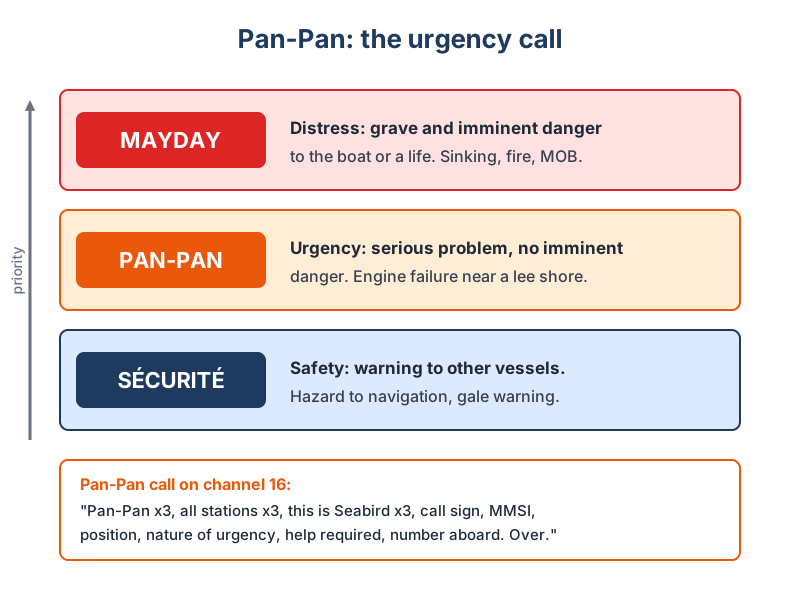
A Pan-Pan is the urgency call on marine VHF. You use it when there is an urgent problem with the safety of the boat or a person aboard, but no grave and imminent danger to life: engine failure near a lee shore, a dismasting in moderate weather, or a crew member who needs medical advice. Say 'Pan-Pan' three times on channel 16, give your boat's name, call sign, MMSI and position, describe the problem and the help you need. A DSC urgency alert can precede it.
Pan-Pan or Mayday?
The radio has three priority signals. Mayday is distress: a vessel or person is in grave and imminent danger and needs immediate help. Pan-Pan is urgency: something serious has happened, help may be needed, but life is not under immediate threat. Sécurité is safety information, such as a navigational hazard. A Pan-Pan takes priority over all traffic except a Mayday.
| Situation | Call |
|---|---|
| Boat sinking, fire out of control, person overboard | Mayday |
| Engine failure, drifting but not yet in danger | Pan-Pan |
| Crew member injured, needs medical advice | Pan-Pan (Pan-Pan Medico) |
| Fouled propeller in a shipping lane | Pan-Pan |
| Large floating log sighted | Sécurité |
If a Pan-Pan situation gets worse, upgrade it to a Mayday at once. The coastguard would rather hear early than late.
How to make a Pan-Pan call
If your set has DSC, first send an urgency alert to all stations (or to the coastguard) using the menu, then speak on channel 16. On a set without DSC, go straight to channel 16 on high power.
- Pan-Pan, Pan-Pan, Pan-Pan
- All stations, all stations, all stations (or the coastguard by name, for example 'Solent Coastguard')
- This is yacht *Seabird*, *Seabird*, *Seabird*, call sign and MMSI
- My position is latitude and longitude, or bearing and distance from a charted point
- Nature of the problem: 'engine failure, drifting towards Hook Sand'
- Assistance required: 'request tow'
- Other information: number of people aboard, weather, intentions
- Over
HM Coastguard will normally acknowledge and may move you to a working channel, often channel 67 in UK waters, so channel 16 stays clear.
Pan-Pan Medico
For medical advice, the coastguard can connect you to a doctor through the radio medical advice service. Start the call the same way and say you need medical advice. Have the casualty's age, symptoms and any medication ready. The first aid lesson covers what to record.
Cancelling a Pan-Pan
If the problem is solved, for example you get the engine going, tell the coastguard and cancel the call. An all-stations cancellation stops other boats diverting to help. Practise the full procedure in the VHF radio lesson.