Berthing
How to Raft Up Boats: Rafting Etiquette and Technique
Published · Last checked October 2026
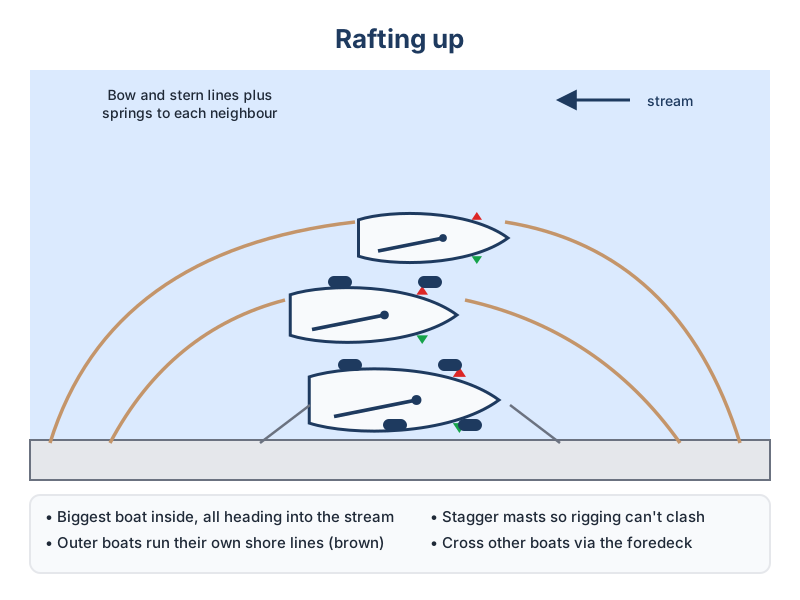
To raft up, ask the boat you want to lie against, rig fenders at the right height, and come alongside slowly heading into the stream. Pass bow and stern lines plus springs to the other boat, then run your own bow and stern lines ashore so you do not hang off your neighbour. Stagger masts so rigging cannot clash, cross other boats via the foredeck, and plan ahead if you need to leave from the inside.

Before you arrive
- Call the harbour master on VHF or check the almanac for whether rafting is expected and how many deep is allowed.
- Prepare plenty of fenders on the side you will raft: at least four, plus a roving fender.
- Rig bow and stern lines and two springs ready.
- Pick a boat of similar or larger size. Ask permission before you come alongside.
Coming alongside
Approach slowly, ideally into the tidal stream or wind, at a shallow angle. Get a midships spring across first to hold position, then the bow and stern lines and the other spring. Set the fenders at the widest part of both hulls, and check heights after you settle, as freeboards often differ.
Lines in a raft
| Line | Goes to |
|---|---|
| Springs | The boat inside you |
| Breast or short bow/stern lines | The boat inside you |
| Long bow and stern shore lines | The pontoon or wall ashore |
Shore lines matter. Without them, the whole raft hangs off the inside boat's lines, and with several boats on the outside that load can be heavy. Your shore lines should be long and led well forward and aft.
Etiquette
- Stagger masts so spreaders cannot tangle as boats roll in wash.
- Cross by the foredeck, never through the cockpit, which is someone's living space.
- Keep noise and generator use down, and point exhausts away from neighbours.
- Agree departure times. If an inside boat leaves first, the outer boats must help by releasing lines and re-forming the raft.
- Leave a clean deck: no lines or kit where someone will step in the dark.
Leaving from the inside
Brief everyone involved. The usual method is for the outer boats to slip their lines to your boat and hold the raft by its shore lines, while you motor out ahead or astern, ideally down tide. Then the outer boats close the gap and re-secure to the inside boat or the pontoon.
Fender sizing is covered in what is a fender on a boat; line handling in the berthing lesson.