Downwind safety
What Is a Preventer on a Sailboat? How to Rig One Safely
Published · Last checked October 2026
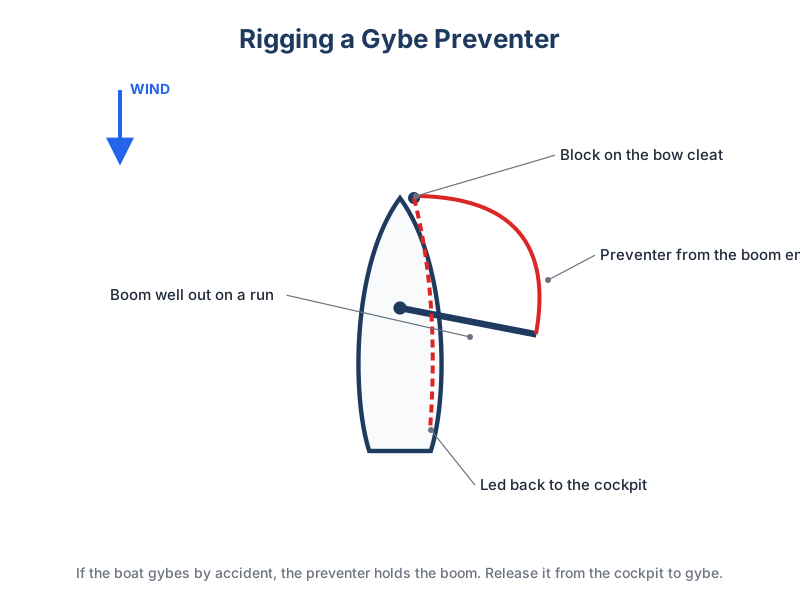
A preventer is a line rigged from the end of the boom forward to the bow, then back to the cockpit, that holds the boom out on a broad reach or run. It stops the boom swinging violently across in an accidental gybe, which can injure crew and damage the rig. Rig it from the boom end, lead it forward to a strong point and back to a winch so it can be released under load from the cockpit.
Why you need one
On a run or broad reach, a wave or a helming error can let the wind get behind the mainsail. The boom then crosses the boat at full speed in an uncontrolled gybe. A swinging boom is a leading cause of serious head injuries and people knocked overboard on yachts, and it can break the boom, kicker or mainsheet track. A preventer turns that risk into, at worst, a boat that rounds up with the main backed.
How to rig a preventer
- Attach a line to the end of the boom, ideally a permanent strop or pennant that lives along the boom.
- Lead it forward outside the shrouds and lifelines to a strong block or cleat near the bow.
- Bring it back along the deck to the cockpit and onto a winch or clutch, so it can be eased under load.
- Ease the main out to your downwind trim, then take up the preventer until it is tight.
- To gybe, release the preventer first, gybe under control, then rig it on the new side.
| Preventer | Boom brake | |
|---|---|---|
| What it does | Stops the boom moving | Lets the boom cross slowly |
| Use for gybing | Must be released first | Can stay on for controlled gybes |
| Risk | Main backed if accidentally gybed | Less load on the rig |
| Where fitted | Boom end to bow | Mid-boom, both sides to the deck |
Common mistakes
- Tying to the kicker fitting or mid-boom: a gybe load near the middle can snap the boom. Use the outer end.
- Leading to a deck cleat near the mast: the angle is too steep and loads are huge. Lead well forward.
- Making it fast where you cannot reach it: if you need to release it in a hurry, you must be able to from the cockpit.
- Using the kicker as a preventer: a kicker tied to the rail is not a preventer and can bend the boom.
Revise gybing in how to tack and gybe and the personal safety lesson.