Mooring
How to Pick Up a Mooring Buoy Under Power or Sail
Published · Last checked October 2026
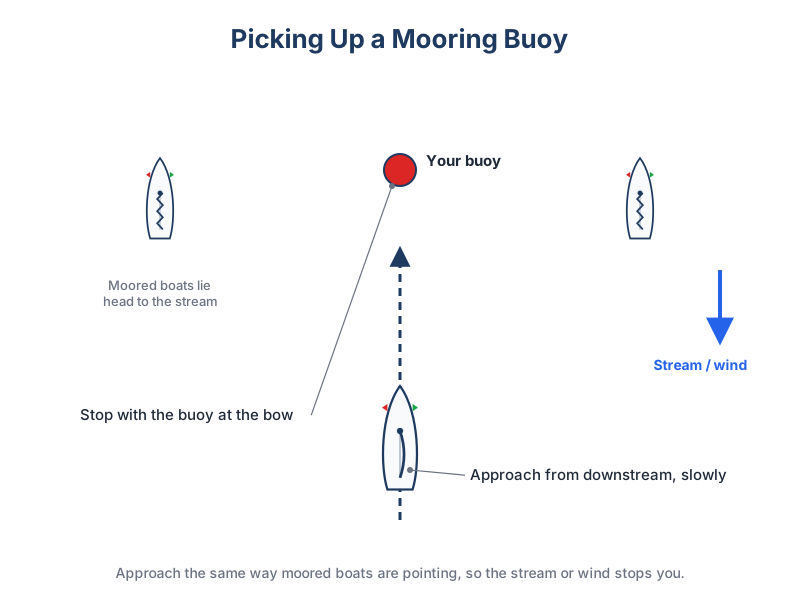
To pick up a mooring buoy, watch how moored boats are lying, then approach slowly heading the same way, into whichever of wind or tide is stronger. Aim to stop with the buoy at the bow. The crew points to it continuously, hooks the pick-up line with a boathook and makes it fast to a bow cleat. If you miss, go round again rather than chasing it.
Read the conditions first
Moored boats are the best guide: they lie head to whichever force is stronger, wind or tidal stream. Approach on the same heading as they are lying so the wind or stream slows you to a stop at the buoy. If boats are lying at odd angles, wind and tide are fighting, and you should approach heading into the stream, which usually has more effect on a yacht's keel.
The approach under power
- Brief the crew: who helms, who points and who hooks. Agree simple hand signals because shouts get lost.
- Rig a bow line ready, led through the fairlead and back to the cleat.
- Make a slow dummy run past the buoy to check the stream and look for the pick-up line.
- Approach slowly, with just enough speed to steer. The crew points at the buoy at all times as it disappears under the bow.
- Stop with the buoy just off the bow on the side the crew is working.
- Hook the pick-up line, lift it and drop the eye over the bow cleat, or pass your own line through the ring and back.
Under sail
If the tide is weak, approach on a close reach so you can spill wind from the sails and stop. If wind and tide are together, a close reach with the main eased works. If the stream is strong, drop the main and come in under jib alone, easing it to slow down. This is a classic Day Skipper exercise.
| Situation | Under sail |
|---|---|
| Wind and tide together or tide weak | Close reach, main only, spill wind to stop |
| Wind against tide, tide stronger | Downwind under jib alone, ease jib to slow |
| Unsure | Do a dummy run, or use the engine |
Securing and leaving
- Do not pass your line through a buoy ring and tie it back to itself if you will be there long: rope chafes through quickly on metal. Use the buoy's own pick-up strop or a chain-protected line.
- Check the mooring is suitable for your size of boat. Visitor buoys often state a maximum.
- To leave, rig a slip line, drop the pick-up and let the boat drift back before motoring away so you clear the buoy and its riser.
For anchoring instead, see how to anchor a yacht and the anchoring and mooring lesson.