Safety kit
Sailing Lifejackets Explained — 150N vs 275N, Auto vs Manual
Published · Last checked October 2026
Most yacht sailors wear a 150N automatic gas-inflating lifejacket with crotch straps, a spray hood and a light. A 50N buoyancy aid is not a lifejacket: it will not turn an unconscious person face-up. 275N jackets suit heavy offshore clothing. Automatic jackets inflate when immersed; manual ones need you to pull the cord. Check the gas cylinder and firing mechanism before every trip and have the jacket serviced as the maker recommends.
| Rating | Type | Typical use |
|---|---|---|
| 50N | Buoyancy aid | Dinghies, kayaks: swimmers near help |
| 100N | Lifejacket | Sheltered water |
| 150N | Lifejacket | Coastal and offshore yachting: the usual choice |
| 275N | Lifejacket | Offshore, heavy clothing and gear |
Automatic or manual?
Automatic jackets fire when water dissolves a tablet or bobbin, or when a hydrostatic valve senses water pressure. They work if you are knocked unconscious. Manual jackets suit dinghy sailors and people who might be trapped under a capsized boat or sail. Hydrostatic mechanisms do not fire from spray or rain, which suits wet cockpits.
Features that matter
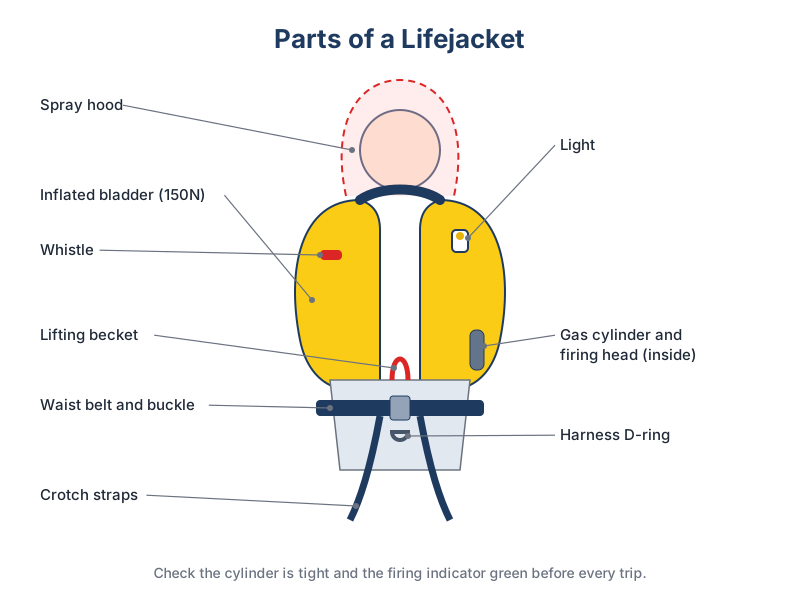
- Crotch or thigh straps: without them the jacket can ride up over your head.
- Spray hood: prevents drowning from breaking waves while you float.
- Light: essential at night.
- Lifting becket: a strong loop for hauling you back aboard.
- Harness D-ring, if you will clip on to jackstays.
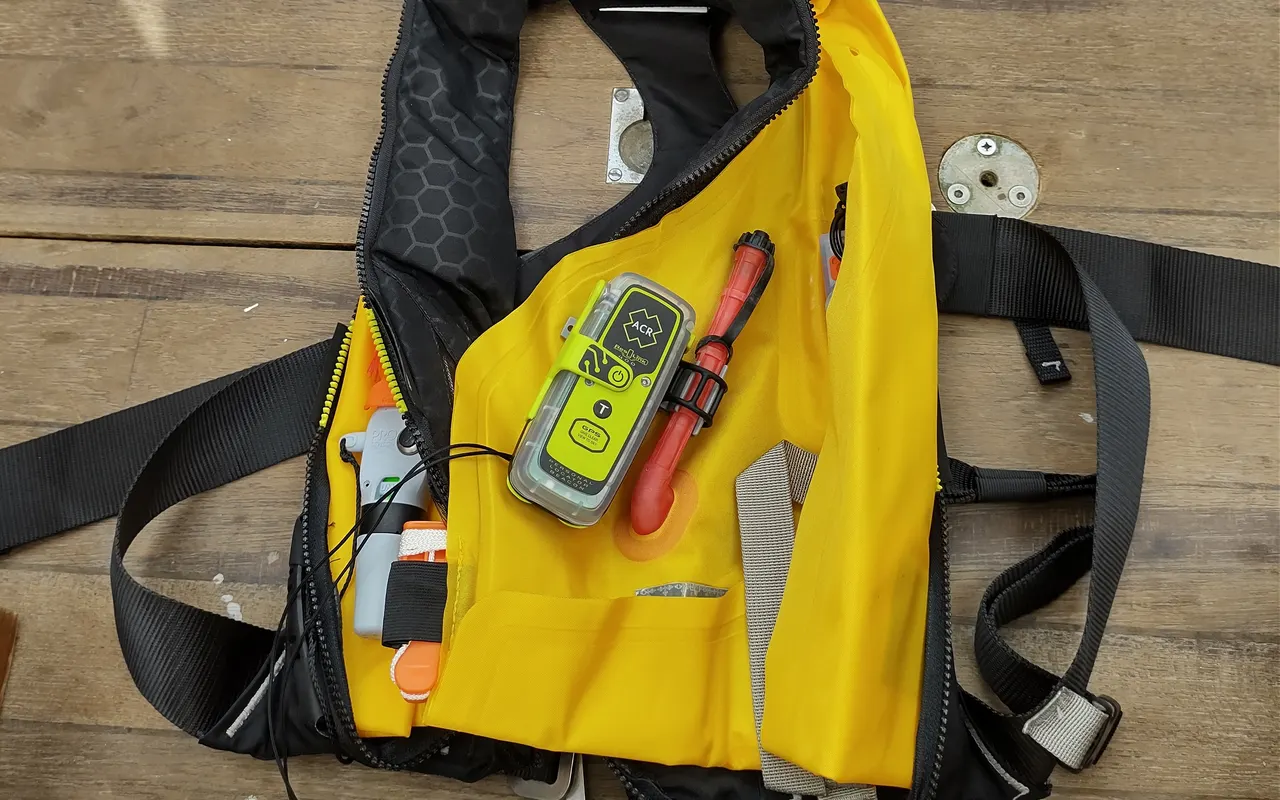
- AIS or PLB beacon: an increasingly common addition offshore.
Checks before you sail
- The gas cylinder is screwed in tight and has not been fired.
- The firing mechanism's indicator is green or in date.
- The bladder holds air when orally inflated and left for a while (do this at home).
- The jacket fits snugly with the straps done up.