COLREGs Rule 13
Overtaking Rule 13 Explained: Who Gives Way When Passing?
Published · Last checked October 2026
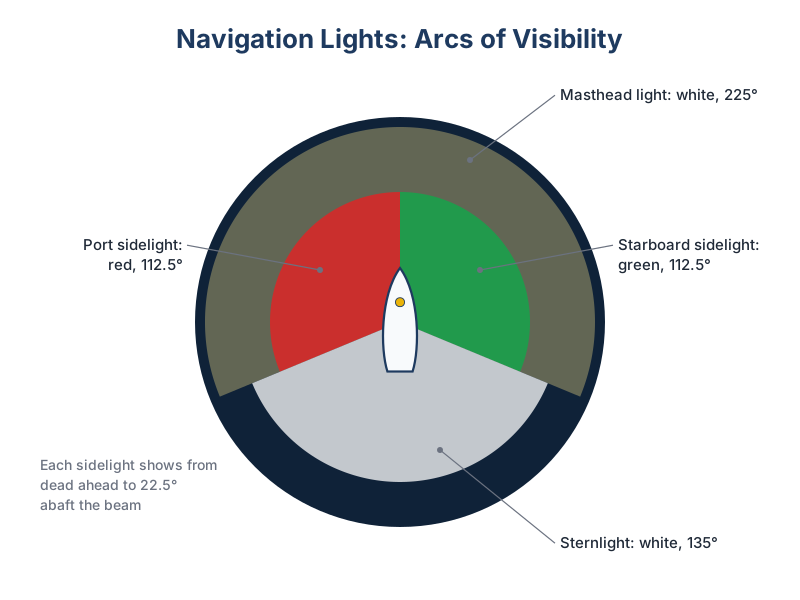
Under COLREGs Rule 13, any vessel overtaking another must keep out of the way of the vessel being overtaken. This applies to every type of vessel, so a sailing yacht overtaking a motor boat must keep clear. You are overtaking when you approach another vessel from more than 22.5 degrees abaft its beam: at night you would see only its sternlight. Once overtaking, you remain the give-way vessel until you are past and clear.
What Rule 13 says
Rule 13(a) starts 'Notwithstanding anything contained in the Rules of Part B, Sections I and II'. That means it overrides the other steering rules, including Rule 12 for sailing vessels and Rule 18's hierarchy. A sailing yacht overtaking a power vessel, or a starboard-tack boat overtaking a port-tack boat, must keep clear.
Am I overtaking?
Rule 13(b) defines overtaking as coming up with another vessel from a direction more than 22.5 degrees abaft her beam. The sternlight covers exactly this arc, so at night an overtaking vessel sees only the white sternlight and neither sidelight.
| You see (at night) | Situation | Who keeps clear |
|---|---|---|
| Only the sternlight | Overtaking | You do |
| Both sidelights ahead (power vessels) | Head-on | Both alter to starboard |
| Red sidelight | Crossing, other vessel on your starboard side | You do, if both power-driven |
| Green sidelight | Crossing, other vessel on your port side | The other vessel, if both power-driven |
Rule 13(c) adds that if you are in any doubt whether you are overtaking, assume you are and act accordingly.
Once overtaking, always overtaking
Rule 13(d): any later change in bearing does not make the overtaking vessel a crossing vessel or relieve it of its duty until it is finally past and clear. If you overtake a slower yacht and then turn across its bow, you are still the give-way vessel throughout.
Overtaking safely
- Pass with plenty of room. Large vessels create interaction effects that can pull a small boat in.
- On a sailing boat, remember your wind shadow can slow the boat being overtaken.
- In a narrow channel, signal your intention with the Rule 9 sound signals and wait for agreement.
- Do not cut back in until you are well clear ahead.
- Watch for the overtaken vessel altering course: it may not know you are there.
Being overtaken also carries a duty. The overtaken vessel is the stand-on vessel under Rule 17, so it should keep its course and speed. See the stand-on vessel guide.
Practise identifying situations from lights in the COLREGs rules and lights lesson.