COLREGs Rule 16
What Is a Give-Way Vessel? COLREGs Rule 16 Explained
Published · Last checked October 2026
A give-way vessel is the one required by the COLREGs to keep out of the way of another vessel when there is a risk of collision. Rule 16 says it must take early and substantial action to keep well clear. Which boat gives way depends on the situation: the overtaking vessel, the sailing boat with the wind on its port side, the power-driven vessel crossing with another on its starboard side, or the boat lower down the Rule 18 hierarchy.
What Rule 16 actually says
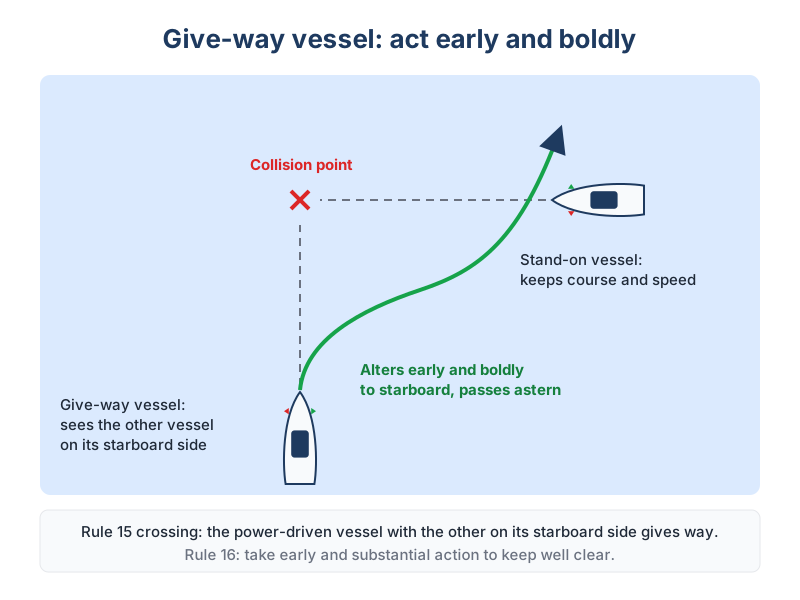
Rule 16 is short: every vessel directed to keep out of the way of another vessel shall, so far as possible, take early and substantial action to keep well clear. The word early matters as much as substantial. A small course change made late leaves the other skipper guessing, and that uncertainty is what causes most close-quarters situations.
The rules never use the phrase 'right of way'. Neither vessel has a right to anything; one has a duty to keep clear and the other a duty to hold its course and speed. See the right of way rules guide for the full picture.
When are you the give-way vessel?
- Overtaking (Rule 13): any vessel overtaking another keeps clear, whatever type it is.
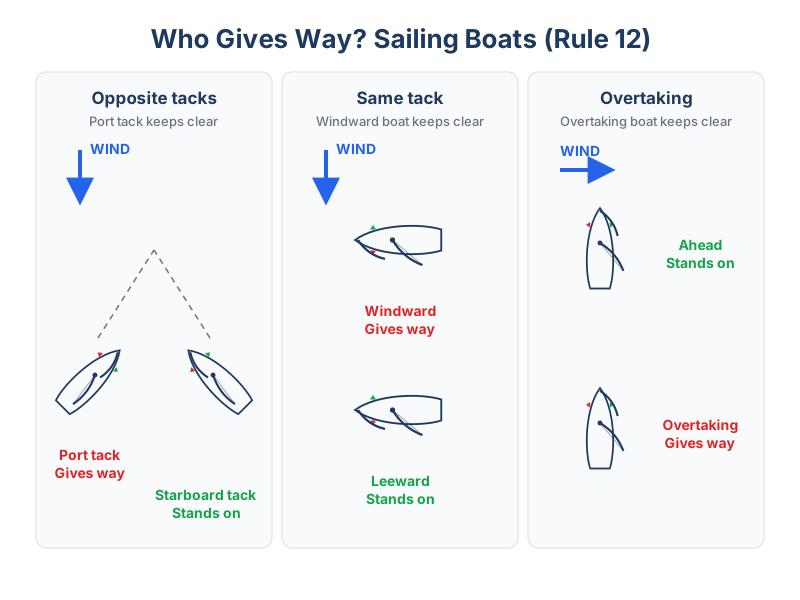
- Two sailing vessels (Rule 12): the boat on port tack gives way to the boat on starboard tack. On the same tack, the windward boat gives way.
- Two power-driven vessels crossing (Rule 15): the one with the other on its own starboard side gives way.
- Head-on power vessels (Rule 14): both alter to starboard, so both share the duty.
- Different types (Rule 18): a vessel lower in the hierarchy keeps clear of one higher up, for example a sailing yacht keeps clear of a vessel engaged in fishing.
How to give way well
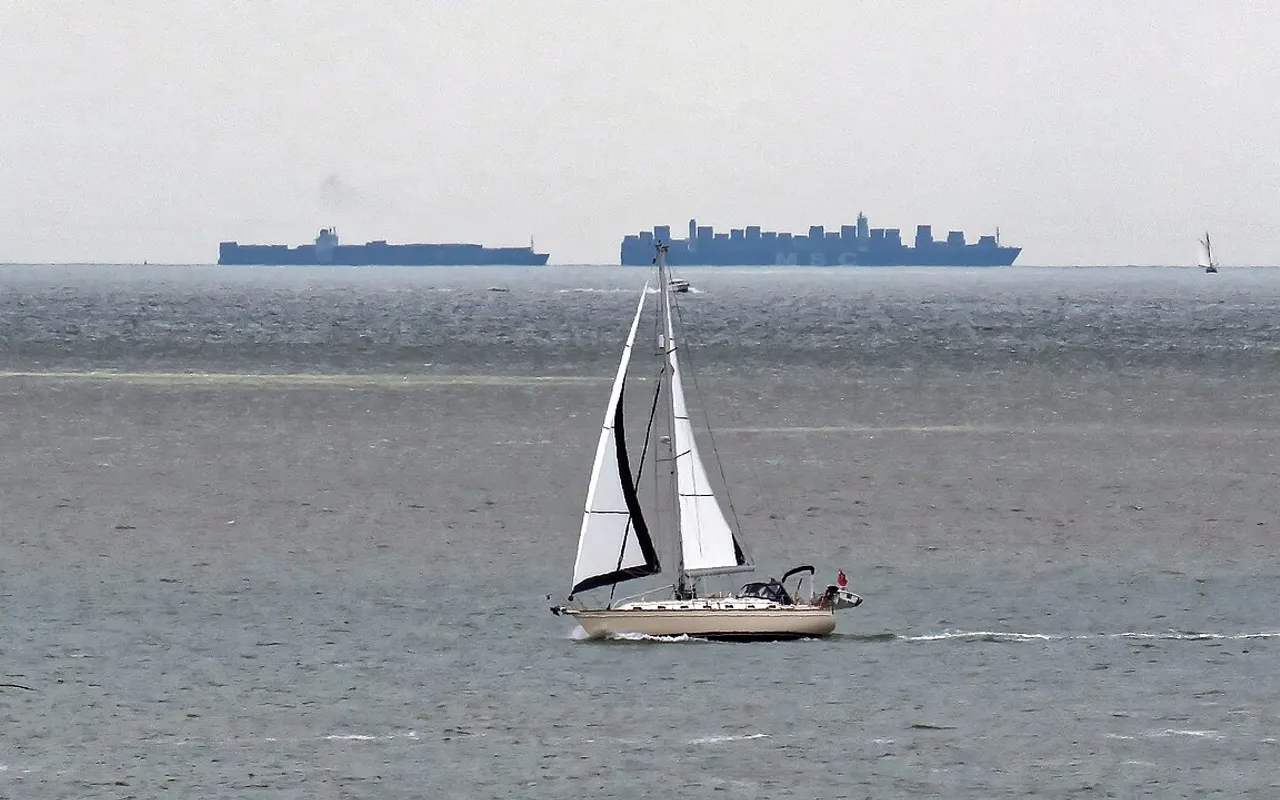
Good give-way action is obvious from the other boat's bridge or cockpit. On a yacht that usually means a bold alteration of course, ideally 30 degrees or more, so that your new heading shows a different aspect or a different sidelight at night.
| Good practice | Poor practice |
|---|---|
| Alter course early, while still well apart | Wait until close then make a sudden turn |
| Make one large, clear alteration | A series of small 5 degree nudges |
| Pass astern of the other vessel | Cross ahead of a ship |
| Slow down or stop if needed | Hold speed and hope |
| Check the bearing is now changing | Assume the danger has passed |
Rule 8 adds that the alteration should be large enough to be readily apparent, and that you should avoid crossing ahead of the other vessel where circumstances allow. Reducing speed, or taking all way off, is also a valid action.
Checking risk of collision
You only become the give-way vessel when risk of collision exists. The classic test is a steady compass bearing: if the bearing of an approaching vessel does not appreciably change while the range closes, risk of collision exists. Take several bearings with a hand-bearing compass, or line the other vessel up against a stanchion while you hold a steady course. With large ships at close range, risk can exist even when the bearing is changing.
Practise the scenarios in the COLREGs introduction lesson.