COLREGs Rule 17
What Is a Stand-On Vessel? COLREGs Rule 17 for Sailors
Published · Last checked October 2026
The stand-on vessel is the one that keeps its course and speed while the other vessel, the give-way vessel, keeps clear. Rule 17 makes this a duty, not a privilege. If it becomes apparent the give-way vessel is not acting, the stand-on vessel may take action to avoid collision by its manoeuvre alone, and when collision can no longer be avoided by the give-way vessel alone, it must take the best action to avoid it.
The duty to stand on
Under Rule 17(a)(i), where one of two vessels is to keep out of the way, the other shall keep her course and speed. This lets the give-way vessel predict where you will be. If you wander about or slow down while they are manoeuvring around you, you can undo their avoiding action.
Holding course on a sailing yacht means holding your heading relative to the wind, not fighting every gust. Small, normal changes are fine; tacking, gybing or starting the engine and turning are not.
The three stages of Rule 17
- Keep course and speed while the give-way vessel has time to act.
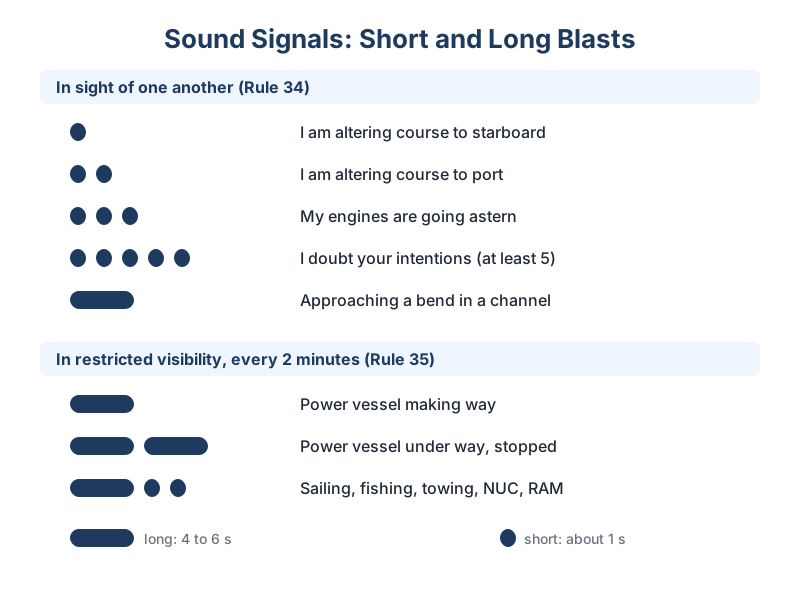
- May act (Rule 17(a)(ii)): once it is apparent the give-way vessel is not taking appropriate action, you may manoeuvre to avoid collision. First, sound at least five short and rapid blasts (Rule 34(d)) to signal doubt.
- Must act (Rule 17(b)): when you are so close that collision cannot be avoided by the give-way vessel alone, you must take whatever action will best help avoid it.
| Stage | Your duty | Typical action |
|---|---|---|
| Vessels well apart | Keep course and speed | Monitor bearing, stay predictable |
| Give-way vessel not acting | May act alone | Five short blasts, VHF call, bold alteration |
| Collision imminent | Must act | Best avoiding action, often hard to starboard or stop |
Which way to turn
Rule 17(c) says a power-driven vessel acting under stage two in a crossing situation should, if circumstances allow, not alter course to port for a vessel on her own port side. Turning towards a give-way vessel that finally turns to starboard is a classic way to collide. A turn to starboard, or slowing down, is usually the safer choice.
For a yacht, turning away to put the other vessel astern, or tacking or gybing away, may be best. Whatever you do, do it boldly and early enough to work.
Stand-on does not mean safe
Rule 17(d) states plainly that this rule does not relieve the give-way vessel of its obligation. But Rule 2 means you are both responsible for avoiding a collision. If you hold on into a collision you could have avoided, you share the blame.
Work through practical examples in the COLREGs rules and lights lesson and the give-way vessel guide.