Tides
What Does Ebb and Flood Mean? Tidal Terms for Sailors
Published · Last checked October 2026
Flood and ebb describe the tidal stream. The flood is the incoming stream as the tide rises, running towards the land or up an estuary; the ebb is the outgoing stream as the tide falls, running seaward. Along an open coast the words refer to the direction the stream sets during the rising and falling tide. Between them is slack water. A fair stream can add knots to your speed over the ground; a foul one can stop you.
The tidal cycle in brief
Around the UK most places get two high and two low waters a day, about 12 hours 25 minutes apart. As the tide rises the flood runs; as it falls the ebb runs. In estuaries and harbours this is straightforward. Offshore, the stream may turn well away from local HW or LW, so 'flood' and 'ebb' are usually defined in the almanac for each stretch of coast, for example the Channel flood running east.
| Term | Meaning |
|---|---|
| Flood (flood stream) | Incoming stream while the tide rises |
| Ebb (ebb stream) | Outgoing stream while the tide falls |
| Slack water | Weak or no stream as it turns |
| Fair tide | Stream helping you along your course |
| Foul tide | Stream against you |
| Young flood / last of the ebb | Early flood or late ebb, usually weaker |
How ebb and flood affect a passage
- Speed over ground: a 5-knot yacht with 2 knots of fair tide makes 7 knots; against it, 3 knots.
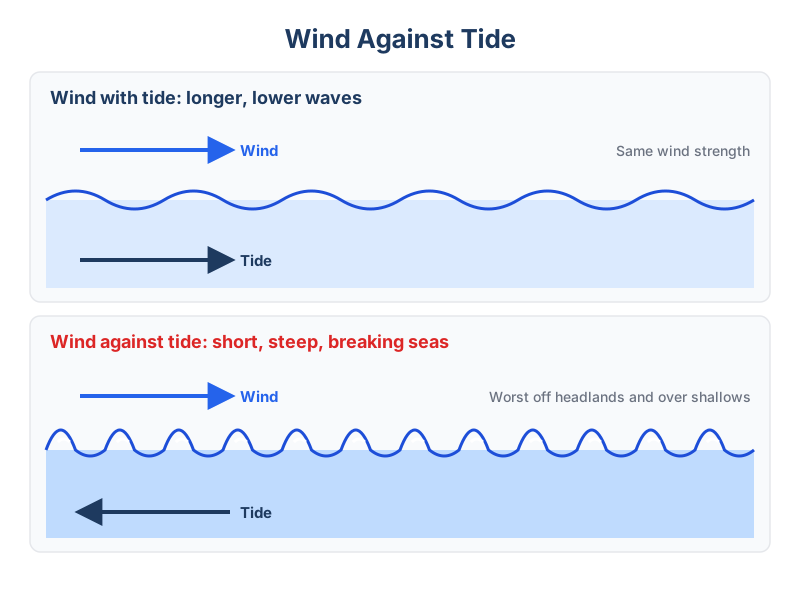
- Sea state: wind against tide makes short, steep waves, worst in estuary mouths on the ebb against an onshore wind.
- Leaving and entering harbour: many skippers leave on the last of the flood or the ebb to carry a fair stream out to sea.
- Rivers: the ebb usually runs faster and for longer than the flood, especially after rain.
Planning with ebb and flood
- Find HW at the relevant standard port.
- Check when the stream turns in your area using tidal diamonds or a stream atlas.
- Time departure to carry the fair stream for as much of the passage as you can.
- Check for wind-against-tide periods and adjust if the forecast wind opposes the stream in exposed places.