Passage planning
What Is a Tidal Gate? Timing Passages Around Headlands
Published · Last checked October 2026
A tidal gate is a place on a passage, usually a headland, narrow channel, race or harbour bar, that you can only pass safely or efficiently at certain states of tide. Strong streams, overfalls or shallow water make it impractical at other times. Well-known UK examples include Portland Bill, St Alban's Head, the Needles Channel and the Alderney Race. Planning means timing your departure so you arrive at the gate when the stream is fair or slack.
Types of tidal gate
| Type | Why it is a gate | Example |
|---|---|---|
| Headland | Streams accelerate and races form | Portland Bill, St Alban's Head |
| Narrow channel | Very strong streams through a gap | Alderney Race, the Swellies |
| Bar or shallow entrance | Not enough depth at low water | Many West Country and East Coast rivers |
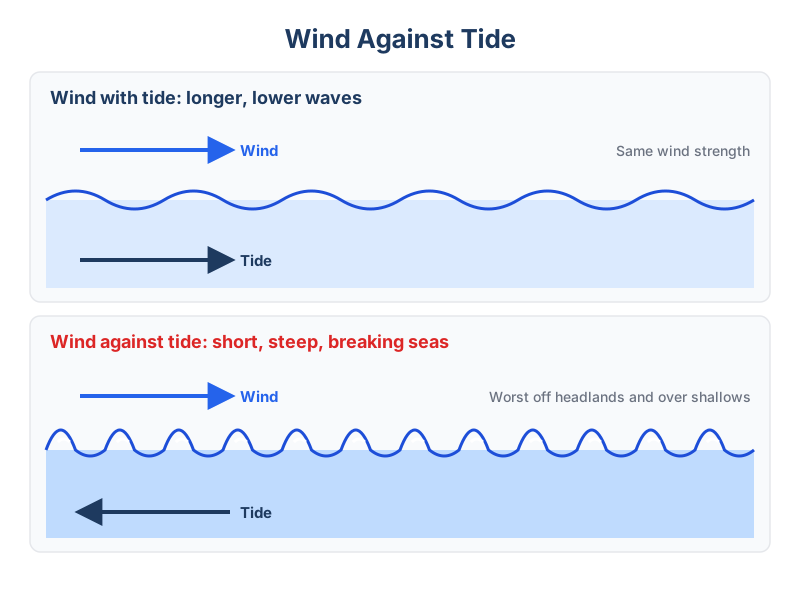
| Estuary mouth | Dangerous seas with wind against the ebb | Thames Estuary approaches |
How to plan a tidal gate
- Identify gates on your route from the chart, pilot book and almanac. Look for overfall symbols, race warnings and very high stream rates.
- Find the favourable window: when the stream turns fair, or the depth over the bar is enough. Pilot books often give this relative to HW at a standard port.
- Work backwards: distance to the gate divided by your realistic speed over ground gives your departure time.
- Add a margin: arrive early in the window rather than late.
- Check the forecast for wind against tide at the gate.
- Have a bolt-hole or waiting anchorage if you are late.
Passages with more than one gate
Longer coastal passages can have several gates, and the timing of one constrains the next. A classic example is heading west along the south coast: carry the ebb out of the Solent, then you may need to time Portland Bill separately. Sometimes the answer is to break the passage, or to accept a foul tide on an easy stretch to be at the hard gate at the right moment.
- Plot the tidal stream hour by hour along the route with a stream atlas.
- Note when slack water occurs at each gate.
- Prioritise the most dangerous gate and fit the rest around it.
Work through examples in the coastal passage planning lesson.