Tidal streams
What Is Slack Water? When It Happens and Why It Matters
Published · Last checked October 2026
Slack water is the brief period when the tidal stream is very weak or stops as it changes direction between flood and ebb. It does not always happen at high or low water: in many places the stream turns an hour or more before or after. Slack may last minutes in a fast-flowing channel or longer in open water. Sailors use it to pass headlands, enter tricky harbours, dive, anchor or cross busy channels.
Slack water versus stand of the tide
Slack water is about the horizontal movement of water (the stream). The 'stand' is about the vertical movement: the period around high or low water when the height changes little. The two often do not coincide. In much of the English Channel, for instance, the stream can be running hard at local high water and turn several hours later.
| Term | Describes | Measured by |
|---|---|---|
| Slack water | Stream nearly zero while turning | Tidal diamonds, stream atlas |
| Stand | Height nearly constant around HW or LW | Tide tables, tidal curves |
| Flood | Stream running in on a rising tide | Diamonds, atlas, pilot notes |
| Ebb | Stream running out on a falling tide | Diamonds, atlas, pilot notes |
How to find slack water
- Look at the nearest tidal diamond table: slack is where the rate drops to near zero and the direction swings round.
- Check the tidal stream atlas pages for small arrows or 'slack' labels.
- Read the pilot book or almanac: for well-known gates they give slack times relative to HW at a standard port.
- Watch the water: lobster pot buoys, moored boats and kelp show what the stream is doing.
Using slack water
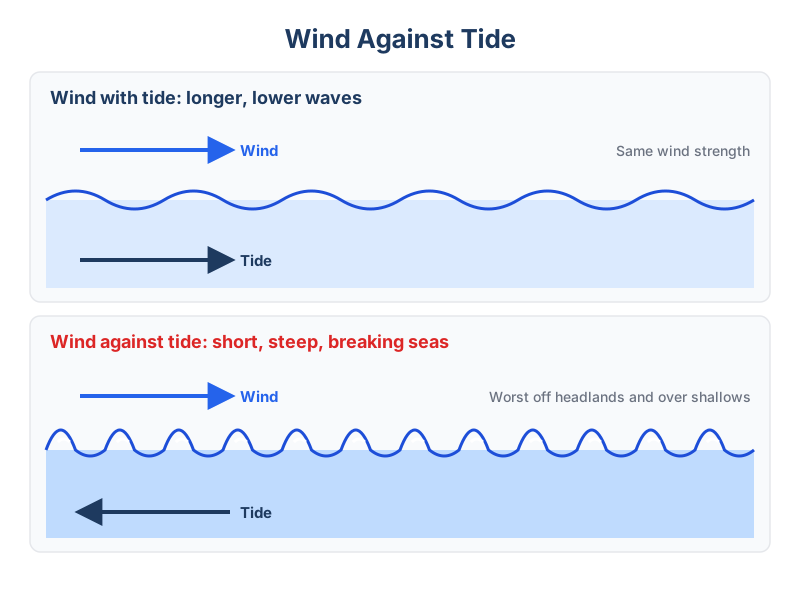
- Passing headlands and races: go through near slack, or with a fair stream in light winds, never wind against tide.
- Entering harbours with fast streams: much easier steerage and a gentler arrival.
- Anchoring and picking up moorings: the boat lies to the wind, so approach accordingly and expect it to swing when the stream builds.
- Crossing shipping lanes: less cross-set to allow for.
Plan timings in the passage planning lesson.