Buoyage
What Is a Safe Water Mark? Red and White Buoys Explained
Published · Last checked October 2026
A safe water mark shows that there is navigable water all around it. It is often used as a landfall buoy at the seaward end of a channel or to mark a channel's centreline. It has red and white vertical stripes, a single red ball topmark, and if lit shows a white light that is isophase, occulting, one long flash every 10 seconds, or Morse code 'A'. Unlike most buoys, it does not mark a danger.
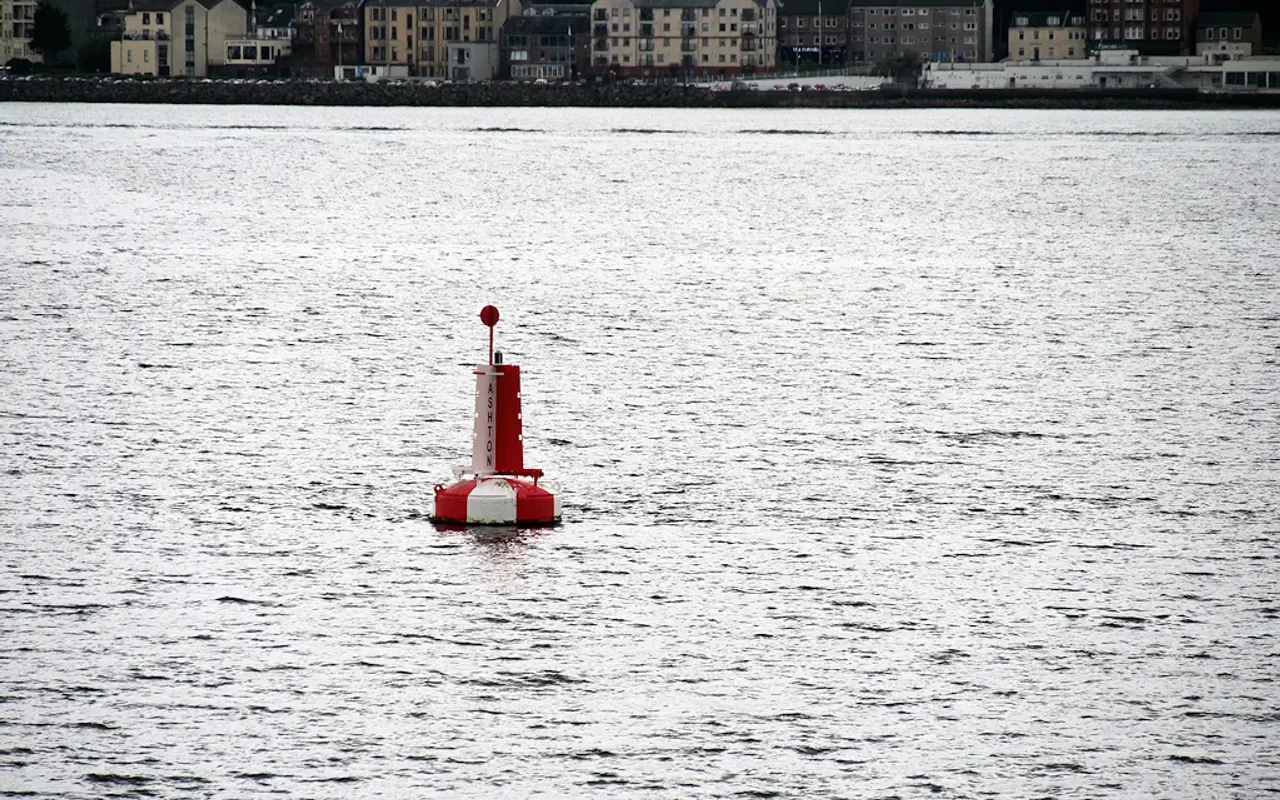
How to recognise one
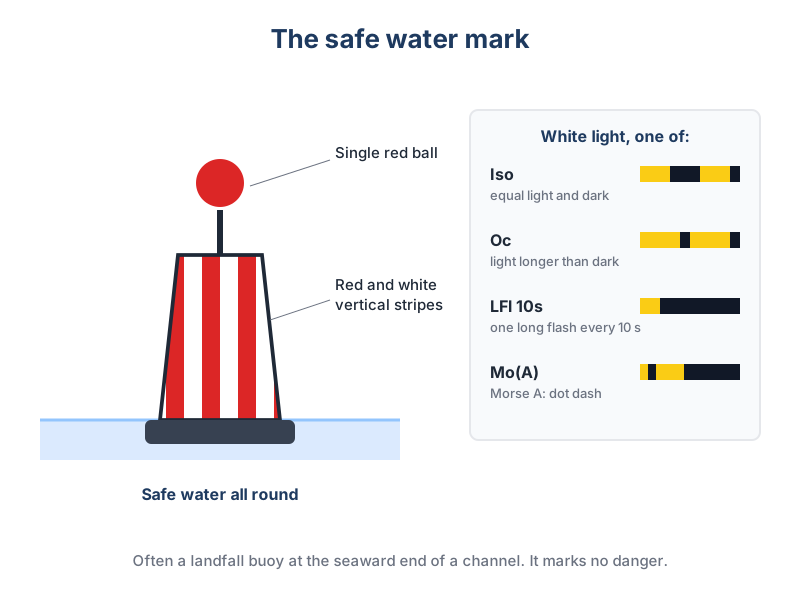
| Feature | Description |
|---|---|
| Colour | Red and white vertical stripes |
| Shape | Sphere, pillar or spar |
| Topmark | Single red sphere |
| Light | White: Iso, Oc, LFl 10s or Mo(A) |
It is the only buoy with vertical stripes in red and white and the only one whose topmark is a single red ball, which makes it easy to pick out once you know it.
What it is used for
- Landfall or fairway buoy: marks the start of a buoyed approach to a port, so you can find the entrance from offshore.
- Mid-channel mark: shows the centre of a wide channel.
- Waypoint: a convenient, safe point to aim for when planning a passage into harbour.
Because safe water marks are often the first buoy of a harbour approach, they make good waypoints in pilotage plans. From the landfall buoy you pick up the lateral marks and follow them in.
The light rhythms
All four permitted rhythms have long periods of light, which helps you tell them apart from the short flashes of cardinal, isolated danger and lateral marks.
- Iso (isophase): equal periods of light and dark, e.g. Iso 4s.
- Oc (occulting): light longer than dark, eclipsed briefly.
- LFl 10s: one long flash (at least 2 seconds) every 10 seconds.
- Mo(A): Morse 'A', a short then a long flash (·−).
See light characteristics for more on reading these abbreviations.
Passing a safe water mark
You can pass either side, though in a narrow channel you should still keep to the starboard side of the fairway as COLREGs Rule 9 requires. Some authorities recommend leaving it to port when entering, so read the local pilot book or harbour guide. Revise the full set of marks in the buoyage and lights lesson.
Approaching a landfall buoy
Arriving from offshore, especially at night or in poor visibility, the safe water mark is often the first confirmation that your navigation is right. Plan to arrive with enough time to identify it calmly:
- Enter its position as a waypoint and check the bearing and distance regularly.
- Look for the light at the expected range, allowing for its nominal range and your height of eye.
- Time the rhythm to confirm it before relying on it.
- From the buoy, take up the planned course for the first pair of lateral marks.
If the buoy carries a racon, it will paint a Morse code letter on radar, which helps identification in fog. The chart shows this beside the buoy symbol.